










































Aligning community organisations and interventions with SDG 5
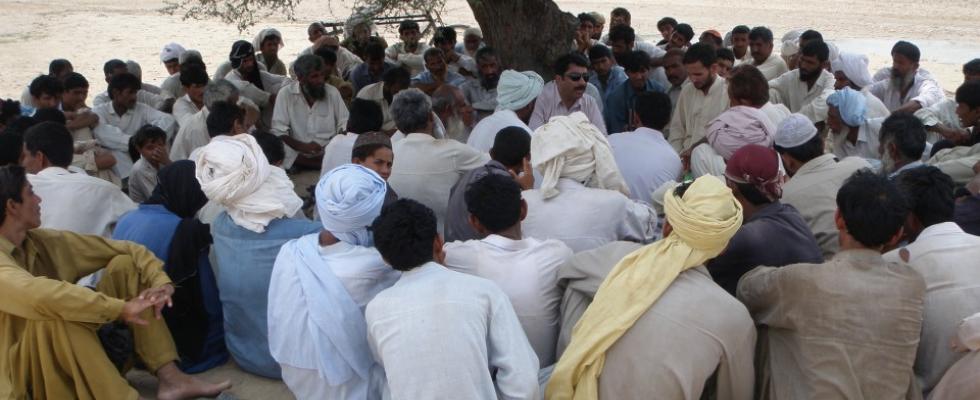
Author: Ranjani K. Murthy, January 23 2020 - Even if a country has progressive legislation, policies and plans, whether gender and social equality is actually achieved depends on how far they are translated on the ground. The sensitivity of community organisations and interventions to gender and social relations does matter. Practically, what does this mean? First, one needs to understand and address who is excluded from community organisations and interventions. Second, one needs to align community organisations and institutions towards what is required to achieve Sustainable Development Goal (SDG) 5.
A. Understanding who is excluded from community organisations and interventions
Exclusions can be direct or indirect. An example of direct exclusion is the case of women not being allowed in traditional councils and religious committees. An indirect form of exclusion is when a rule does not allow women into community organisations or interventions. For example, land ownership is mandatory for participation in irrigation and watershed programmes and committees and agriculture cooperatives. As few women own land, they are excluded. Gender-based exclusions also affect men, but to a lesser extent. Fathers, for example, are excluded from early childhood and nutrition committees (India) and school feeding groups (Mozambique). Such "rules" and "norms" that permeate community organisations violate gender equality and targets that are part of SDG 5. Quotas alone are not adequate to change such exclusions; social norms and distribution of resources have to be changed. These are discussed in part B.
Gender interlocks with other identities that lead to exclusions. For example, women in sex work, HIV+ women and transwomen are often left out of women's self-help groups, as well as the savings and loans those groups may provide. Nutrition interventions and groups in a programme in Nepal excluded women who are not pregnant or lactating, signifying that women's nutrition did not matter other than in their capacity as mothers. I encountered an unusual type of exclusion - of women from indigenous community considered endangered. They wanted access to contraception, but the government would not provide it to them, as their numbers were declining. That is, women's reproductive decision making was controlled by the government.
Another pathway of exclusion is the venue and time and of meetings, and leadership of groups. Holding meetings and training programmes in religious places excludes people of other religions as well as menstruating women and girls. Daytime meetings, convenient for staff of development organisations, exclude the poorest women who go out to work. Who holds leadership positions in groups also matters, with domination of privileged women leading to less participation of the marginalised. Further, non-rotation of women leaders and the same leader holding multiple posts can further existing divides. Thus, gender interlocks with caste, class, ethnicity pregnancy status, menstruating status, gender identity, religion, occupation, health to exclude women (and, at times, men).
Aligning community organisations and interventions requires an understanding of different identities that lead to exclusion of marginalised women, how they intersect and strategies to address such exclusions
B. Addressing exclusions in community organisations and interventions towards SDG 5
SDG 5.1, 5.2 and 5.3 End all discrimination against women, eliminate all forms of violence against women and End all Harmful practices:
Few violence against women (VAW) committees of government exist in South Asia, other than in special programmes. Outside state-run programmes, non-governmental organisations (NGOs) have formed "men against violence" on women groups in Brazil, India, Bangladesh and Uganda, to list a few. They have addressed wife battering, molestation, child marriage and rape, and such incidences are reported to have come down in areas where these groups function. However, only a few VAW groups have addressed the wide spectrum of violence and discrimination that women and girls (in particular, marginalised ones) face. To cite one: Ten Sudar, a federation of women's groups in Theni in India, is led by Arunthathiyars (considered the lowest sub caste amongst Dalits) and other Dalits. It has supported inter-caste marriages of adults and taken up abuse of Dalit women by people who employ them. Thus, ending all discrimination and forms of violence requires going beyond "visible" and "acceptable" things to challenge, to challenging the socially "unacceptable".
SDG 5.4 Recognise and value unpaid care work...promote shared responsibility within the household:
National governments have mainly focused on pushing responsibility for bringing change in gender norms on women. NGOs and some UN agencies have attempted to form "caring men/husbands' groups" and "Adolescent boys' groups" in Brazil, Uganda, India, Bangladesh and Nepal. Through such programs, adolescent boys help their mothers, but not to the extent of their sisters. It is time the responsibility of changing gender norms on unpaid work was shared between men and women, and the burden of change not foisted on women. Equally, it is necessary for the state to contribute to reducing the care burden. For example, the UK government supports/provides cheap after school care in schools and also accredits private providers and regulates who can take care of children until parents come from work.
5.5 Ensure women's full and effective participation and equal opportunities for leadership at all levels of decision-making in political, economic and public life:
Several countries have separate quotas for women and marginalised groups in local government, but rarely together - which is necessary to address intersectionality. However, quotas do not mean that women exercise power, as at times husbands or privileged men act as proxies. Further, when backed by a political party, a woman in local government cannot exercise her independent influence. That said, in some provinces and countries, considerable work has gone into empowering elected women and into gender budgeting, planning and implementation at the level of local government. For instance, one Panchayat in Kerala, India, declared itself dowry free and regulates the same. And Upazilla committees in one district in Bangladesh, with training from a women's rights organisation, takes up cases of violence on women and refers to health centres if necessary.
In the economic sphere, there are examples of Dalit women leasing land and doing agriculture (India), indigenous women managing forests with men (Nepal) and women's groups managing poultry and coffee value chains (Bangladesh and Rwanda, and women processing sweet potato and cassava oil (Ghana). However, these are few and far between. Women labourers have also mobilised themselves to demand higher wages. Straddling the economic and social spheres, a UN agency supported the government of Ghana to work on economic empowerment of widows who were labelled as witches.
Though few in number, there have been some successes in bringing women into traditional mixed forums, village councils, and local religious institutions, or engendering the deliberations. In Rwanda, women were brought into mixed forums for decision making like cooperatives, watershed committees, and micro finance groups through a UN agency. In the religious sphere, Muslim women in some places have formed their own Jamaats, conducting prayers, interpreting the Quran in a feminist way, and giving verdicts.
5.6 Ensure universal access to sexual and reproductive health and reproductive rights:
Village health committees have been formed by government and function to varying degrees in developing countries. Antenatal care (ANC) and institutional deliveries are monitored and have increased, and unmet needs for contraception have come down. Yet anemia amongst girls and women is high, and responsibility for contraception is on women. Safe and legal abortion services are limited. Violence against women is seen only by a few as a health issue. The health committees, where they function, address issues that are safe and not controversial. Sexual rights of women are rarely addressed, whereas those of men are assumed. However, when women's health rights have worked together with these committees, a few breakthroughs have been possible.
To sum up, legislation, policies and plans towards gender and social equality (SDG 5) need to be accompanied by shifts in community structures, norms and resources. Community organisations and interventions that are transformative and sensitive to intersectionality need to be fostered on on the part of the state as well as UN agencies and NGOs. There are some examples of such interventions that could be scaled up, and others that could be experimented with. We need to ensure that the onus of change is not only on women, but shared by men; and likewise with regard to other social relations.
Image credit: TheWaterChannel
Editor's note: Above is a slightly edited and abbreviated portion of a longer blog by Ranjani K. Murthy posted on LinkedIn. Click here to read the full blog on LinkedIn.
As with all of the blogs posted on our website, the content above does not imply the endorsement of The CI or its Partners and is from the perspective of the writer alone. We do not check facts and strive to retain the writer's voice, as is detailed in our Editorial Policy.
- Log in to post comments