










































Covid-19: how do we encourage the right behaviours during an epidemic?
Authors: Sarah Merriam and Dr. Hannah Behrendt, February 24 2020 - It's only February but here at BIT [Behavioural Insights Team] we think we have a strong contender for word of the year (take note Oxford English Dictionary!):
Misinfodemic (noun): the spread of a particular health outcome or disease facilitated by viral misinformation
This is hardly a new phenomenon - the proliferation of misinformation online has often been linked to health outcomes. Take vaccination for instance: anti-vaccine content on social media has been blamed for the decline in uptake of routine vaccinations. And similar effects have been noted elsewhere, for example, widespread disinformation has hindered the response to the ongoing outbreak of Ebola in the Democratic Republic of the Congo.
The emerging epidemic of the novel coronavirus, now christened 'Covid-19', has brought into sharp focus how the spread of misinformation can propagate confusion, potentially undermining containment efforts. As this New York Times article explains, the dramatic way that the outbreak is being reported, focusing on fatalities and city-wide lockdowns in China, means that the most severe outcomes of coronavirus are being overrepresented in our minds. The resulting anxiety is potentially harmful if it leads to an increase in racist incidents and "super-worriers" filling hospital waiting rooms.
The opposite concern is that people will underreact to coronavirus, failing to change their behaviour to minimise the spread of infection. In order to contain transmission of Covid-19, governments need people to follow the instructions of public health experts. However, some of the attributes of an emerging epidemic situation make people particularly prone to biased decision-making which may impact their willingness to take up preventive behaviours:
- Outcomes are uncertain. People have no way of knowing if taking preventive steps will actually stop them contracting the virus. You'll never know what didn't happen.
- Many of the benefits of containment accrue to other people, particularly if the person taking preventive steps is already infected.
- The potential benefits of not getting ill are in the future, but the effort of taking preventive steps is felt in the present (e.g. changing hand-washing habits).
So how can we help people remain calm while taking appropriate and responsible steps to protect themselves and others from the virus?
Evidence from behavioural insights can suggest some key principles for how governments might communicate about Covid-19:
Maintain public trust
According to the WHO [PDF] [World Health Organization], the primary goal of communication in any outbreak is to maintain public trust. One 'messenger effect' consideration especially relevant here is that doctors and scientists are the two most trusted professions in Britain. Politicians and government ministers meanwhile are among the least.
A nationally-representative US [United States] sample [PDF] in 2010 (during swine flu) found that public health officials were the most trusted spokespersons. In addition, one factor that significantly increased trust in the US government's response was the role model effect of the [President Barrack] Obama daughters receiving the eventual vaccine.
There is also some evidence to suggest that far from helping, directly addressing misinformation might instead be counterproductive. Two online experiments in Brazil found that providing corrective information not only did not lessen common misconceptions about Zika, but actually reduced levels of confidence in other beliefs about the virus, both accurate and inaccurate.
Make messages clear, simple and precise
When people are concerned about a perceived threat, their ability to process information effectively can become severely impaired which means clear and precise communication is essential. In some cases, less rather than more information leads to more accurate judgements. Communicating simple instructions that are easy to remember makes it more likely that people will follow them.
As understanding of the virus improves, governments should work to communicate this reduction in uncertainty. A survey of 997 British adults in 2009 found people were more willing to adopt preventive behaviours to avoid swine flu when they felt government communications on the topic were honest and reduced uncertainty.
Be transparent
And finally 'operational transparency', that is, showing people the work that is being done behind the scenes, has been shown to improve perceptions of service performance [PDF].
In an epidemic situation, showing what the authorities are doing to help people and deal with the situation may improve perceptions of those actions. Social media is a good vehicle for this as it allows real-time information and dynamic communication.
Addressing the Munich Security Conference on February 15th, WHO Director-General Dr Tedros Adhanom Ghebreyesus said, "we're not just fighting an epidemic; we're fighting an infodemic". Unfortunately, we don't yet know how to stop the 'misinfodemic', but behavioural insights can help enhance our response to Covid-19 and develop new approaches to tackling misinformation.
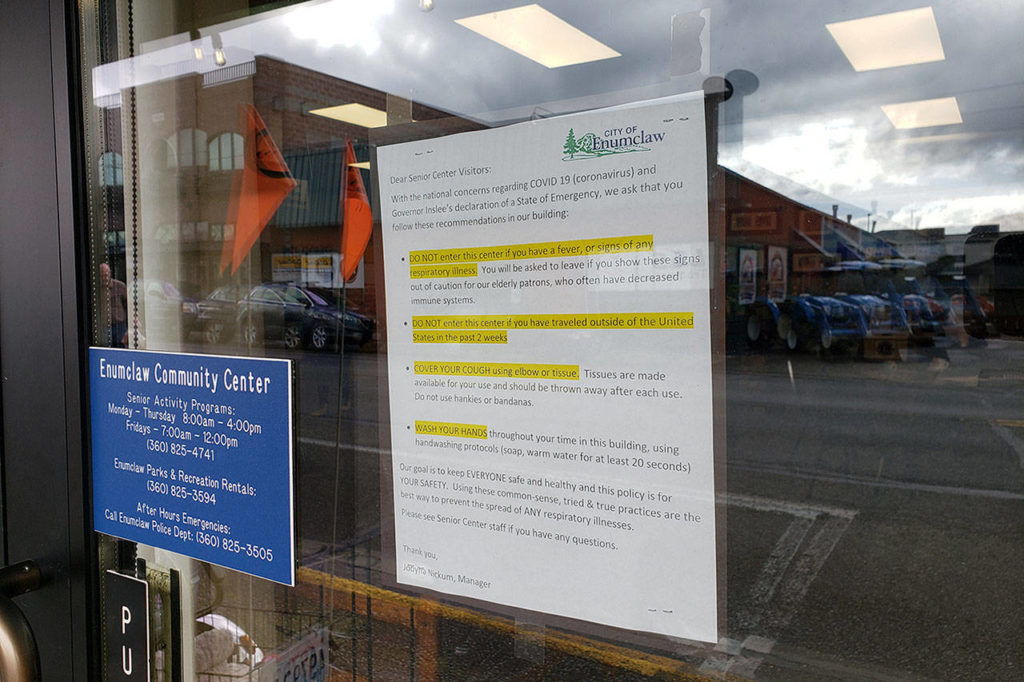
Image caption/credit: As the coronavirus outbreak continues, residents may see more of these kinds of signs in public places or community centres. Ray Miller-Still, The Courier-Herald
Click here for the original blog as posted on the BIT website.
As with all of the blogs posted on our website, the content above does not imply the endorsement of The CI or its Partners and is from the perspective of the writer alone. We do not check facts and strive to retain the writer's voice, as is detailed in our Editorial Policy.
- Log in to post comments