
























Development action with informed and engaged societies

After nearly 28 years, The Communication Initiative (The CI) Global is entering a new chapter. 

Following a period of transition, the global website has been transferred to the University of the Witwatersrand (Wits) in South Africa, where it will be administered by the Social and Behaviour Change Communication Division. Wits' commitment to social change and justice makes it a trusted steward for The CI's legacy and future. 

On the transfer, co-founder Victoria Martin expressed her pleasure to see this work continue under Wits' leadership, knowing that co-founder Warren Feek (1953–2024) would have felt deep pride in The CI Global's Africa-led direction. 

As Wits, we honour the team and partners who sustained The CI for decades and look forward building from that strong base. This includes co-founders Warren Feek (1953-2024) and Victoria Martin as well as La Iniciativa de Comunicación (CILA), which continues independently at lainiciativadecomunicacion.com with links to The CI Global site. We are also eager to forge new partnerships and entertain new ideas as we consider how best to contribute to social and behaviour change in our rapidly evolving environment.

If you are joining the International Social and Behaviour Change Communication (SBCC) Summit in Panama, please join Wits and CILA on Monday, 22 June, to share your thoughts and suggestion for the relaunch of the Communication Initiative. We will be in Pacifica 5 from 12-1:25 for the Refuel, Reflect, and Renew Lunch Series: The Communication Initiative: celebrating a driving force for Communication for Social Change and the way forward. We will reflect on the legacy of Warren Feek and family in creating the Communication Initiative, consider the contributions of CI over the years and then turn our attention towards the future in this dynamic session. 

If you are unable to join us in Panama, we still want to hear from you. Please contribute your thoughts by following this link: https://redcap.link/CommunicationInitiative2026 or reaching out to ci_surveys@commint.com

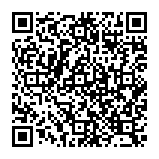
You can also follow the QR Code:

 https://redcap.link/CommunicationInitiative2026

Time to read
1 minute
Read so far

Female Condom Campaign

0 comments
In partnership with the Brazilian Ministry of Health, the international social marketing organisation DKT carried out an educational and social marketing intervention in 2001 in an effort to increase sex workers' information about and access to the female condom. Theatrical street performances, discussions and training, and a cellular telephone "help line" were among the communication elements used to help make participating women aware of the female condom, and to motivate them to use it to protect themselves against HIV and other sexually transmitted infections (STIs).
Communication Strategies

Entertainment strategies were among those developed to educate sex workers about the female condom, and to create a venue for distribution of the device through social marketing techniques. Specifically, theatrical pieces were performed on the streets and in selected sex establishments. After the performances, actors provided the audience with female and male condoms and information on the female condom, which included a list of nearby sales outlets. DKT also used the mass media as a tool for providing information by publishing stories in popular magazines and newspapers.

Interpersonal exchanges were designed to help sex workers learn how to use the female condom and to give them some background information on the importance of doing so. Every 2 weeks, the project team conducted educational activities with small groups of sex workers from each of the 4 study sites. Sessions included informal discussions on STI/HIV prevention and reproductive health. A pelvic model was used to demonstrate how to insert the female condom, and participants were given the opportunity to practice with the model, ask questions, and discuss relevant issues.

Information and communication technologies (ICTs) were tools for increasing access to the product, and for offsetting potential problems with its use. A cell phone number was set up as a "help line" to enable sex workers to talk with a health promoter about usage problems and health concerns, or to find out where to obtain female condoms.

Development Issues

Health, HIV/AIDS, Women.

Key Points

The female condom was registered in Brazil in January of 1997; since then it has been available commercially through DKT. The price for a box of two female condoms established by DKT was approximately R$5.00 to R$7.00, equivalent to US$2.55 to US$3.57 (US$1.28 to US$1.79 each). According to Horizons/Population Council, at the time of the campaign, this was more than 6 times the price of a male condom. In addition to socially marketed female condoms, the Brazilian Ministry of Health has also given female condoms to public health clinics and community organisations to distribute free as part of activities specifically designed to reach vulnerable groups of women.

Partners

Brazilian Ministry of Health, DKT.