
























Development action with informed and engaged societies

After nearly 28 years, The Communication Initiative (The CI) Global is entering a new chapter. 

Following a period of transition, the global website has been transferred to the University of the Witwatersrand (Wits) in South Africa, where it will be administered by the Social and Behaviour Change Communication Division. Wits' commitment to social change and justice makes it a trusted steward for The CI's legacy and future. 

On the transfer, co-founder Victoria Martin expressed her pleasure to see this work continue under Wits' leadership, knowing that co-founder Warren Feek (1953–2024) would have felt deep pride in The CI Global's Africa-led direction. 

As Wits, we honour the team and partners who sustained The CI for decades and look forward building from that strong base. This includes co-founders Warren Feek (1953-2024) and Victoria Martin as well as La Iniciativa de Comunicación (CILA), which continues independently at lainiciativadecomunicacion.com with links to The CI Global site. We are also eager to forge new partnerships and entertain new ideas as we consider how best to contribute to social and behaviour change in our rapidly evolving environment.

If you are joining the International Social and Behaviour Change Communication (SBCC) Summit in Panama, please join Wits and CILA on Monday, 22 June, to share your thoughts and suggestion for the relaunch of the Communication Initiative. We will be in Pacifica 5 from 12-1:25 for the Refuel, Reflect, and Renew Lunch Series: The Communication Initiative: celebrating a driving force for Communication for Social Change and the way forward. We will reflect on the legacy of Warren Feek and family in creating the Communication Initiative, consider the contributions of CI over the years and then turn our attention towards the future in this dynamic session. 

If you are unable to join us in Panama, we still want to hear from you. Please contribute your thoughts by following this link: https://redcap.link/CommunicationInitiative2026 or reaching out to ci_surveys@commint.com

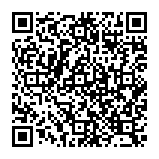
You can also follow the QR Code:

 https://redcap.link/CommunicationInitiative2026

Time to read
1 minute
Read so far

Handbook For AIDS Awareness Activities For Clubs

0 comments
SummaryText
This manual was designed to support Namibia's Youth Health and Development Programme, which is a joint effort of the Government of the Republic of Namibia and the United Nations Children Fund (GRN-UNICEF). This publication aims to sustain graduates from the My Future is My Choice programme and other young people’s peer education activities. It provides step by step guidance to young people wishing to set up and/or participate in AIDS Awareness Clubs, in which young people can use peer methods to educate one another about responsible sexuality.

Topics include:
  • What are “peers” and “peer education”?
  • Where to begin: Getting your club off the ground
  • Following through: Evaluating your goals
  • Finding resources: Fundraising ideas for clubs
  • Spreading the word: Publicising club meetings, activities and events
The manual provides guidance on club activities, including group discussions; writing letters in advice columns; using pictures and photos to generate discussion about sexual behaviour; holding talks, lectures and panel discussions, and debates and quizzes. Booklets provide suggestions on different media and forums which can be used to encourage responsible behaviour: games, condom demonstrations, dramas and role plays, music and dance, poems and stories, fairs, festivals and sporting events, posters and banners, rallies and walks, community service projects, field trips and educational visits, contests and videos.

The manual also includes annexes, providing summaries of subjects needed by youth and applicable to club activities. These include facts on HIV/AIDS and sexually transmitted diseases; sex and reproduction; and alcohol use and abuse. Annexes also include tips on research methods and public speaking.

Publication Date
Number of Pages

101

Source

EDSNet website on November 10 2004.