Development action with informed and engaged societies

After nearly 28 years, The Communication Initiative (The CI) Global is entering a new chapter. 

Following a period of transition, the global website has been transferred to the University of the Witwatersrand (Wits) in South Africa, where it will be administered by the Social and Behaviour Change Communication Division. Wits' commitment to social change and justice makes it a trusted steward for The CI's legacy and future. 

On the transfer, co-founder Victoria Martin expressed her pleasure to see this work continue under Wits' leadership, knowing that co-founder Warren Feek (1953–2024) would have felt deep pride in The CI Global's Africa-led direction. 

As Wits, we honour the team and partners who sustained The CI for decades and look forward building from that strong base. This includes co-founders Warren Feek (1953-2024) and Victoria Martin as well as La Iniciativa de Comunicación (CILA), which continues independently at lainiciativadecomunicacion.com with links to The CI Global site. We are also eager to forge new partnerships and entertain new ideas as we consider how best to contribute to social and behaviour change in our rapidly evolving environment.

If you are joining the International Social and Behaviour Change Communication (SBCC) Summit in Panama, please join Wits and CILA on Monday, 22 June, to share your thoughts and suggestion for the relaunch of the Communication Initiative. We will be in Pacifica 5 from 12-1:25 for the Refuel, Reflect, and Renew Lunch Series: The Communication Initiative: celebrating a driving force for Communication for Social Change and the way forward. We will reflect on the legacy of Warren Feek and family in creating the Communication Initiative, consider the contributions of CI over the years and then turn our attention towards the future in this dynamic session. 

If you are unable to join us in Panama, we still want to hear from you. Please contribute your thoughts by following this link: https://redcap.link/CommunicationInitiative2026 or reaching out to ci_surveys@commint.com

You can also follow the QR Code:

 https://redcap.link/CommunicationInitiative2026

Time to read
1 minute
Read so far

Love Test Campaign

0 comments
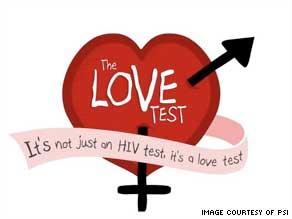
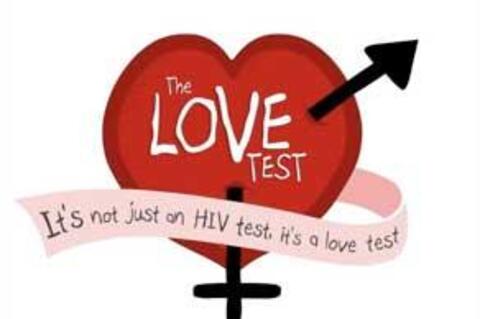
The Love Test campaign, launched in 2009 by Population Services International in Swaziland, is designed to increase HIV testing, particularly among couples, by framing HIV testing as an act of love. The programme combines public awareness with clinical testing and counselling, and involves a media campaign, roadshows, and provision of testing and counselling facilities.
Communication Strategies

According to PSI, the name 'love test' was chosen because it speaks of mutual devotion and respect. HIV testing campaigns have often relied on messages that induce fear, however the PSI Swaziland campaign instead suggests that testing is an act of love. The campaign poster reflects these ideals: it presents a drawing of a man kneeling before a woman, like he is proposing marriage.

Campaign messages are being distributed through radio talkshows, and print advertisements, as well as through live performances.

Individuals or couples coming for a love test are offered a 30-minute counselling session regardless of their test result. If results show one or both partners are HIV positive, PSI offers longer-term free counselling.

For more information, click here to watch a video about the Love Test Campaign on YouTube.

Development Issues

HIV/AIDS

Key Points

According to the PSI, Swaziland has an HIV prevalence rate of 26%, and only one in four people know their HIV status. Prior to the campaign, only two percent of people tested did so as couples. Since the campaign began in 2009, the number of couples testing has more than tripled. Neighbouring countries are also showing interest in adapting the campaign.

Research has shown that HIV couple testing is one of the most efficient prevention methods, because if the couple is discordant, there is then a chance to avoid the transmission to the other partner by counselling on prevention methods. Also when both partners are educated about HIV at the same time, they tend to work together on changing their behaviour.

Partners

Population Services International (PSI) Swaziland, Swaziland Ministry of Health, National Emergency Response Committee on HIV/AIDS (NERCHA), UNICEF, and UNAIDS.

Sources
Teaser Image
http://www.comminit.com/files/safe_image.jpg