










































Maternal Vaccine Knowledge in Low- and Middle-Income Countries - and Why It Matters
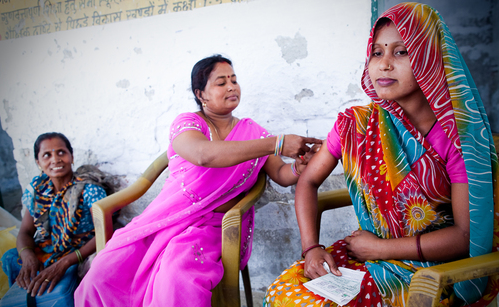
Boston University School of Public Health (Williams, Mitrovich, Gill); Right to Care Zambia (Mwananyanda)
"Maternal knowledge, attitudes, and beliefs around vaccines are key determinants to vaccine acceptance or vaccine hesitancy, and yet this issue is often understudied in low and middle-income country settings."
Considering that maternal knowledge of vaccines, coupled with attitudes and beliefs, contribute to or allay vaccine hesitancy, this commentary makes the point that maternal knowledge, attitudes, and beliefs should be considered not only by policy implementers and researchers alike, but prioritised as a key potential barrier when considering current and future maternal immunisations.
While research on this topic in low- and middle-income countries (LMICs) is limited, the commentary does review some of the available evidence. For instance, a study in Zambia revealed that mothers had a limited knowledge of vaccines but expressed positive views about vaccinating themselves and their children. Mitigating beliefs and norms such as paternal involvement and community rumours influenced women's attitudes toward vaccination. Further research in Zambia explored vaccine attitudes and hesitancy and found that lack of knowledge, along with other factors such as traditional religious practices, created misgivings toward western medicine amongst some participants. Attitudes have also been found to play a significant factor; in one 3-country study of maternal vaccine acceptance, maternal attitudes toward the government and trust in the healthcare system was shown to influence vaccine uptake. "The parallels between a mother choosing to vaccinate her child versus choosing to vaccinate her child in utero highlight the importance of understanding this as a factor for uptake."
The authors point out that mothers' knowledge of maternal vaccines is dependent to a large extent on the expertise of healthcare providers, who have been shown to influence uptake. In one study, provider hesitancy to recommend a maternal vaccine negatively impacted women's decision to get vaccinated. "Healthcare provider hesitancy to recommend vaccines can have the unfortunate consequence of influencing mothers not to vaccinate their children, and should be considered a determinant of maternal vaccine attitudes."
As outlined here, in order to increase maternal vaccination rates at a global scale, vaccine uptake strategies should incorporate context-specific maternal vaccine attitudes, knowledge, and beliefs about maternal vaccines to address any potential barriers to acceptance. This involves:
- "Research: Public health researchers should conduct more research about maternal vaccine knowledge, attitudes, and beliefs of maternal vaccines across different contexts, particularly in LMICs, to better understand the scope of the issue and its impact on global immunization coverage rates. The role of religion and partners in maternal decision-making processes should also be explored as potential facilitators and barriers to vaccine uptake. Research stratified across facility type or setting (rural vs. urban) should also take place to see if there is variation in acceptance and hesitancy across different settings."
- "Policy development: Firstly, vaccine policy development at the global and national levels should include education of healthcare professionals so that they are adequately able to disseminate the benefits of maternal vaccinations....A consistent message across an entire healthcare workforce will fill in maternal knowledge gaps which will in turn reduce vaccine hesitancy. Secondly, SAGE [Strategic Advisory Group of Experts on Immunization], which already notes knowledge, attitudes, and beliefs as drivers of vaccine hesitancy, should prioritize acceptability in their review for a new vaccine introduction for maternal vaccines..."
- "Program implementation: In addition to considering structural barriers such as cost, availability, and accessibility of vaccines, programs designed to increase maternal immunization should specifically target maternal vaccine knowledge, attitudes and beliefs to amplify vaccine acceptance and ensure successful dissemination and uptake....A strong communication strategy should also include culturally and contextually appropriate messaging that addresses the values, beliefs and norms of the groups and subgroups of populations, to address the attitudes and beliefs that could influence a mother’s intention to vaccinate."
In conclusion, in light of the fact that maternal vaccines have the potential to reduce the global burden of infant morbidity and mortality, the authors hold that, across both policy and programmatic levels, addressing barriers to vaccine uptake, such as maternal knowledge, attitudes, and beliefs, is paramount to effective implementation and ultimate disease reduction.
Human Vaccines & Immunotherapeutics https://doi.org/10.1080/21645515.2018.1526589. Image credit: Global Alliance to Prevent Prematurity and Stillbirth
- Log in to post comments