










































The Mediational Role of Trust in the Healthcare System in the Association between Generalized Trust and Willingness to Get COVID-19 Vaccination in Iran
The Hong Kong Polytechnic University (Ahorsu); National Cheng Kung University (Lin); Qazvin University of Medical Sciences (Yahaghai, Alimoradi, Pakpour); Jönköping University (Broström, Pakpour); Nottingham Trent University (Griffiths)
"...transparent engagement and education dissemination from health experts to individuals may help to resolve their issues concerning COVID-19, developing or boosting their trust in COVID-19 vaccines which may further improve their willingness to get COVID-19 vaccination."
The COVID-19 vaccination drive has been met with low uptake in some countries. Trust is an important contributing factor to public compliance with preventative measures, including vaccination, and perceived risks during a pandemic. COVID-19 has seen conflicting messages, concerns about political interference in public health recommendations, and other factors that threaten trust in the healthcare system. This study used a mediation model to investigate how trust is associated with an individual's willingness to get COVID-19 vaccination among Iranians.
For the study, 10,843 Iranian adults in Qazvin province were interviewed in their homes between February 19 and April 9 2021. Measures included:
- The Generalized Trust Scale (GTS), a six-item self-report scale that assesses an individual's general level of trust of others.
- The Trust in Healthcare System Scale (THSS), a three-item self-report scale that assesses trust in healthcare systems.
- Willingness to get COVID-19 vaccination (WCV), a single-item question: "Are you going to get COVID-19 vaccination?"
The findings showed that: generalised trust was positively associated with trust in the healthcare system; trust in the healthcare system was positively associated with willingness to get COVID-19 vaccination; and generalised trust was positively associated with willingness to get COVID-19 vaccination. Trust in the healthcare system mediated the association between generalised trust and willingness to get COVID-19 vaccination.
With regard to demographic factors, age (being older), sex (being male), education (having primary education), and relationship status (being married) were positively associated with willingness to get a COVID-19 vaccine. These findings identify the demographic characteristics that health experts may wish to target during education on the need for COVID-19 vaccination.
According to the researchers, government bodies and health officials may use these findings in their efforts to encourage individuals to get a COVID-19 vaccine. For those with lower trust levels (in general and in the healthcare system), the focus may be to re-build and/or regain individuals' trust through carefully planned transparent communication, information dissemination, and ethical education to help increase the uptake of COVID-19 vaccination. Trust may be fostered by listening to individuals' concerns and reassuring them of healthcare workers' professional and selfless work during the pandemic and by providing them with accurate information.
The study suggests that, in addition to such direct methods, there are indirect ways of appealing to individuals to take the COVID-19 vaccine. When individuals do not trust the healthcare system, they may ignore health experts' recommendations. Thus, recommendations from non-health sectors (e.g., government) on the need to take COVID-19 vaccination may be accepted directly with or without corroboration from health professionals (i.e., the healthcare system). That is, individuals may be willing to take the COVID-19 vaccine if indirectly recommended by other significant sources (e.g., government communicators).
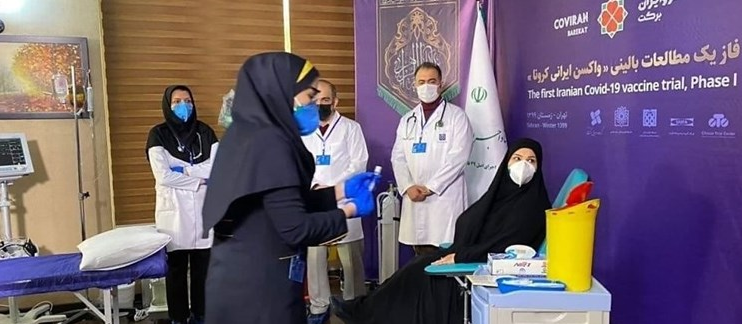
Human Vaccines & Immunotherapeutics https://doi.org/10.1080/21645515.2021.1993689. Image credit: Fars News Agency via Wikimedia (licensed under the Creative Commons Attribution 4.0 International license
- Log in to post comments