










































Medical Populism and Immunisation Programmes: Illustrative Examples and Consequences for Public Health
University of the Philippines Diliman (Lasco); Ateneo de Manila University (Lasco); London School of Hygiene and Tropical Medicine (Larson); University of Washington (Larson)
"...across geographies and political contexts, vaccines are prone to being used as populist tropes..."
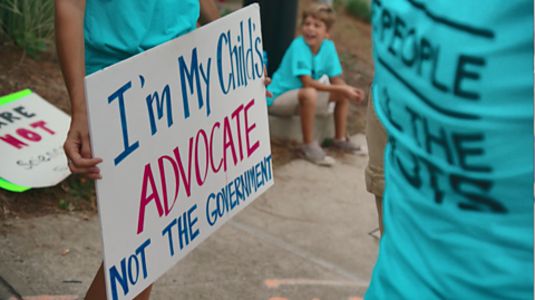
While vaccine hesitancy is linked to broader issues of trust, it can in some cases also be traced to particular episodes of medical crisis (vaccine scares) that have involved the participation of political actors. This paper uses the notion of "medical populism" - involving (i) an antagonistic relationship between "the establishment" and "the people", (ii) a performance (e.g., a viral story) of a public health crisis, and (iii) a medical knowledge claim - to reflect on ways in which vaccination programmes have been politicised in ways that can contribute to anti-vaccine sentiments. The paper presents 4 cases that illustrate how populist responses prevailed, at least partly or temporarily, over technocratic responses, leading to adverse public health outcomes.
The 4 examples include:
- The Nigerian boycott of the polio vaccine, Kano State (2003-2004) - In claiming that the oral polio vaccine (OPV) causes infertility and HIV, political and religious leaders tapped into long-standing mistrust of "Western medicine", a vaccine campaign led by global (rather than local) institutions, and resentment following a northern, Muslim presidential candidate losing to a candidate from the wealthier, Christian-dominated, south. The "performance of crisis" in this case was conspiracy narratives, as voiced, for example, by physician Datti Ahmed, leader of the Supreme Council for Sharia in Nigeria (SCSN). Ultimately, the crisis was resolved when the Kano political leaders agreed to resume vaccination on the condition that a company from Indonesia, a Muslim-majority country, would supply the vaccine.
- The anti-vaccination movement in Italy (2015) - In the context of a population that was already sceptical about vaccines (partly traceable to the 1998 publication of a fraudulent, now-retracted, research paper in The Lancet linking the measles, mumps, and rubella (MMR) vaccine to autism), far-right candidates in the 2015 Italy elections repeated long-disproven claims about vaccine dangers and filed a bill outlawing vaccinations altogether - further sensationalising the issue in Italian media and popular discourse. However, months after the new government was inaugurated in 2018, a measles crisis erupted in the country in even bigger numbers than the previous year, which had already concerned public officials. In a dramatic reversal, the government implemented even stricter measures than those in place before the elections.
- Vaccine scare in Ukraine (2008) - The death of a teenager a day after receiving the measles-rubella (MR) vaccine, although later assessed as not caused by the vaccine, led to public protests and negative coverage by print and television media, some of whom spewed conspiracy theories about the vaccine. The vaccine scare was rooted in long-running distrust of public health and the government, but, as outlined in the article, individual political actors participated in and exacerbated the crisis. The result was a breakdown of public trust and anxieties about vaccine safety that persisted for a decade.
- The dengue vaccine scandal in the Philippines (2017) - The public inauguration of Dengvaxia, a new vaccine to protect against dengue infection took place at the height of the campaign period for the national elections. The Philippine president, Benigno Aquino, underscored the public's experience of dengue and highlighted free vaccines, including to 800,000 schoolchildren, as a political accomplishment. One-and-a-half years later, under a different political leadership, the vaccine manufacturer revealed that Dengvaxia carried greater-than-previously-reported risk. This announcement prompted a political drama, with attempts to implicate the previous government in children's deaths. Although there are signs that immunisation rates are recovering, the long-term consequences of the dengue vaccine scandal in the Philippines remain unclear.
The paper concludes by outlining some implications of the analysis for public health:
- Social scientists have a role to play in identifying the pre-existing social, cultural, religious, economic, and political contexts and to probe the ways in which the resonance of medical populism varies according to positionalities of class, age, and gender, and ideology.
- Public health bodies need to monitor relevant social media platforms to detect early signals of misinformation and concerns and to intervene with credible information and explanations before anxieties erupt into crises.
- Individuals who are trusted by doubting and dissenting groups should be identified and engaged, as they may be well-placed to elicit concerns from the public and facilitate meaningful dialogue among various stakeholders.
- Countries could create mechanisms to hold public officials accountable for spreading health-related misinformation.
- Public health bodies need to reflect and act on their own failures and shortcomings and resist the temptation to create false expectations about safety and efficacy of vaccines.
In conclusion, "given what is at stake in vaccine confidence and immunisation programmes, health officials and institutions - as well as NGOs [non-governmental organisations] and international agencies - should show utmost transparency, prudence, and accountability if they are to address the populist refrain of a corrupt establishment and if they are to restore the all-important element of trust...that will doubtless continue to play a decisive role in the future of immunisation."
Global Public Health, 15:3,334-44, DOI: 10.1080/17441692.2019.1680724. Image credit: BBC
- Log in to post comments