
























Development action with informed and engaged societies

After nearly 28 years, The Communication Initiative (The CI) Global is entering a new chapter. 

Following a period of transition, the global website has been transferred to the University of the Witwatersrand (Wits) in South Africa, where it will be administered by the Social and Behaviour Change Communication Division. Wits' commitment to social change and justice makes it a trusted steward for The CI's legacy and future. 

On the transfer, co-founder Victoria Martin expressed her pleasure to see this work continue under Wits' leadership, knowing that co-founder Warren Feek (1953–2024) would have felt deep pride in The CI Global's Africa-led direction. 

As Wits, we honour the team and partners who sustained The CI for decades and look forward building from that strong base. This includes co-founders Warren Feek (1953-2024) and Victoria Martin as well as La Iniciativa de Comunicación (CILA), which continues independently at lainiciativadecomunicacion.com with links to The CI Global site. We are also eager to forge new partnerships and entertain new ideas as we consider how best to contribute to social and behaviour change in our rapidly evolving environment.

If you are joining the International Social and Behaviour Change Communication (SBCC) Summit in Panama, please join Wits and CILA on Monday, 22 June, to share your thoughts and suggestion for the relaunch of the Communication Initiative. We will be in Pacifica 5 from 12-1:25 for the Refuel, Reflect, and Renew Lunch Series: The Communication Initiative: celebrating a driving force for Communication for Social Change and the way forward. We will reflect on the legacy of Warren Feek and family in creating the Communication Initiative, consider the contributions of CI over the years and then turn our attention towards the future in this dynamic session. 

If you are unable to join us in Panama, we still want to hear from you. Please contribute your thoughts by following this link: https://redcap.link/CommunicationInitiative2026 or reaching out to ci_surveys@commint.com

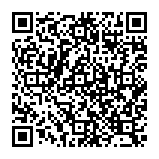
You can also follow the QR Code:

 https://redcap.link/CommunicationInitiative2026

Time to read
less than
1 minute
Read so far

Moral challenges in the information society

0 comments
Summary

- excerpt

"There is in current public debate, policy and practice a strong emphasis on the importance of information and information technology. The forthcoming United Nations World Summit on the Information Society (Geneva, 2003) stresses the prospect of future societies as ‘information societies'.

It is disconcerting that most of the preparatory documents for the United Nations World Summit on the Information Society (2003, Geneva) 'communication' has practically disappeared. There is a real danger that the Summit will make the same mistake as the United Nations World Conference on Human Rights (Vienna, 1993), which in its Final Declaration did not refer to communication, but only mentioned information and news. Yet, the real core question is how to shape 'communication societies'. In fact for the resolution of the world's most pressing problems we do not need more information processing but the capacity to communicate. Ironically as our capacity to process and distribute information and knowledge expands and improves, our capacity to communicate and to converse diminishes.

In complex modern societies we need urgently to communicate with each other. For the resolution of our most urgent social problems the capacity to communicate is much more critical than the capacity to inform. It is a very disturbing prospect indeed if we manage to develop information or even knowledge societies in which people are incapable of conversing with each other...."

Editor's note: This document is not currently online (2014). Please consult the WACC website.

Source

Media Development, Issue 4, 2002 based on The Campaign for Communication Rights in the Information Society, CRIS - from WACC.