










































Oxfam Inequality Guide
"We [at Oxfam] have always put gender inequality front and centre in our programme work, making a firm commitment to build up the voices of the most marginalised, and challenging power in all its forms. Yet what has changed in recent years is the explosion in economic inequality..."
This guide is about inequality in all its forms. It contains practical advice on how to find and use reliable data on inequality in advocacy and campaigning.
In response to what Oxfam describes as a global inequality crisis and the links between inequality and poverty, Oxfam launched Even It Up, a worldwide campaign that aims to draw attention to the starkly growing trends of wealth concentration and calls for action to close the gap between the rich and the rest. In 2014, Oxfam undertook a global online conversation between programme staff and partners, which encouraged reflection on the drivers of inequality and how Oxfam should tackle them. The guide emerged from these and other Oxfam activities. To that end, Section 1 briefly explains what inequality is and why it matters to Oxfam, providing basic background on the topic. Section 2 provides an overview of how different inequalities are measured.
Section 3, the most practical section of the guide, identifies drivers of inequality, including: governance and political and participation inequalities; economic and social inequalities such as taxation; provision of essential services; access to jobs and fair wages; and access to land and capital. Gender inequality is also explored here. ("Deeply embedded attitudes about the unequal treatment of women, ethnic minority or low-caste groups and poor people can normalise the situation, leading to greater inequality. The drivers of gender inequality are also related to both deliberate policy choices and deep rooted beliefs and social norms.") As is noted here, the interwoven and overlapping nature of the drivers of inequality compound and complicate inequalities that an individual may face. Section 3: (i) explains why a certain issue is relevant for your work, (ii) provides questions to explore with your team and partners, and (iii) gives options for action for the following areas:
- 3.1 Tackling power and political inequalities
- 3.2 Strengthening transparency, accountability, citizen participation and space for civil society
- Case 1 - Oxfam's Within and Without the State (WWS) programme - implemented in Afghanistan, Israel and the Occupied Palestinian Territories, South Sudan, and the Democratic Republic of Congo
- Case 2 - Forest communities in Chhattisgarh state
- Case 3 - Craft advocating for fair taxation
- 3.3 Raising public resources: Aid, debt and fair taxation
- 3.4 Raising public resources: Revenues from extractives industries
- 3.5 Spending public resources on progressive public services
- Case 4 - Advocating around public-private partnerships in health in Lesotho
- 3.6 Jobs and wages
- Case 5 - Advocating for a living wage in the tea industry in Malawi
- 3.7 Access to productive resources: Land and capital
- 3.8 Tackling gender inequalities
- Case 6 - Strengthening women workers' rights in the strawberry sector in Morocco
- Case 7 - The Raising her Voice programme
Support materials are offered in Section 4, including strategies for conducting a workshop on inequality.
The guide has been used by Oxfam teams in several countries to help integrate inequality into country programme strategies.
Publishers
English, French, Spanish
74 (English); 80 (Spanish); 84 (French)
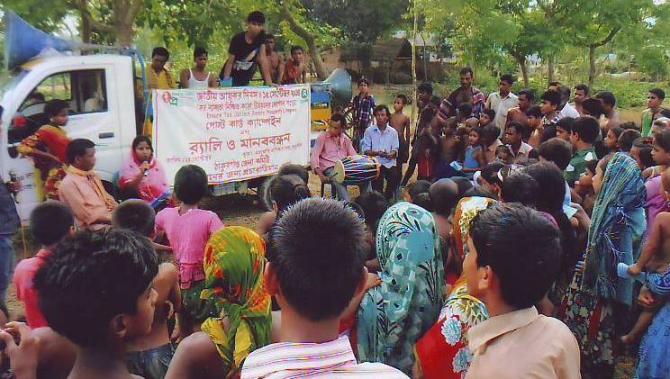
Email from Oxfam Policy & Practice to The Communication Initiative on April 28 2017; and Oxfam website, May 1 2017. Image caption/credit: "Street drama on the eve of national income tax day 15th September 2014." Oxfam
- Log in to post comments