










































The role of narrative change in influencing policy
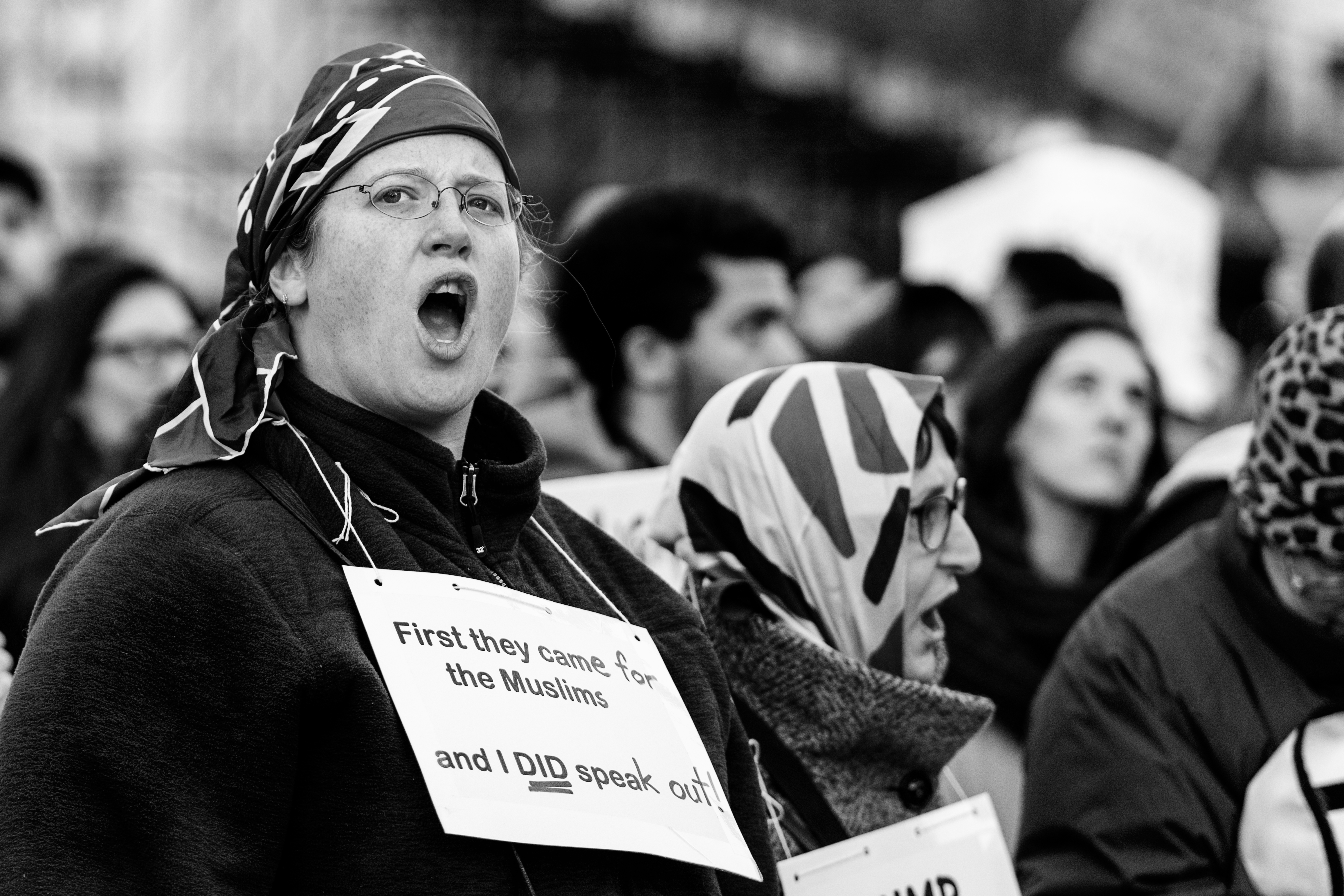
Author: Brett Davidson, July 31 2018 - 'Narrative change' seems to be a catch-phrase at present. A number of foundations - including the Open Society Foundations - have engaged in narrative change work and a number of donors have funded narrative change projects. Hardly a conversation or meeting happens without the term 'narrative change' being used. However, when a term becomes a trend, there is the danger that it starts to become shorthand for thinking - a term without precision - where everybody thinks they know what it means, but nobody really does for sure. Therefore, we need to be able to define the concept of 'narrative change' more precisely, to understand what it is and what it is not, why it is important, and how we go about it.
Firstly, what do we mean when we talk about narrative? A narrative consists of a collection or body of stories of characters, joined in some common problem as fixers (heroes), causes (villains) or the harmed (victims) in a temporal trajectory (plot) leading towards resolution within a particular setting or context (Jones & McBeth 2010; Frank 2010). These stories together or collectively convey a common worldview or meaning - an interpretation of the world and how it works (Frank 2010; Fisher 1984). This worldview embeds within it particular power relationships. Narrative change work rests on the premise that reality is socially constructed through narrative, and that in order to bring about change in the world, we need to pay attention to the ways in which this takes place. Importantly, the narrative representation of reality cannot be evaluated or challenged empirically, but rather according to whether it is coherent and 'rings true' (Bruner 1991 and Fisher 1984).
Narratives play an important role at three levels.
Individual Decision-Making
There is a growing body of research in fields such as psychology, cognitive science, political science and sociology showing that people do not make decisions through a purely rational process, and that emotion and a range of cognitive biases play a hugely important role (See for example Kahneman 2011, Haidt 2012, and Lakoff 2004). This research and its implications are extensively addressed in the 2015 World Development Report [PDF], which distils this research into three key insights about human decision-making: that humans think automatically, we think socially, and we think with mental models (common perspectives and mental shortcuts - such as stereotypes - that help us make sense of the world around us). Narratives are central to the mental models and social beliefs and practices that guide individuals' decision-making and behavior, and thus narrative is an important tool for bringing about change. Metaphor plays a key role here, as the likes of George Lakoff have pointed out.
The Policy Process
Because of their central role in individual decision-making, narratives also play an important role in policy processes. There are many well-established theories of policy change that recognize that narrative strategies are important and ever-present aspects of any policy advocacy process (examples are the Advocacy Coalition Framework [PDF] or the Narrative Policy Framework – see Sabatier et al, 2015). Along with struggles over power, money, law and so forth, there is ongoing struggle over 'meaning', or what has been called 'the politics of signification' (Benford and Snow 2000). However, this often does not receive as much conscious attention as it should – particularly in the human rights field. An example is the continued use of the human rights frame in an attempt to combat discrimination and violence against LGBTQ [lesbian, gay, bisexual, transgender, and queer] people in many countries, even though it is often counter-productive. This contrasts with the successful decision by same-sex marriage advocates in the US [United States] to abandon rights-based arguments in favour of talking about love: 'love is love'. We can see recognition of this lack of effective engagement with the politics of signification in the fact that the International Human Rights Funders Group devoted an entire day during its New York conference in July 2015 to an examination of how we might 'detoxify' the human rights 'brand'. In the conference materials, meeting organizers noted, "Human rights advocacy has lagged behind other movements for social change in developing and deploying new communications strategies designed not simply to influence how people think about issues, but critically how they feel about them."
Thus, in addition to traditional approaches to advancing and supporting human rights, such as monitoring, legal empowerment, strategic litigation, grassroots mobilization and elite advocacy, we need to pay much more explicit attention to narrative strategies in the policy sphere.
In addition to being a part of any advocacy process, narrative strategies play a particularly important role with respect to a particular type of policy change, in which there is large-scale change involving a fundamental redefinition or reframing of an issue. This is exemplified in the Punctuated Equilibrium Theory (True, et al 2006) of policy change. The theory is that political processes are usually stable, with incremental change taking place - but occasionally there is large-scale change or upheaval. According to True, et al (2006), for such major change to take place, three conditions must exist: firstly, an issue must become more salient - it has to rise from existing within a particular sector or sub-system, to the very centre of the political agenda (heightened attention by the public, media and political elites, caused by factors such as major changes in public opinion, striking and compelling new information, or major mobilization). Secondly, an issue becomes defined differently - there is significant change in the supporting policy image (understood as a powerful idea or image, involving a mix of empirical information and emotive appeals, which is linked to core values and is the manner in which a policy is characterized or understood by the public). Thirdly, new actors begin to enter the arena: "As the issue is redefined, or as new dimensions of the debate become more salient, new actors feel qualified to exert their authority where previously they stayed away." (p8) This also leads to further mobilization and increased public attention - and subsequent major policy revision.
Cultural narratives
While we might win occasional policy battles, these wins are constantly under attack and in danger of being reversed. We win some battles, but we are losing the war. One of the reasons for this is that we are often working against powerful narratives that are embedded in the overarching culture. Thus we also need to look beyond the policy sphere, as narratives are embedded in the larger culture and in institutions. They shape the way in which problems and priorities are identified; they limit the types of solutions that are viewed as acceptable and possible and determine how certain types of people are categorized and treated.
Culture interacts with policy in complex ways. At times, cultural narratives may change long before policy catches up. An example is same-sex marriage in the USA - where policy changes in recent years have recognized and been made possible by a broad cultural shift over the past 30 years. On the other hand, policy changes may be ineffective or precarious unless culture shift also takes place. An example is abortion in the US, where Roe vs Wade shocked conservatives and mobilized them into a long-term battle to systematically undo the Supreme Court's decision (Baker 2015).
Narratives embody fundamental assumptions by which we interpret and understand the world. Because they constitute the culture in which we live, we are often unaware of these assumptions and the narratives through which they are conveyed.
Therefore, we need to find ways to reveal, challenge and change them. Reinsborough and Canning (2010) refer to this as action at the 'point of assumption' (as opposed to action at other points of intervention such as the 'point of decision' - such as a legislature - or point of consumption - such as a consumer boycott).
So how do we undertake narrative change? Within the Open Society Public Health Program, we have adopted three types of approach:
Cultural strategies, including creative activism and tapping into popular culture
Creative activism combines the tools and skills of artists and the emotional impact of art with the tools and skills and effect-driven nature of activism. It makes use of "symbols and signs, images and expressions" in order to have an impact in today's "media-saturated, spectacle-savvy world."
Cultural and artistic activism can play a role in policy change, particularly for grassroots groups interested in influencing policy narratives. It can also play a role in making visible and challenging narratives at the level of culture (and popular culture in particular).
The popular culture sphere includes television, film, social media, comedy and music, among other things. It is a crucial arena for culture-level change, although it can require large budgets. For more detail on the use of popular culture for social justice, see the excellent PopJustice series recently released with support from Unbound Philanthropy and The Nathan Cummings Foundation.
Personal narrative: Listening and storytelling
This approach seeks to facilitate storytelling as a way of opening up political space, destabilizing entrenched power relationships, and giving voice to voices that are usually drowned out, suppressed or simply ignored. By enabling stories to proliferate, we aim to undermine assumptions and preconceptions and 'change the narrative' about stigmatized or marginalized groups.
Personal storytelling of this sort can be very effective in influencing individual change and transforming relationships. Personal stories can also be used to open up the policy space, particularly when positions are polarized.
Metaphor and Cognitive linguistics
This approach is influenced largely by the work of George Lakoff and other cognitive scientists who take a similar perspective. Lakoff (2004) is known for his thesis that our socio-political lives are greatly influenced by the metaphors we use to explain complex phenomena, that these metaphors operate at an unconscious level and that unless politicians and activists pay attention to this and are very careful about the metaphors they use, their influence will be very limited.
This approach entails steps such as:
- analysis of existing messaging and language used by the various parties in a particular narrative contest;
- research into the target audience - to better understand the narratives active in their understanding of the world and of the particular issue at hand;
- development and testing of new messages through use of focus group discussions and dial testing.
This approach is likely to be most useful at the level of policy contestation.
The long-term nature of the work
This is work that has to be viewed over the long-term. It is aimed at shaping how people think about and understand particular issues or groups of people over time. It is work that takes place in contested terrain. It is work that is new to us and to many operating within the human rights field, and we are learning as we go. We will, no doubt, face many setbacks and dead ends. But it is work that, if successful, has potentially huge impact in transforming the social and cultural context within which much of our other advocacy work takes place.
Brett Davidson is director of Media and Narratives at the Open Society Public Health Program. Image credit: Wikimedia Commons
References:
Baker, Aspen (2015) Pro-Voice: How to keep listening when the world wants a fight. Berrett-Koehler. Oakland, CA.
Benford, Robert D. and Snow, David A. (2000) Framing Processes and Social Movements: An Overview and Assessment. Annual Review of Sociology, Vol. 26 (2000), pp. 611-639
Benford, Robert D. and Snow, David A. (2000a) Clarifying the Relationship between Framing and Ideology, Mobilization: An International Journal 2000, 5(1): 55-60.
Bruner, Jerome (1991) The Narrative Construction of Reality. Critical Inquiry Volume 18 (1) 1-22.
Frank, Arthur W (2010) Letting Stories Breathe. University of Chicago Press, Chicago.
Fisher, Walter R (1984) Narration as a Human Communication Paradigm: The case of public moral argument. Communication Monographs, Volume 51, March 1984. P1-22.
Jones, Michael D. and McBeth, Mark K (2010) A Narrative Policy Framework: Clear Enough to Be Wrong? The Policy Studies Journal, Vol. 38, No. 2
Haidt, Jonathan, (2012) The Righteous Mind. Pantheon, New York
Kahneman, Daniel (2011) Thinking Fast and Slow. Farrar, Straus and Giroux
Lakoff, George (2004) Don't Think of an Elephant. Chelsea Green, White River Junction.
McBeth, Mark K. Jones, Michael D, and Shanahan, Elizabeth A (2015) The Narrative Policy Framework. Chapter in Sabatier, Paul A and Weible, Christopher M, Theories of the Policy Process
Reinsborough, Patrick & Canning, Doyle (2010) Re:Imagining Change. PM Press, Oakland
Sabatier, Paul A and Weible, Christopher M, (2015) Theories of the Policy Process. True, James L, Jones, Bryan D and Baumgartner, Frank R (2006) Punctuated-Equilibrium Theory: Explaining Stability and Change in Public Policymaking. IN Paul Sabatier, Editor, Theories of the Policy Process, 2nd Edition
World Bank (2015) World Development Report 2015: Mind, Society and Behavior. World Bank, Washington, DC
As with all of the blogs posted on our website, the content above does not imply the endorsement of The CI or its Partners and is from the perspective of the writer alone. We do not check facts and strive to retain the writer's voice, as is detailed in our Editorial Policy.
- Log in to post comments