

























Development action with informed and engaged societies

After nearly 28 years, The Communication Initiative (The CI) Global is entering a new chapter. 

Following a period of transition, the global website has been transferred to the University of the Witwatersrand (Wits) in South Africa, where it will be administered by the Social and Behaviour Change Communication Division. Wits' commitment to social change and justice makes it a trusted steward for The CI's legacy and future. 

On the transfer, co-founder Victoria Martin expressed her pleasure to see this work continue under Wits' leadership, knowing that co-founder Warren Feek (1953–2024) would have felt deep pride in The CI Global's Africa-led direction. 

As Wits, we honour the team and partners who sustained The CI for decades and look forward building from that strong base. This includes co-founders Warren Feek (1953-2024) and Victoria Martin as well as La Iniciativa de Comunicación (CILA), which continues independently at lainiciativadecomunicacion.com with links to The CI Global site. We are also eager to forge new partnerships and entertain new ideas as we consider how best to contribute to social and behaviour change in our rapidly evolving environment.

If you are joining the International Social and Behaviour Change Communication (SBCC) Summit in Panama, please join Wits and CILA on Monday, 22 June, to share your thoughts and suggestion for the relaunch of the Communication Initiative. We will be in Pacifica 5 from 12-1:25 for the Refuel, Reflect, and Renew Lunch Series: The Communication Initiative: celebrating a driving force for Communication for Social Change and the way forward. We will reflect on the legacy of Warren Feek and family in creating the Communication Initiative, consider the contributions of CI over the years and then turn our attention towards the future in this dynamic session. 

If you are unable to join us in Panama, we still want to hear from you. Please contribute your thoughts by following this link: https://redcap.link/CommunicationInitiative2026 or reaching out to ci_surveys@commint.com

You can also follow the QR Code:

 https://redcap.link/CommunicationInitiative2026

Time to read
1 minute
Read so far

Tikwere! Interactive Radio Instruction
0 comments
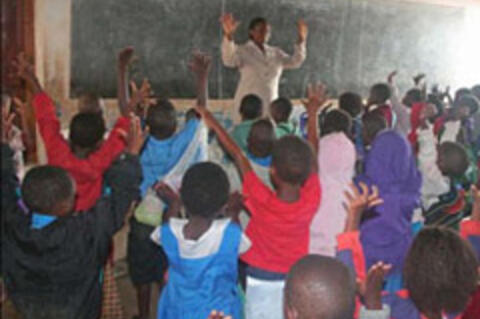
The Tikwere! programme, implemented by the International Development Division (IDD) of the Education Development Centre (EDC) and supported by the United States Agency for International development (USAID) and other partners, is an interactive radio instruction (IRI) project that is part of an effort to improve the teaching and learning conditions in Malawian primary schools. The programme, which started broadcasting in 2008, has two main objectives: to improve the learning outcomes in basic subjects in early primary school grades 1-3, and to support and reinforce the introduction of the new primary curriculum and assessment reform (PCAR) in Malawi.
Communication Strategies

Tikwere (meaning "let’s climb” in Chichewa) is broadcast nationally via Malawi Broadcasting Corporation radio stations and consists of two 30-minute programmes daily. In 2008, the programme was broadcast into Grade 1 classrooms, followed by Grade 2 broadcasts in 2009. Broadcasts for Grade 3 are planned for 2010. The programme is based on a new curriculum and is designed to reinforce instructional strategies that emphasise student-centred approaches, active learning, and equitable classroom management for grade 1-3 nationwide. Tikwere seeks to improve both the quality and equity of education, especially in relation to the achievements of girls and the reach into rural communities.

The IRI content covers all basic skills in the curriculum (including literacy, numeracy, English, and life skills). Schools use wind-up radios to tune into the lessons, which are written and produced by a team of Malawian and Zambian scriptwriters. Broadcasts include stories, activities, and exercises that require interaction from both pupils and teachers. Intermittent pauses are included to engage primary school pupils in the learning process, and the instructional design aims to ensure that the subject matter is organised and well taught.

The radio programmes are recorded in the studios of the Malawi College of Distance Education. All Ministry of Education officials, teachers, and teacher supervisors were sensitised and trained in radio instruction, and 10,000 wind-up radios were distributed to primary schools nationwide.

Development Issues

Education, Children

Key Points

Malawi’s education system struggles with large class sizes, limited supplies, and insufficiently trained teachers.

In its first year, the programme reached over 800,000 students and their 8,000 teachers in over 5,300 public schools.

Partners

International Development Division (IDD) of the Education Development Centre (EDC), USAID, Malawi College of Distance Education, Malawi Broadcasting Corporation (MBC), and the Ministry of Education, Science and Technology (MOEST).
Teaser Image
http://www.comminit.com/files/malawiradio1.jpg