










































What can development approaches, intersectionality and human rights offer for the next World Bank Group's gender strategy?
Author: Ranjani K Murthy*, March 17 2022 - With the present lifespan of World Bank Group (WBG)'s Gender Strategy (2016-23), "Gender Equality, Poverty Reduction and Inclusive Growth"1, almost coming to an end, it may be appropriate to review the elements of the strategy in the development context of a global pandemic and increasing conflicts, as well as emerging debates on gender, intersectionality and rights.
The WBG's Gender Strategy 2016-23 emphasises gender equality as an intrinsic goal and a necessity for reducing poverty and boosting the prosperity of developing countries. It perceives that gender equality has been bridged better in the realms of health and education than in the economy and in the political process. The WBG's Gender Strategy focuses on four objectives: (i) improving human endowments (health, education and social protection), (ii) removing constraints for more and better jobs for women (through strengthening care services and reducing skill gaps and occupational segregation), (iii) removing barriers to women's ownership and control over assets (including land, housing and technology), and (iv) enhancing women's voice and agency, as well as engaging men and boys. Agency is defined as women's ability to make decisions about their lives and to act on them to achieve desired outcomes.
Surprisingly, the terms "race", "caste", "minority", "ethnicity", "disability", "gender identity" and "sexual orientation" do not figure in the Gender Strategy 2016-23 of the WBG; neither does the term "human rights".
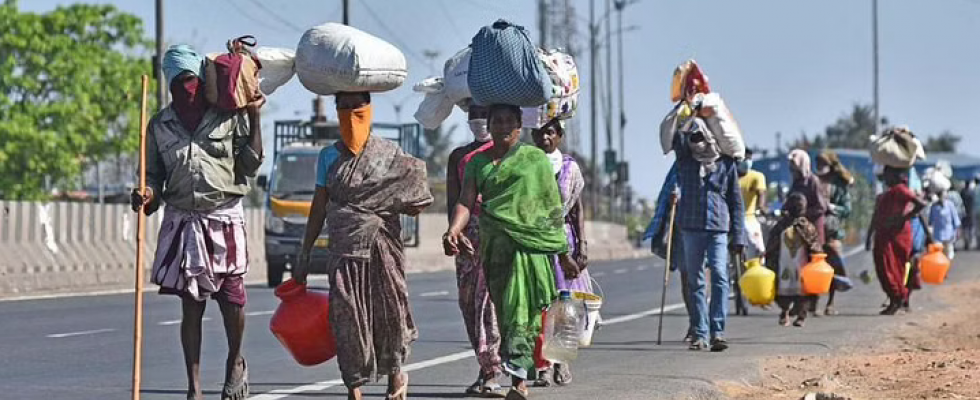
Since 2016, the context of development has changed. The COVID-19 pandemic has brought to the fore the interconnection of the world, not just economically, but also in terms of health and well-being. The limitation of the development model, based mainly on growth in (urban) services and manufacturing, was amply clear during the pandemic. Huge numbers of migrants from rural to urban areas - a consequence of weak investment and growth in agriculture and skewed distribution of land - had to return to their native villages with lockdowns in the developing world.2 They were not included when cash transfers were made during the pandemic as social protection. The cash transfers were small when compared to the earnings of those in the informal sector, where women are disproportionately represented.
Yet another concern is the invisibility of women and men sanitation workers, whose work was not recognised during COVID-19, unlike that of doctors and nurses. Sanitation workers come from some of the most stigmatised communities and are considered Scheduled Castes in South Asia. A disproportionate proportion of blacks are found in this work in South Africa, too.
Discrimination was also reported during the pandemic by transgender persons.3 Some of the transgender persons who were tenants were asked to vacate houses, as they were considered potential carriers of viruses who moved around more than others.
Furthermore, the gap between government and private sector education widened during COVID-19, as infrastructure was not adequate in government educational institutions, where more girls than boys from marginalised communities were to be found. The gaps in public health investment and capacities across the developing world also came to the surface, including the gender-differentiated impact.4 The pandemic has also coincided with the rise of right-wing political parties in several countries, with adverse consequences for women and men (in particular, minority groups).
Clearly, as the pandemic has laid bare, gender, caste, race, minority, gender identity, migrant status and occupation (amongst others) interact in complex ways.
In this complex context, it is suggested that the next Gender Strategy of the WBG should consider the following.
- Promote labour-intensive, balanced and formal sector growth, with basic income for citizens: Along with the present emphasis on productive assets, labour-intensive agriculture growth - with value chains - is crucial for reducing rural-urban migration. Crop insurance and insurance against price fluctuations are a must. Agricultural households should have rights to land and water, and conversion of agricultural land and commons for other purposes should not be allowed. Increasing formal sector employment, wherein salaries and wages are higher, and rules exist against discrimination, is necessary. Affirmative action to bring women and men from all communities into sanitation work is a must, which will improve conditions of work. A universal basic income for each global citizen, including children, is required to ensure survival and well-being, with women having control over their basic income and that of their children. Apart from gender equality in education, bridging gaps between government and private education in infrastructure is a must, as is universal access to laptops and the internet. Universal health insurance covering all catastrophic expenses is recommended.
- Address gender equality from an intersectional lens: It is necessary to adopt an intersectional lens to situational analysis, policy formulation, planning, knowledge management, and monitoring and evaluation functions. Frameworks and tools for weaving in an intersectional lens to the different functions are needed. Otherwise, the slogan "leave no one behind" may not be achieved. As per the Council of Europe, intersectional discrimination happens when two or multiple grounds operate simultaneously and interact in an inseparable manner, producing distinct and specific forms of discrimination. Gender and intersectional analyses need to be applied on a continuous basis as contexts change.
- Look at gender beyond binary: We must look at gender beyond binary categories and work towards equality of LGBTQI amongst low-income groups with women and men who are cisgender. Some may experience added discrimination, depending on their other identities like caste, disability, religion, etc. Typically, these groups are excluded by self-help groups and federations fostered through government schemes supported by aid agencies. Social stigma is high, and in several countries, homosexuality is illegal.
- Press for legislation pertaining to gender equality and intersectional discrimination where there are gaps: In several countries, there are controversial issues that are not addressed by any legislation, such as marital rape, the right to abortion, women as co-heads of households and legalisation of homosexuality. Further, several countries do not have broader legislation that impacts intersectional discrimination, like the right to non-discrimination, right to shelter (a house with at least two bedrooms), the right to agricultural land (in rural areas), the right to institutional credit, the rights to water resources and commons, unemployment allowance, etc.
- A human rights approach: There is a necessity to strengthen the voices of marginalised women as "rights holders" (as opposed to beneficiaries), making demands on the state and highlighting to the state when local markets and community institutions fail to uphold gender and intersectional equality. This approach demands not just "one" women's organisation but, rather, identity-specific organisations when conflicts arise over caste, age, employee-employer status, religion, etc. Likewise, the state should be seen as duty bearers and not just implementers of schemes. This means strengthening accountability of the government on ratification of all articles of the Convention on Elimination of Discrimination of Women and pressing follow-up on Universal Progress Reviews. Sustainable Development Goal (SDG) 5 on gender equality is a goalpost, not the means; the means is a human rights approach to address intersectional discrimination confronting marginalised women. There also need to be mechanisms to hold international organisations to account on these human rights conventions.
To sum up, the forthcoming Gender Strategy of the WBG should address gender, intersectionality and human rights in the context of a development paradigm that is balanced in terms of sectoral focus, that is employment intensive, that is formal sector based and that includes a much-strengthened public health and education sector. Accountability of the state, private sector, communities and households to gender, intersectionality and rights is crucial, as is that of inter-state organisations. Gender- and intersectionality-sensitive risk strategies are required at all institutional levels.
* The author would like to acknowledge the contribution of Kier Olsen DeVries in editing this article.
1 World Bank Group. 2015. World Bank Group Gender Strategy (FY16-23): Gender Equality, Poverty Reduction and Inclusive Growth, Washington DC.
2 See Karthikeyan P Iyengar and Vijay Kumar Jain. 2021. "COVID-19 and the plight of migrants", India Postgraduate Medical Journal 97:471-472.
3 Pragna L. Krupa. 2021 (Nov 22). "Cast Away", Bangalore Mirror.
4 Senait Fisseha, Gita Sen, Tedros Adhanom Ghebreyesus, et al. 2021 (Aug 7). "COVID-19: the turning point for gender equality", The Lancet 398;10299:e9.
Image credit: Unknown author (CC BY-NC-ND 3.0).
As with all of the blogs posted on our website, the content above does not imply the endorsement of The CI or its Partners and is from the perspective of the writer alone. We do not check facts and strive to retain the writer's voice, as is detailed in our Editorial Policy.
- Log in to post comments