
























Development action with informed and engaged societies

After nearly 28 years, The Communication Initiative (The CI) Global is entering a new chapter. 

Following a period of transition, the global website has been transferred to the University of the Witwatersrand (Wits) in South Africa, where it will be administered by the Social and Behaviour Change Communication Division. Wits' commitment to social change and justice makes it a trusted steward for The CI's legacy and future. 

On the transfer, co-founder Victoria Martin expressed her pleasure to see this work continue under Wits' leadership, knowing that co-founder Warren Feek (1953–2024) would have felt deep pride in The CI Global's Africa-led direction. 

As Wits, we honour the team and partners who sustained The CI for decades and look forward building from that strong base. This includes co-founders Warren Feek (1953-2024) and Victoria Martin as well as La Iniciativa de Comunicación (CILA), which continues independently at lainiciativadecomunicacion.com with links to The CI Global site. We are also eager to forge new partnerships and entertain new ideas as we consider how best to contribute to social and behaviour change in our rapidly evolving environment.

If you are joining the International Social and Behaviour Change Communication (SBCC) Summit in Panama, please join Wits and CILA on Monday, 22 June, to share your thoughts and suggestion for the relaunch of the Communication Initiative. We will be in Pacifica 5 from 12-1:25 for the Refuel, Reflect, and Renew Lunch Series: The Communication Initiative: celebrating a driving force for Communication for Social Change and the way forward. We will reflect on the legacy of Warren Feek and family in creating the Communication Initiative, consider the contributions of CI over the years and then turn our attention towards the future in this dynamic session. 

If you are unable to join us in Panama, we still want to hear from you. Please contribute your thoughts by following this link: https://redcap.link/CommunicationInitiative2026 or reaching out to ci_surveys@commint.com

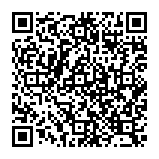
You can also follow the QR Code:

 https://redcap.link/CommunicationInitiative2026

Time to read
1 minute
Read so far

Women's Participation in Disaster Relief and Recovery

0 comments

Author

SummaryText
This pamphlet provides three case studies from earthquake stricken areas India and Turkey which seek to highlight the specific ways in which women are affected by disasters and the roles that low-income women can play in relief and recovery efforts. The projects described are:
  • India's 1993 Maharashtra earthquake - Describes how Swayam Shikshan Prayog (SSP) was contracted by the Indian government to help in citizen participation efforts for reconstruction. SSP used interviews, participatory mapping and rapid appraisals to assess the situation, and then revived and reoriented government-established women's groups to act as information and communication interface between the community and government officials. The women learned basic construction techniques and government policies and methods.
  • Turkey's 1999 Marmara Region earthquakes - Outlines how the Turkish feminist organisation Kadin Emegini Degerlendirme Vakfi (KEDV) began by providing emergency aid and then developed local women's groups in emergency shelter areas, where women worked together to produces dolls, candles, wooden toys, doors and other saleable items. The women organised workshops to fill needs for plumbers and electricians, formed credit and savings groups, and helped lobby for housing and financial resources.
  • India's 2001 Gujarat earthquake - Describes how SSP drew on the experiences of both the Maharashtra and Marmara region recovery projects to create a network of women's groups which could identify the most immediate recovery needs. The women developed savings and credit groups and learned construction methods, land acquisition and management techniques.
The authors conclude that disasters can be an opportunity to "empower women at the grassroots level." In particular, they stress modifying post-disaster response methodology to use and support local grassroots women's organisations as part of recovery efforts. They note three main lessons learned from these case studies (abbreviated below):
  1. Policymakers often fail to realise that post-disaster efforts are, in fact, development interventions that should reflect principles of participation and sustainability.
  2. Often no clear agreement exists about what this participation should entail in relation to the roles of the government, international relief, and donor organisations. Lack of communication and coordination between the government agencies, aid organizations, and NGOs [non-governmental organisations] often wastes a sizeable share of the resources flowing into the affected area.
  3. Relief and subsequent recovery efforts fail to pay adequate attention to the gender-specific impacts of disasters.
[This report was produced as part of the Population Council's SEEDS pamphlet series which provides programme ideas that address the economic needs and roles of low-income women. Click hereto learn about the SEEDS series.]
Number of Pages
38
Source

Email from Debra Warn to The Communication Initiative, September 21 2005; and Population Council website.