










































Using Smartphones to Study Vaccination Decisions in the Wild
University of Trento (Girardini); Fondazione Bruno Kessler - FBK (Girardini); independent researcher (Stopczynski); Fraunhofer Institute for Translational Medicine and Pharmacology - ITMP (Baranov); German Centre for Infection Research - DZIF (Baranov); LMU University Hospital (Baranov); Bernhard Nocht Institute for Tropical Medicine (Betsch); University of Erfurt (Betsch); TUD Dresden University of Technology (Brockmann); University of Copenhagen (Lehmann, Böhm); Technical University of Denmark (Lehmann); University of Vienna (Böhm)
"[U]nderstanding what determines vaccination decisions is important to better communicate about vaccination and develop interventions that support vaccine uptake."
Considering the personal and social benefits of vaccination, individuals have to decide whether to prosocially benefit non-vaccinated others by getting vaccinated or whether to free ride on the indirect protection provided by vaccinated others, resulting in a social dilemma. Previous research has shown that people consider both the decisions of others and the welfare consequences for others when making their own vaccination decisions. However, the evidence regarding the direction of such effects is mixed. In order to understand what factors determine people's vaccination decisions, previous behavioural research made use of (i) controlled but often abstract or hypothetical studies (e.g., vignettes) or (ii) realistic but typically less flexible studies that make it difficult to understand individual decision processes (e.g., clinical trials). Combining these approaches, this study proposes integrating real-world Bluetooth contacts via smartphones in several rounds of a game scenario as a methodology to study vaccination decisions and disease spread.
The study uses an established interactive vaccination game that builds on a SIR (Susceptible-Infectious-Recovered) model of disease dynamics, thus capturing the dynamic personal and social benefits of vaccinations depending on the population's vaccination rate. Various versions of this interactive vaccination game (I-Vax) have been applied to investigate vaccination behaviour and potential behavioural interventions. The key advantage of this gamified method is that decisions are not hypothetical, but they have actual consequences by providing behaviour-contingent monetary incentives, thus reducing the intention-behaviour gap.
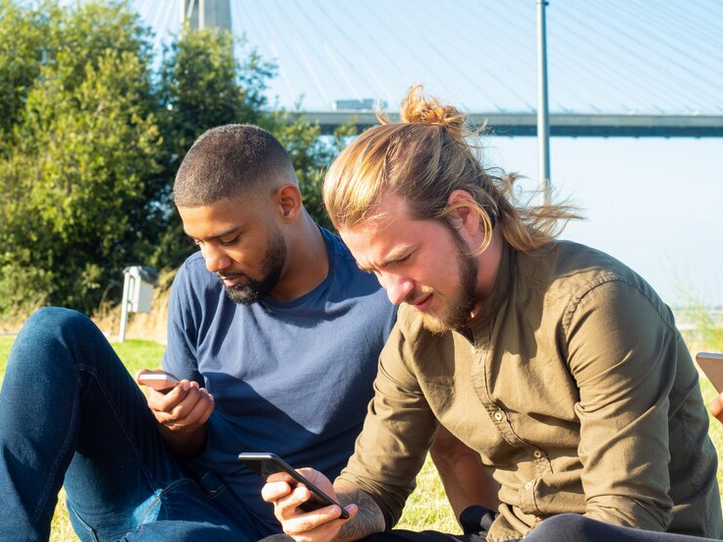
This 12-week proof-of-concept study, conducted with N = 494 students, implements the I-Vax game in a natural scenario, taking into account the spatial and temporal dynamics of vaccination decisions and their consequences. The researchers gave players (all freshmen at a Danish university) information about infected, recovered, susceptible, and vaccinated individuals in their environment. The game involved infections taking place via Bluetooth contact between participants' smartphones - that is, infections can only happen when two participating individuals are physically close one another (infection range up to ten meters). This approach models the spatial properties of real-world disease spreading, i.e., infections happen because of actual physical contact between infectious and susceptible individuals. Through the implemented application, the participants could make the decision to vaccinate and protect themselves from the fictional disease.
The study found that participants strongly responded to some of the information provided to them during or after each decision round, particularly those related to their individual health outcomes. In contrast, information related to others' decisions and outcomes (e.g., the number of vaccinated or infected individuals) appeared to be less important. Furthermore, the analysis indicates that players were less likely to get vaccinated in later rounds.
The paper discusses the potential of this novel method and points to areas for future research. For example, the study found that participants valued more their own experience and did not consider much the feedback given at the end of the round, be that global or local. Instead, they valued highly the daily information about the number of players who were still susceptible. Future studies could investigate the role of social norms, free-riding motivation, and prosocial concern when people learn about a more local and potentially psychologically closer group versus a more distant but larger group. Differences in how people value and react to such information could help policymakers improve vaccination communication.
In conclusion, the researchers "propose that running experiments using this method could provide important insights before rolling out...clinical trials (e.g. to evaluate interventions aiming at increasing vaccine uptake), and potentially reduce the attitude-behaviour gap that plagues implementation research."
PLOS Digital Health 3(8): e0000550. https://doi.org/10.1371/journal.pdig.0000550. Image credit: Freepik
- Log in to post comments