
























Development action with informed and engaged societies

After nearly 28 years, The Communication Initiative (The CI) Global is entering a new chapter. 

Following a period of transition, the global website has been transferred to the University of the Witwatersrand (Wits) in South Africa, where it will be administered by the Social and Behaviour Change Communication Division. Wits' commitment to social change and justice makes it a trusted steward for The CI's legacy and future. 

On the transfer, co-founder Victoria Martin expressed her pleasure to see this work continue under Wits' leadership, knowing that co-founder Warren Feek (1953–2024) would have felt deep pride in The CI Global's Africa-led direction. 

As Wits, we honour the team and partners who sustained The CI for decades and look forward building from that strong base. This includes co-founders Warren Feek (1953-2024) and Victoria Martin as well as La Iniciativa de Comunicación (CILA), which continues independently at lainiciativadecomunicacion.com with links to The CI Global site. We are also eager to forge new partnerships and entertain new ideas as we consider how best to contribute to social and behaviour change in our rapidly evolving environment.

If you are joining the International Social and Behaviour Change Communication (SBCC) Summit in Panama, please join Wits and CILA on Monday, 22 June, to share your thoughts and suggestion for the relaunch of the Communication Initiative. We will be in Pacifica 5 from 12-1:25 for the Refuel, Reflect, and Renew Lunch Series: The Communication Initiative: celebrating a driving force for Communication for Social Change and the way forward. We will reflect on the legacy of Warren Feek and family in creating the Communication Initiative, consider the contributions of CI over the years and then turn our attention towards the future in this dynamic session. 

If you are unable to join us in Panama, we still want to hear from you. Please contribute your thoughts by following this link: https://redcap.link/CommunicationInitiative2026 or reaching out to ci_surveys@commint.com

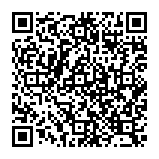
You can also follow the QR Code:

 https://redcap.link/CommunicationInitiative2026

Time to read
1 minute
Read so far

Five Key Questions That Can Change the World: Classroom Activities for Media Literacy

0 comments

Author

SummaryText
Developed by the Center for Media Literacy (CML) as Part II of their MediaLit Kit, Five Key Questions That Can Change the World has been designed as a resource for teachers to help students build a foundation in the skills of media literacy. The publication is a collection of 25 lesson plans, five lessons for each of CML's Five Key Questions of media literacy:
  • Who created this message?
  • What creative techniques are used to attract my attention?
  • How might different people understand this message differently than me?
  • What values, lifestyles and points of view are represented in, or omitted from, this message?
  • Why is this message being sent?
According to the publication, "Unlike other media literacy activity books, which typically are organized by genre (news, advertising, etc.) or topic (violence, gender, etc.), the inquiry-based lessons in Five Key Questions That Can Change the World help students build an internal checklist of questions to ask about any message in any media - television, movies, the Internet, radio, advertising, newspapers and magazines, even maps and money!" Each chapter begins with a short background essay for teachers to explore the issues conveyed in each Key Question. Then each of the five lessons begins with a brief paragraph connecting the objectives and activities of the lesson plan to just one aspect of the Key Question. This introduction is followed by an overview of the skills and knowledge the lesson aims to teach, correlation to United States McREL National Standards, materials and preparation needed to conduct the lesson, and step-by-step instructions to help organise and conduct the lesson. Scalable activities aim to help teachers adapt the lessons for varying grade levels.
Number of Pages
85
Source