Development action with informed and engaged societies

After nearly 28 years, The Communication Initiative (The CI) Global is entering a new chapter. 

Following a period of transition, the global website has been transferred to the University of the Witwatersrand (Wits) in South Africa, where it will be administered by the Social and Behaviour Change Communication Division. Wits' commitment to social change and justice makes it a trusted steward for The CI's legacy and future. 

On the transfer, co-founder Victoria Martin expressed her pleasure to see this work continue under Wits' leadership, knowing that co-founder Warren Feek (1953–2024) would have felt deep pride in The CI Global's Africa-led direction. 

As Wits, we honour the team and partners who sustained The CI for decades and look forward building from that strong base. This includes co-founders Warren Feek (1953-2024) and Victoria Martin as well as La Iniciativa de Comunicación (CILA), which continues independently at lainiciativadecomunicacion.com with links to The CI Global site. We are also eager to forge new partnerships and entertain new ideas as we consider how best to contribute to social and behaviour change in our rapidly evolving environment.

If you are joining the International Social and Behaviour Change Communication (SBCC) Summit in Panama, please join Wits and CILA on Monday, 22 June, to share your thoughts and suggestion for the relaunch of the Communication Initiative. We will be in Pacifica 5 from 12-1:25 for the Refuel, Reflect, and Renew Lunch Series: The Communication Initiative: celebrating a driving force for Communication for Social Change and the way forward. We will reflect on the legacy of Warren Feek and family in creating the Communication Initiative, consider the contributions of CI over the years and then turn our attention towards the future in this dynamic session. 

If you are unable to join us in Panama, we still want to hear from you. Please contribute your thoughts by following this link: https://redcap.link/CommunicationInitiative2026 or reaching out to ci_surveys@commint.com

You can also follow the QR Code:

 https://redcap.link/CommunicationInitiative2026

Time to read
1 minute
Read so far

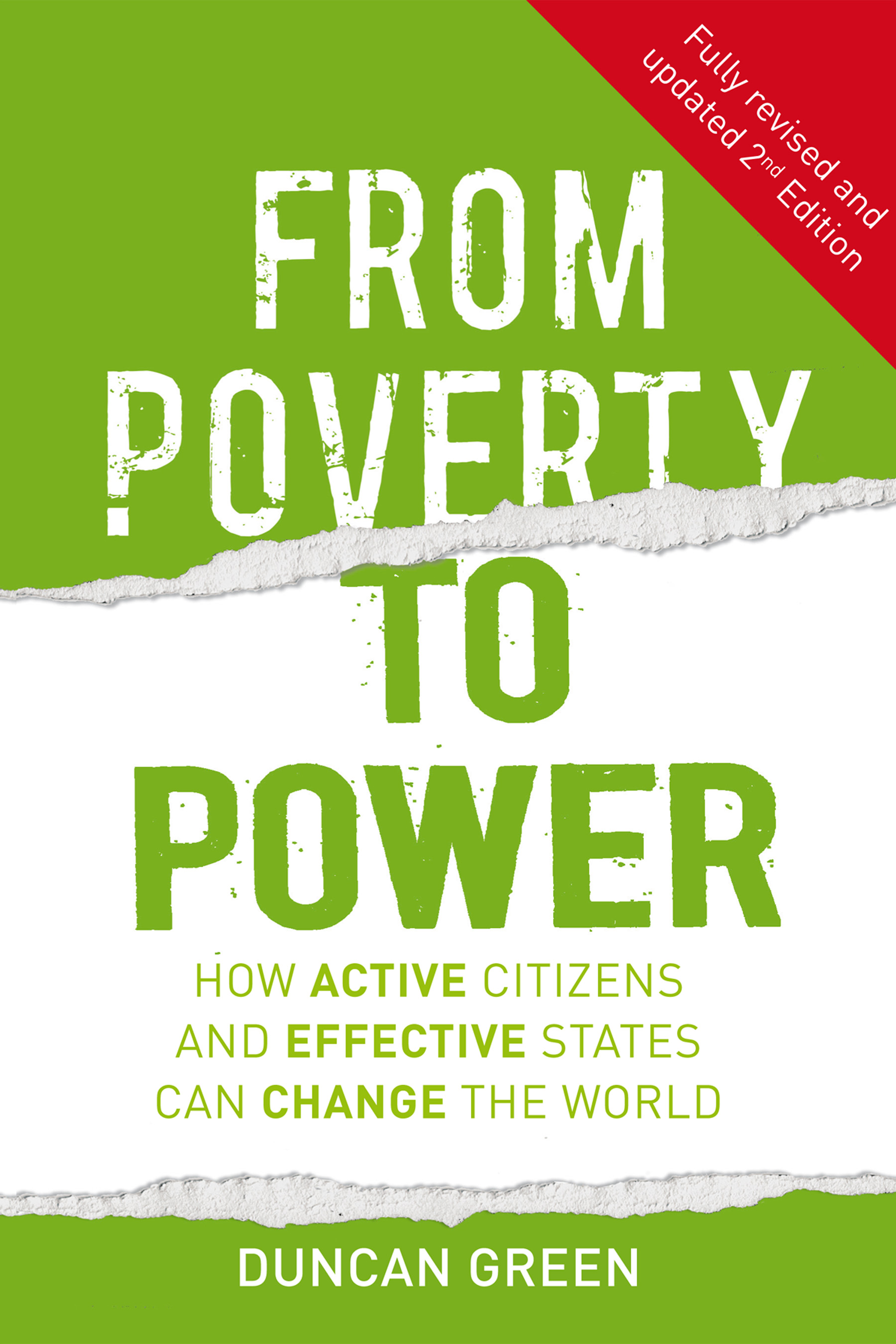
From Poverty to Power: How Active Citizens and Effective States Can Change the World

0 comments
Image

Author

SummaryText
From Poverty to Power examines the change processes that affect development in the 21st century. It highlights "the central role of effective states and active citizens in bringing about genuine human development, and the primacy of 'the national' in development, compared to an often exaggerated emphasis on 'the international'."

Published in 2008, the first edition of the book - click here to access it in PDF format (540 pages) - is intended to provide critical insights into the human and economic costs of inequality and poverty and propose realistic solutions. It recommends: 1) active citizenry to give people living in poverty a voice in deciding their own destiny, fighting for rights and justice in their own society, and holding states and the private sector to account; and 2) effective nation states, because of the need for a state structure that can actively manage the development process. Sections include the following:
  • An Introduction on the Unequal World
  • Power and Politics
  • Poverty and Wealth
  • Risk and Vulnerability
  • The International System
  • Conclusion
  • Annex: How Change Happens
The second edition of the book reflects the "[s]eismic events [that] have convulsed global markets since 2008". Having been fully revised, it includes an in-depth analysis of the human impact of the global financial and food crises, arguing that a radical redistribution of power, opportunities, and assets, rather than traditional models of charitable or government aid, is required to break the cycle of poverty and inequality. As author Duncan Green had articulated in the first edition, active citizens and effective states are driving this transformation. Why active citizens?, he asks. He suggests that people living in poverty must have a voice in deciding their own destiny and holding the state and the private sector to account. With regard to the role of effective states, Green points to the fact that history shows that no country has prospered without a state structure that can actively manage the development process. He stresses that there is now an added urgency: climate change. We need to build a secure, fair, and sustainable world within the limits set by scarce resources and ecological realities.

Sections include the following:
  • Part I: Introduction
  • Part II: Power and Politics
  • Part III: Poverty and Wealth
  • Part IV: Human Security
  • Part V: The International System
  • Part VI: The Food and Financial Crises of 2008-11
  • Part VII: Conclusion
The book is accompanied by a list of blog resources. Green's From Poverty to Power blog played a key role in shaping the second edition of the book. Selected posts have been indexed thematically to create a list of background material that can be read alongside the book.
Publication Date
Number of Pages

488

Source

e-CIVICUS Issue No. 399, July 6 2008; and Oxfam website, November 28 2016.