
























Development action with informed and engaged societies

After nearly 28 years, The Communication Initiative (The CI) Global is entering a new chapter. 

Following a period of transition, the global website has been transferred to the University of the Witwatersrand (Wits) in South Africa, where it will be administered by the Social and Behaviour Change Communication Division. Wits' commitment to social change and justice makes it a trusted steward for The CI's legacy and future. 

On the transfer, co-founder Victoria Martin expressed her pleasure to see this work continue under Wits' leadership, knowing that co-founder Warren Feek (1953–2024) would have felt deep pride in The CI Global's Africa-led direction. 

As Wits, we honour the team and partners who sustained The CI for decades and look forward building from that strong base. This includes co-founders Warren Feek (1953-2024) and Victoria Martin as well as La Iniciativa de Comunicación (CILA), which continues independently at lainiciativadecomunicacion.com with links to The CI Global site. We are also eager to forge new partnerships and entertain new ideas as we consider how best to contribute to social and behaviour change in our rapidly evolving environment.

If you are joining the International Social and Behaviour Change Communication (SBCC) Summit in Panama, please join Wits and CILA on Monday, 22 June, to share your thoughts and suggestion for the relaunch of the Communication Initiative. We will be in Pacifica 5 from 12-1:25 for the Refuel, Reflect, and Renew Lunch Series: The Communication Initiative: celebrating a driving force for Communication for Social Change and the way forward. We will reflect on the legacy of Warren Feek and family in creating the Communication Initiative, consider the contributions of CI over the years and then turn our attention towards the future in this dynamic session. 

If you are unable to join us in Panama, we still want to hear from you. Please contribute your thoughts by following this link: https://redcap.link/CommunicationInitiative2026 or reaching out to ci_surveys@commint.com

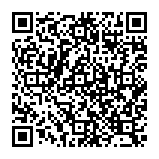
You can also follow the QR Code:

 https://redcap.link/CommunicationInitiative2026

Time to read
1 minute
Read so far

Learning about Avian Influenza Through Theatre and Play

0 comments
Affiliation
UNICEF Georgia
Summary

The United Nations Children's Fund (UNICEF) of the Republic of Georgia is providing support for theatre drama focusing on the risks of avian influenza (bird flu) in order to prevent the spread of the disease in eight areas seen by UNICEF as 'high risk'. The project is led by an internally displaced persons (IDP) women's association called Consent and a non-governmental organisation (NGO) called Atinati.


The theatre project is part of a multi-faceted response to a recent survey within the Republic of Georgia showing that only 5.5 percent of children of aged 6 to 11 wash their hands after touching poultry; this figure rises to only 9 percent among children aged 12 to 16.

Performances are scheduled to reach approximately 6,000 children. The project includes both puppet shows and theatre performances; children have contributed to the scripts and will also be in the cast of the performances. The works are interactive, involving the audience in discussion and analysis of the behaviour of the heroic characters.

Print materials also support the effort. School calendars and bookmarks with messages on avian flu prevention have been printed and distributed to children during the performances. A special issue of the children’s magazine "White Crane", containing information on avian influenza, stories and pictures, special quizzes, and a question-and-answer section on special preventive measures, has also been produced.

In addition, in March 2007, a two-day school event "What we have to know to prevent avian influenza" was organised in schools in collaboration with the Ministry of Education and Science and the National Curriculum and Assessment Centre. As stated here, "all schools received educational packages on avian influenza, including special instructions and booklets for teachers, lesson plans, school calendars, and posters. Many pupils painted pictures about avian influenza during these lessons that were later displayed at a special exhibition."

Source

UNICEF
Georgia website
on August 7 2007.