

























Development action with informed and engaged societies

After nearly 28 years, The Communication Initiative (The CI) Global is entering a new chapter. 

Following a period of transition, the global website has been transferred to the University of the Witwatersrand (Wits) in South Africa, where it will be administered by the Social and Behaviour Change Communication Division. Wits' commitment to social change and justice makes it a trusted steward for The CI's legacy and future. 

On the transfer, co-founder Victoria Martin expressed her pleasure to see this work continue under Wits' leadership, knowing that co-founder Warren Feek (1953–2024) would have felt deep pride in The CI Global's Africa-led direction. 

As Wits, we honour the team and partners who sustained The CI for decades and look forward building from that strong base. This includes co-founders Warren Feek (1953-2024) and Victoria Martin as well as La Iniciativa de Comunicación (CILA), which continues independently at lainiciativadecomunicacion.com with links to The CI Global site. We are also eager to forge new partnerships and entertain new ideas as we consider how best to contribute to social and behaviour change in our rapidly evolving environment.

If you are joining the International Social and Behaviour Change Communication (SBCC) Summit in Panama, please join Wits and CILA on Monday, 22 June, to share your thoughts and suggestion for the relaunch of the Communication Initiative. We will be in Pacifica 5 from 12-1:25 for the Refuel, Reflect, and Renew Lunch Series: The Communication Initiative: celebrating a driving force for Communication for Social Change and the way forward. We will reflect on the legacy of Warren Feek and family in creating the Communication Initiative, consider the contributions of CI over the years and then turn our attention towards the future in this dynamic session. 

If you are unable to join us in Panama, we still want to hear from you. Please contribute your thoughts by following this link: https://redcap.link/CommunicationInitiative2026 or reaching out to ci_surveys@commint.com

You can also follow the QR Code:

 https://redcap.link/CommunicationInitiative2026

Time to read
1 minute
Read so far

Pilika Pilika (Busy Busy)
1 comment
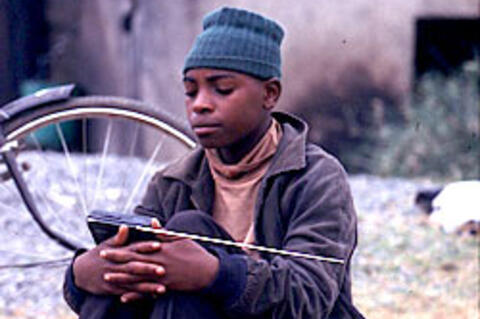
Created by Mediae, Pilika Pilika was a radio soap opera broadcast in Kiswahili in Tanzania from 2004 to July 2011. It aimed to spread awareness about issues relating to sustainable rural livelihoods such as home hygiene and community water management, gender issues, and local rights and responsibilities at the village level. Pilika Pilika, which means "busy, busy" in English, was set in the fictional Tanzanian village of Jitazame, a kind of crossroads village with representatives of most local cultures.
Communication Strategies

Pilika Pilika was broadcast weekly on Tanzanian radio networks, transmitted during prime time on the national broadcaster, and repeated on local FM stations. It was written, produced, and performed by local people in a studio on the outskirts of Arusha. The edutainment drama was followed by a discussion programme that explored some of the issues raised in the show through the views of rural children, farmers, and a panel of experts.

According to Mediae, partnerships were an important part of the communication strategy. As of this writing, Mediae is sponsored by WaterAid, Femina Hip, and Policy Forum, but has also worked closely with the Department for International Development (DFID), the Natural Resource Institute (NRI), Farm Africa, and others to include themes and messages relating to issues such as agriculture, education, health, hygiene, rights, and some governance issues. One episode dealing with water, hygiene, and sanitation told the story of how Mawazo, a key character, falls into his poorly maintained pit latrine and then has to walk for hours to the river to clean up because the water pump in the village was broken. WaterAid was closely consulted on scripts for the shows and was a regular provider of experts for the discussion programme, which visited communities all over the country in order to gauge the views of a cross-section of the population.

Before the launch of the drama, Mediae conducted two studies of radio listenership patterns and information needs of rural audiences in the region. The organisation, which works in East Africa and specialises in the production of radio and television educational drama, then trained the team from Pilika Pilika.

Development Issues

Natural Resource Management, Sanitation, Rights, Gender

Key Points

According to Mediae, the average listening figures showed that Pilika Pilika reached 5.5 million people, with each broadcast enabling WaterAid to get messages about safe hygiene practices, good management of water supplies, and sanitation to a broader audience than could be reached with their direct project work or by their partners in Tanzania. They also indicate that the show regularly received a large number of letters and text messages from people whose lives have been changed by messages on the show.

Partners

Mediae, WaterAid, Femina Hip, Policy Forum

Sources

WaterAid website; Mediae website, April 2 2008; and email from Kate Lloyd Morgan to The Communication Initiative on March 16 2012.

Comments

User Image
Submitted by Qazi Kabir Ahmed on Wed, 04/16/2008 - 22:49 Permalink

I am leading a local NGO in NWFP Pakistan. research, advocacy, mobilization and BCC are the key tools and techniques we adopt to guage our social change initiatives. this website has a lot for learning and experience.

Teaser Image
http://www.wateraid.org/images/cm_images/uk/what_we_do/where_we_work/tanzania/pilika_pilika/TZ_37027_250w.jpg