










































Advancing Social Norms Practice for Adolescent and Youth Sexual and Reproductive Health: The Why and the How
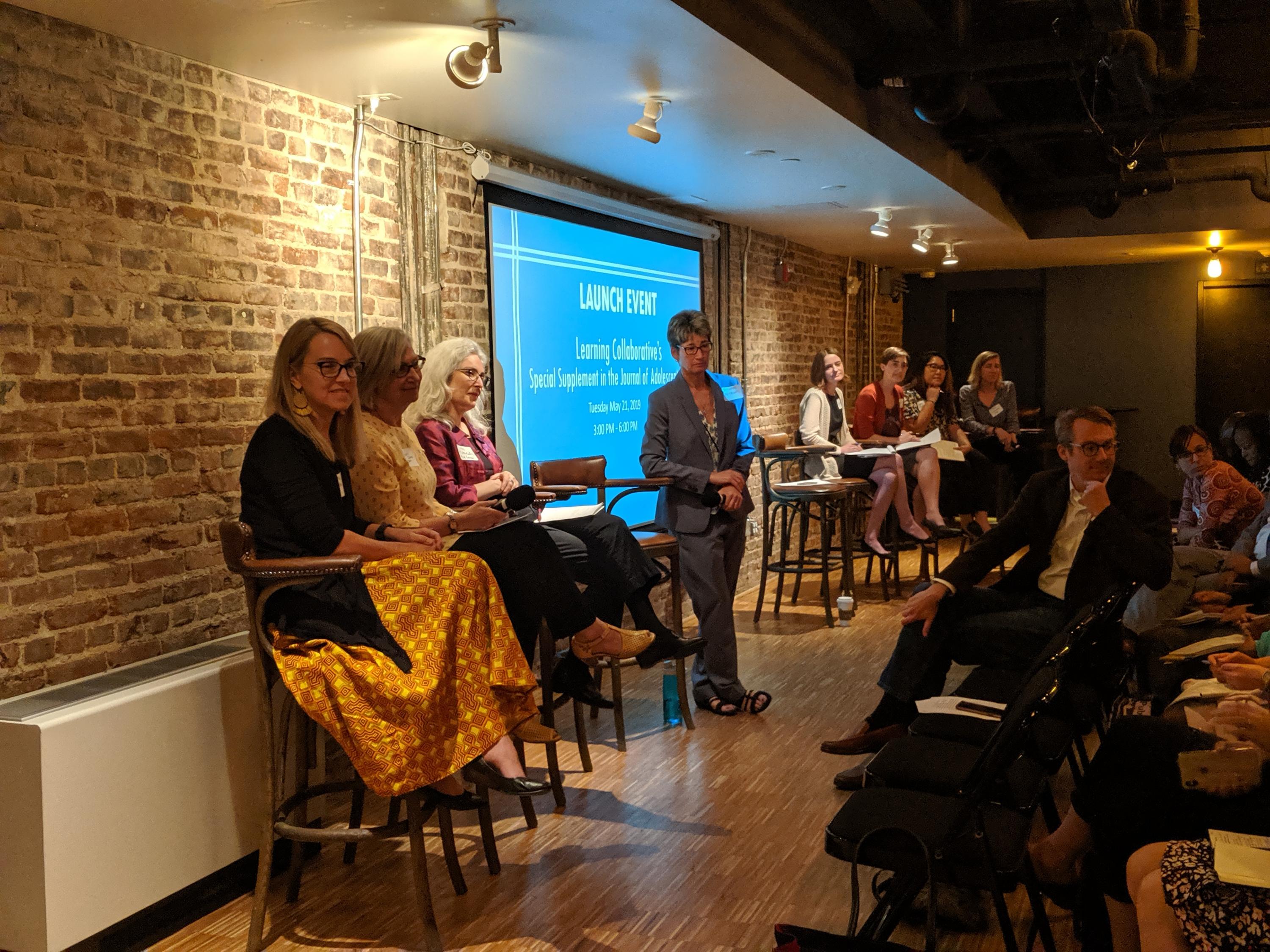
"Practitioners and investigators working on adolescent and youth sexual and reproductive health have long recognized that the behavioral and health outcomes they seek to influence are functions not merely of knowledge, beliefs, and attitudes of individual young people but also of the social contexts in which these young people are embedded." - Jeffrey B. Bingenheimer
Normative change and adolescent and youth sexual and reproductive health (AYSRH) are the focus of this Journal of Adolescent Health (JAH) collection developed by the Learning Collaborative to Advance Normative Change.
The special issue introduces a new conceptual framework for addressing social norms in AYSRH, offers specific approaches to improve social norms measurement, and examines the evidence on scaling-up normative change interventions for AYSRH. Among the case studies are those highlighting: methodologies for the measurement of social norms regarding child marriage in Malawi, scales to assess girls' agency in relation to sexual and reproductive rights in Ethiopia, and participatory visual methods to identify gender norms associated with transactional sex for adolescent girls in Uganda.
In his opening editorial, Jeffrey B. Bingenheimer points out that, while the contributions to the special issue are heterogeneous, they all tend to challenge a narrow approach to social norms that focuses on behaviour-specific norms and related social consequences as potential determinants of the same behaviour. Because such an approach can be inadequate to address the complexities of AYSRH, many of the contributions support the notion that one behaviour (or set of behaviours) may be influenced by social norms pertaining to other behaviours. Similarly, in a review of the scale-up of 13 social norms interventions targeting AYSRH and a related commentary, the authors identify 5 practices that have been used successfully in the scale-up of these interventions. All the interventions, however, were multicomponent programmes combining elements having little to do directly with social norms, such as family life education and the creation of safe spaces for youth, with activities focused on other groups such as parents and teachers as well as components such as mass media campaigns that were intended for the community as a whole.
Contents include:
- Veering From a Narrow Path: The Second Decade of Social Norms Research, by Jeffrey B. Bingenheimer
- Social Norms Measurement: Catching up With Programs and Moving the Field Forward, by Elizabeth Costenbader, Beniamino Cislaghi, Cari Jo Clark, Laura Hinson, Rachel Lenzi, Donna R. McCarraher, Courtney McLarnon-Silk, Julie Pulerwitz, Bryan Shaw, Leigh Stefanik
- Proposing a Conceptual Framework to Address Social Norms That Influence Adolescent Sexual and Reproductive Health, by Julie Pulerwitz, Robert Blum, Beniamino Cislaghi, Elizabeth Costenbader, Caroline Harper, Lori Heise, Anjalee Kohli, Rebecka Lundgren
- Scaling-up Norms-Focused Interventions for Adolescent and Youth Sexual and Reproductive Health: Current Practice and Reflections for Moving the Field Forward, by Susan Igras, Neela Saldhana, Antje Becker-Benton, Nana Apenem Dagadu, Martha Pirzadeh
- Catalyzing Gender Norm Change for Adolescent Sexual and Reproductive Health: Investing in Interventions for Structural Change, by Anju Malhotra, Avni Amin, Priya Nanda
- Scaling-up Normative Change Interventions for Adolescent and Youth Reproductive Health: An Examination of the Evidence, by Gabrielle Nguyen, Elizabeth Costenbader, Kate F. Plourde, Brad Kerner, Susan Igras
- Beyond Individual-Level Theorizing in Social Norms Research: How Collective Norms and Media Access Affect Adolescents' Use of Contraception, by Erica Sedlander, Rajiv N. Rimal
- Measuring Social Norms Related to Child Marriage Among Adult Decision-Makers of Young Girls in Phalombe and Thyolo, Malawi, by Mara Steinhaus, Laura Hinson, A. Theodore Rizzo, Amy Gregowski
- Child Marriages and Unions in Latin America: Understanding the Roles of Agency and Social Norms, by Alice Y. Taylor, Erin Murphy-Graham, Julia Van Horn, Bapu Vaitla, Ángel Del Valle, Beniamino Cislaghi
- Adolescent Girls' Agency Significantly Correlates With Favorable Social Norms in Ethiopia -Implications for Improving Sexual and Reproductive Health of Young Adolescents, by Yemane Berhane, Alemayehu Worku, Dagmawit Tewahido, Nebiyou Fasil, Hanna Gulema, Amare W. Tadesse, Semira Abdelmenan
- Developing Experimental Vignettes to Identify Gender Norms Associated With Transactional Sex for Adolescent Girls and Young Women in Central Uganda, by Kirsten Stoebenau, Nambusi Kyegombe, Jeffrey B. Bingenheimer, Ismael Ddumba-Nyanzi, Josephine Mulindwa
Established as a platform for sharing and discussing emerging evidence, practices, and lessons learned among practitioners and investigators working in this area, the Learning Collaborative is funded by the Bill and Melinda Gates Foundation and led by the Institute for Reproductive Health (IRH) at Georgetown University (convener) and FHI 360 (co-convener). It has a steering committee with members from 10 agencies and organisations and has been joined by over 300 individuals from more than 100 organisations.
Publishers
IRH website; and "Veering From a Narrow Path: The Second Decade of Social Norms Research", by Jeffrey B. Bingenheimer, Ph.D., Journal of Adolescent Health, April 2019, Volume 64, Issue 4, Supplement, Pages S1–S3 - both accessed on August 7 2019; and email from Cait Davin to The Communication Initiative on August 16 2019. Image caption/credit: "Commentary and manuscript authors answer questions from the audience at the Learning Collaborative's Launch of the JAH Special Supplement". Cait Davin, 2019, Washington, DC, United States