










































Agnes Pareyio - Tasaru Ntomonok Initiative - DFID Girl Summit 2014
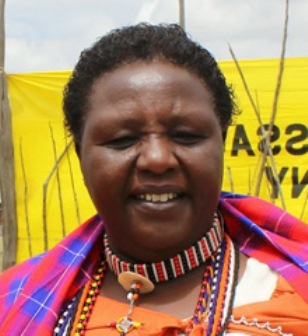
"TNI has been engaged in community awareness-raising and education against the practice using workshops and seminars for specific target groups such as community leaders, circumcisers, health workers, journalists, police, the youth, teachers, women’s groups and peer educators to inform them about the dangers of FGM." Agnes Pareyio
Panel Discussion: Spotlight on Progress - "All Aboard: Strategies to Engage Girls, Boys, Men, Women and Whole Communities for Change"
Context: This presentation is from one of the 14 "Spotlights on Progress" video-recorded sessions from the Girl Summit 2014, London, United Kingdom (UK). The sessions were organised to share best practice between practitioners, grassroots activists, and government ministers across the issues of female genital mutilation (FGM) and child, early, and forced marriage (CEFM). Girl Summit is a project of the Department for International Development (DFID), UK.
A featured panelist of this Spotlight session was Agnes Pareyio, founder of the Tasaru Ntomonok Initiative (TNI).
Profile of speaker: Agnes Pareyio comes from a Maasai community and went through FGM at 14 years of age. She recounted the support of her father when she wished to forgo the procedure, but he was opposed by her mother and grandmother. "I was born and brought up in a Maasai set up where girls and women are viewed as wealth to the husband. I struggled throughout my childhood to go against the culture and beliefs of my community but to no success because my mother would not want her daughter to be an outcast." Her efforts as a local activist championing, through TNI, the rights of Maasai girls to be free from FGM and early marriage and to receive an education were recognised by the United Nations (UN) when the UN presented Pareyio as their choice of person of the year, 2005.
Strategy overview: Pareyio decided towork towards the goal of protecting Maasai girls from FGM by engaging with the Maa community for changing that tradition. Because Maasai people believe in FGM and value it ("girls are seen as a source of income, their bride wealth being higher if they are cut..."), TNI applies a multiple strategy campaign among the Maasai to end FGM and CEFM, because early marriage is a route to FGM, including:
- community mobilisation, education, and outreach trainings, including men and boys, to sensitise "the Maa community on the dangers and effects of FGM and [CEFM]";
- the provision of safe houses/rescue centres to protect girls, the first opened in 2002, and an accompanying reconciliation process for parents and girls fleeing their households when faced with FGM and early marriage;
- provision of "G-Days" of seclusion and training for an alternative rite of passage, when girls are taught life skills and how to become adults without necessarily being physically cut;
- promotion of girls’ education through secondary education, tertiary colleges, and university, so that they can become permanently employed and key role models in their communities; and
- advocacy with the government to implement existing laws against FGM, requiring police and prosecutors to carry out their duties.
TNI’s work is showcased in an Equality Now publication entitled Protecting Girls from Undergoing FGM in Kenya and Tanzania, available by clicking here [PDF format] or reading the first related summary listed below.
Overview of this Summit Session: From the Girl Summit summary document: "This session recognises the importance and power of community members and the structures to drive social change for girls - including the importance of engaging men and boys. Here we explore a range of different strategies for working with whole communities to promote abandonment of FGM and child, early and forced marriage. We learn more about the role of championing from within, bringing men and boys into the picture, the power of working through pre-existing structures to promote conversation and commitment to change and exploring the role of the disparate communities in the form of diaspora groups.
The session is opened by Ziauddin Yousafzai Honorary Chairman, The Malala Fund.
The speakers, in order of appearance, are:
Rugiatu Neneh Turay Founder of the Amazonian Initiative Movement
Nasheima Sheikh Assistant CEO, Birmingham & Solihull Women’s Aid
Sana Uqba Campaigns and Publicity Manager, Middle East and North Africa Regional Consulting
Sabitra Dhakal Project Manager, CARE International
Agnes Pareyio Founder of the Tasaru Ntomonok Initiative
The session is moderated by Eric Levine, CEO, Stars Foundation."
Footage of this (available below) and other "Spotlights" are available on DFID’s YouTube channel.
The Girl Summit is a project of DFID. Click here and scroll down to see the full list of committed individuals and organisations working on girls' issues, as well as a list of Girl Summit Charter signatories.
DFID Girls Summit Outcomes website, the Equality Now website, the Donor Direct Action website, and the Rise4justice blog series: Agnes Pareyio, August 3 2015.