










































Another Development
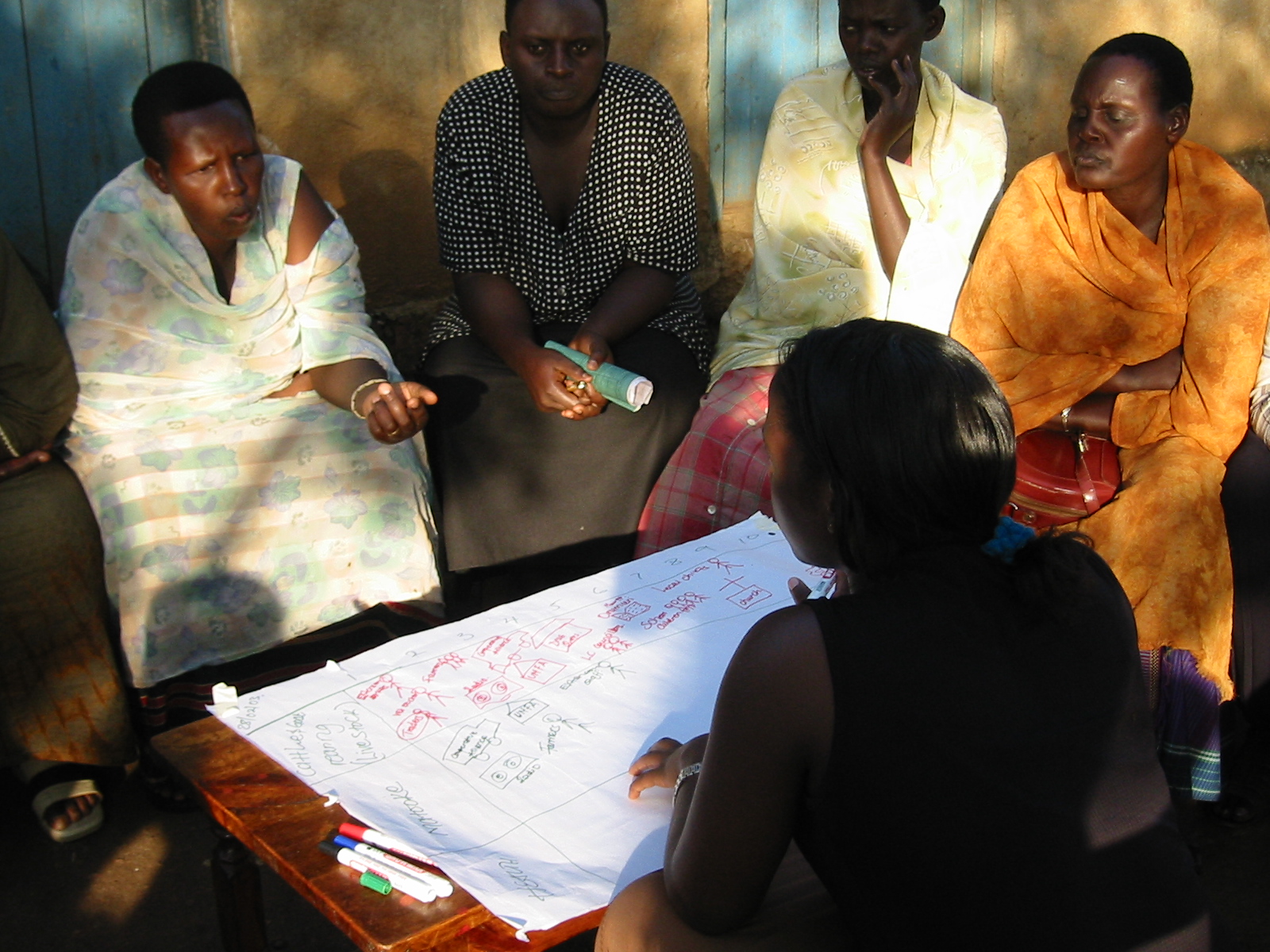
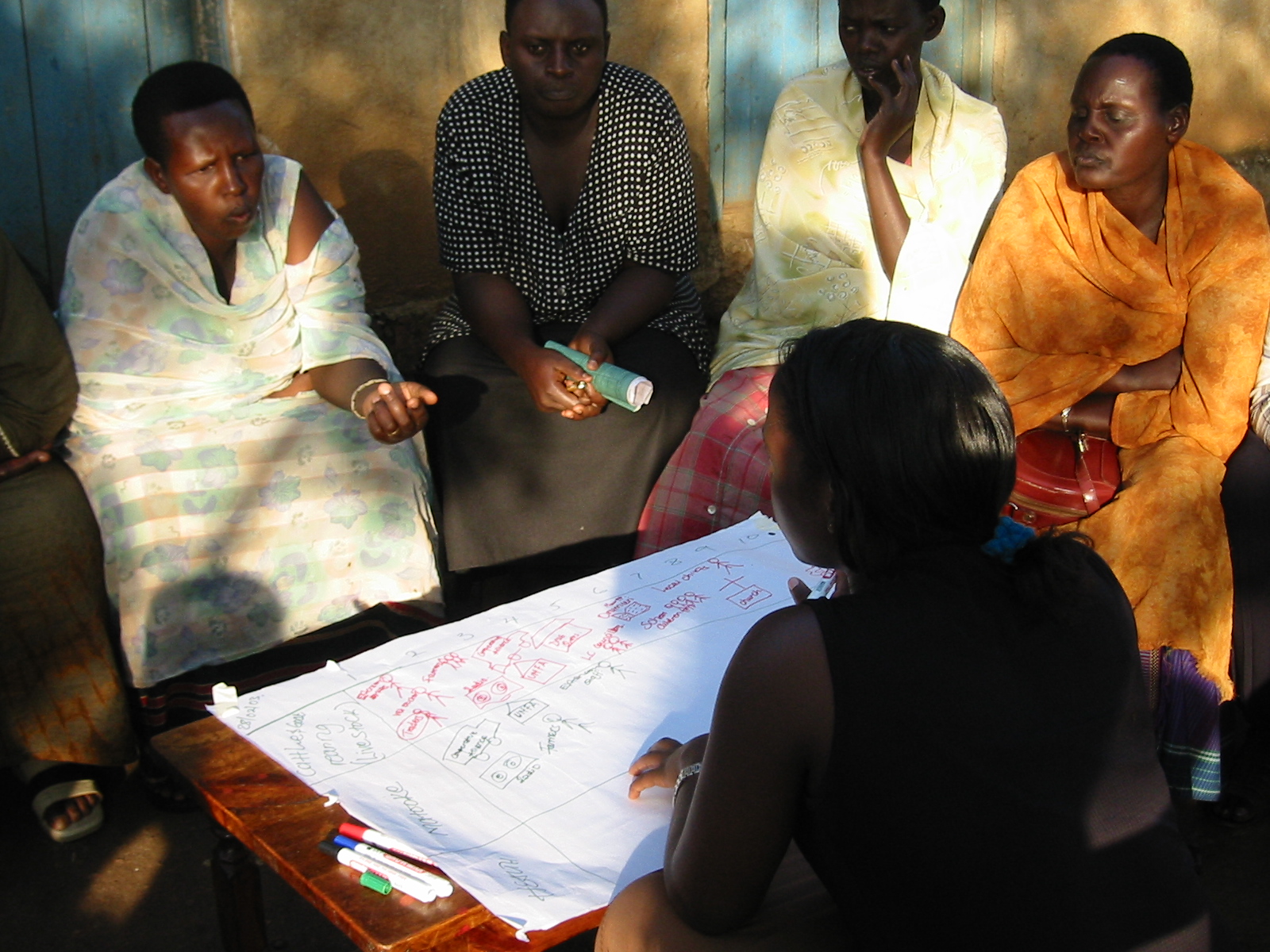
For a long time those of us who belong to the cult of communication practitioners have believed that good communication makes good development. In broad terms, when we say "good communication" we are talking about participatory communication. Participatory communication emphasizes "listening", while mainstream communication focuses on "telling". We think of participatory communication as one that shapes the very nature of development. We think of conventional communication as the one that simply promotes the desired development outcome.
It took us nearly 20 years to finally face an unpleasant truth: no matter how hard we tried, we could not effect anything close to participatory communication so long as donor agencies (or governments) were footing the bill. We have begun to realize that we have collectively been looking at the wrong end of the stick. We have been firmly convinced that an infusion of good communication would enhance development when all the time what we really needed to confront is a change in development. This turns decades of communication advocacy on its head.
The World Congress on Communication for Development took place in Rome October 25–27, 2006. It was entirely dedicated to "position and promote the field of Communication for Development in the overall agenda of development and international cooperation." To this end it brought together government officials, aid agency decision makers, media representatives, communication practitioners, academics, and authors of papers. It lasted for three days and offered up a veritable feast of networking, panel discussions, communication exhibits, and, of course, a sumptuous dinner at an ancient site in Rome.
But did it achieve its objective? No, and this is because it is counterproductive to spend time convincing development decision makers to embrace communication. They already do. They are, after all "decision-makers" and don't get to that position without understanding that some form of communication is essential to the task - so long as it sticks to public relations, information, awareness raising, social marketing, or any other form in the persuasive mode. What they do not accept, however, is the idea of participatory communication. It is messy, takes time, and will definitely spoil the linear direction of the development plan. Yet this, we see, is the form of communication that lies at the nub of what makes communication so essential to the development process.
We have been writing scholastic papers with pleas for communication components to be built into development programs. Decision-makers in our survey understood communication as public relations and knowledge management. No one ever mentioned any other approach to communication. At that time we really thought that it was because they didn't understand. Now we are convinced that decision-makers do in fact understand the participatory process. However, they realize that it has no place within their "big-plan" technocratic approach to development (what if the beneficiaries change the plan?)
We reflect on our experience as consultants and trainers. So often we agreed to work under project conditions that were less than ideal. We have been practicing in what we now refer to as working in the grey zone. When we have been able to succeed, it was only for short moments. The listening kind of communication was pushed aside because mainstream development relies on the telling kind of communication. Being realistic about what is possible helps us to assess reality and adjust our expectations and methodology to fit that reality. We think of this as communication common sense.
We navigate in the grey zone using three coordinates: champions, an understanding of context, and matching those with appropriate communication functions. Champions are individuals or organizations with a sincere respect for the views of the people with whom they work and with a belief that people innately have the ability to solve many of their own problems. As practitioners, we have been able to play the role of champions only for short moments. But mostly, we are not champions - we are humbled by their commitment.
The second component is about understanding context. Our focus is achieving an understanding of the many dimensions of a context or environment. Time matters: champions who stay in one place are immersed in the context. They are familiar with the nuances, they know the situation, they have developed trust within their environment and they are able to act when the time is right.
The third component is about communication. A communication initiative can fulfill a wide variety of functions (public relations, information, behavior change, and so on) depending on the intended purpose of the intervention. To simplify, we have grouped different communication functions into five main categories: public relations and organizational communication; policy communication; educational or technology transfer; advocacy; and participation. The types of communication that can challenge the status quo are advocacy communication and participatory communication. They contrast with those that governments and corporations tend to use: public relations, policy communication and educational communication. The different functions call for different methods, each with its own rationale.
We have realized how important it is to get a reading on these three markers before any activity takes place - or terms of reference are set. Is there a potential champion? And if we can create the conditions to help that champion flourish, we have found that champions – over time – can make change happen. And champions do not have to be communicators. Also, what is the condition/context both institutional and cultural behind this initiative - what is the time frame? We can go from there to question which communication function is expected (or is possible) within this terrain.
We revisit the notion of Another Development proposed by the Dag Hammarskjöld Foundation of Sweden, which set out new parameters for development thinking. It was based on five core principles:
Needs-oriented. Development should be geared to meeting human needs, both material and non-material.
Endogenous. It should stem from the heart of each society, which defines in sovereignty its values and the vision of its future.
Self-reliant. The development of each society should rely primarily on its own strength and resources in terms of its members' energies and its natural and cultural environment.
Ecologically sound. The resources of the biosphere must be utilised rationally in full awareness of the potential of local ecosystems as well as the global and local outer limits imposed on present and future generations.
Based on structural transformation. Structural reforms are needed so as to realise the conditions of self-management and participation in decision-making by all those affected by it.
In the 1970s and 1980s we called this "People Centered Development." The problem was, while many in the rank and file strongly endorsed the idea behind People Centered Development, those in the positions of power in large development organizations (governments, elites) did not. Or they said they did but action never or seldom followed rhetoric. By the 1990s development had been taken over by the technocrats. We are in a risk-adverse environment and we are governed by the search for accountability. We are stuck with log frames, results-based management and project implementation plans – there is no room for anything that might mess with that agenda.
Too often, we in the development community think of communication as merely a component that helps deliver the desired outcome or even worse, a component that simply promotes the end result (ie. public relations and marketing). So the question of whether good communication comes before good development or vice versa is essentially irrelevant. The very question highlights the misconception of the role of communication.
We now find ourselves at workshops, meetings and training sessions or working with others on various projects where the lament is the same – the heart and soul seems to have seeped out of the development world - it has, without doubt turned into a giant business governed at a corporate level with mind-numbing rules and regulations. There remains little room for creativity and innovation - in our mind a hallmark of good development.
And so we turn back to the future. We advocate for Another Development and one that resonates with some of the ideas put forward in the 80s. We know that this is not a panacea. Yet we continue to believe that it is important to look for instances where people have been given the tools to express their needs as they see them. This cannot be done without participatory communication. Good development breeds good communication; it invites our common communication sense.
We will be publishing more extensively on these themes in our forthcoming book, Communication for Another Development: Listening before Telling, to be published in August 2009 by Zed Books.
Comments

It feels good to have people
It feels good to have people who think alike.
Don't Give up the good fight!
Ricardo and Wendy repeat the hard truths learned in decades of pursuing participatory communication -- development decision-makers trained in other disciplines may pay some lip service to the idea of people-centred development, but at the end of the day they are so results-oriented that an artificial time-line pre-empts the participatory approach. Development communicators from Erskine Childers to Don Snowden knew this too, but did not give up the good fight of trying to infiltrate the development business with their more progressive ideas. At the Canadian International Development Agency, in the early '80s, a progressive manager let me hang out my shingle as Specialist, Development Communication and Wendy Quarry toiled for me to write a Policy Guideline recommending that many types of projects - social as well as infrastructure - adopt, from the start, a consultation process among the "target beneficiaries." The effort was never understood or adopted and disappeared after a few years. It is still rare, and just today we read of our Canadian Government's musing about the need to win the "hearts and minds" of the Afghan people, putting stress on "development" projects (very old style, one suspects) rather than directly battling Taliban insurgents!
I find Wendy and Ricardo's pessimism a bit dark - compared to the situation 20 years ago, participatory communication has a much higher profile - thanks to efforts such as yours - and we are surely developing a critical mass of research based on a greatly increased investment by multilateral and bilateral development agencies - UNICEF & DFID come to mind. So, keep up the good fight!
Charles Morrow
Retired Director of Public Information, World Health Organization, Geneva
& former Director of Information, CIDA, Ottawa
613 241-4665
morrow2@sympatico.ca
A matter of choice
I applaud Wendy and Ricardo's recent writings on the subject, it is somehow therapeutic to read the honesty behind their frustration.
As a practitioner of participatory video for 15 years, and as director of an organisation, Insightshare, we have faced the same walls. We have had some successes that we are proud of and developed some partnerships with development agencies that we are keen to sustain and build upon because we can see real results and benefits to communities and other stakeholders. This work tends to involve training project staff in PV, carrying out field work and supporting the creation of strategic action plans. The trickle down effect to communities can be very slow after the initial field work and training, and i worry about how much local people are getting their hands on the equipment we leave behind, and at the slow rate of visible change. I agree with Ricardo and Wendy's analysis of the aspects that block change at the grassroots.
Certainly we learned some years ago the value of individual "champions" well placed in organisations like the UN and who have personally witnessed the transformative power of the PV process and continue over the years to promote our approach.
Increasingly we are deciding to zig zag around some of the established, obvious International Development clients who have provided our bread and butter, but instead to follow our instincts and passion by working directly with communities. That is being invited by communities directly, by their home-grown NGOs or Associations or introduced by their allies, leading to capacity building process and on-going long term support based on the real needs on the ground. In turn this is leading to the creation and growth of new networks, with support from enlightened donors who trust in our methods and look for more direct and real connection with people on the ground.
Conversations with the Earth is a good example of this; an indigenous-led network connecting communities at the frontline of climate change through participatory video hubs -these are social media centres owned and run by communities like the Baka villagers of Mayos in the Eastern forests of Cameroon (www.conversationsearth.org).
Ultimately it takes courage and sacrifice and perseverance to follow strong principles in the world of business. At Insightshare nobody earns very much! Until very recently the directors (both with young families to support) couldn't rely on getting a regular salary. We rely heavily on dedicated volunteers, we are politically motivated, we are "do-ers", i guess we are activists, and cashflow is not something we focus on. Sometimes we "land" well paid consultancy work and we do the best we can working in a corporate or beaurocratic environment that sits very awkwardly with the principles of participatory communication (and can be somewhat "poisonous"). We choose this work strategically and it subsidises the work we really enjoy, with local people.
The way we are growing as an organisation reflects the situation: training local and regional networks of PV trainers, investing in a future where as practitioners we leave a smaller carbon footprint by travelling less, and enabling us to deliver training at much cheaper local cost. We always have a big vision in mind, that is about spearheading A MOVEMENT! alongside kindred spirits and diverse partners.
Nick Lunch, Director, Insight
www.insightshare.org
is it dark or realistic?
Hello Charles - it is great to read your comments and think about what you are saying. Do you really think we are 'dark' or simply 'realistic?" I do agree that the idea of participatory communication is widely talked about and written about today much more than the 80's - but that is the problem. In the 80's there was some room for experimentaiton. Today it is high on talk and paper and very low on action. Ideas get coopted and discussed and analysed but seldom actually implemented. I still think it is the Don Snowden's and others like him who work outside the development business (using it for support when they can) who make progress - clearly Nick Lunch is amongst that crowd.
In writing the book Ricardo and I came to understand that all that fighting within Aid Organizations for an acceptance of communication was really a fight to demand a better approach to development. Good communication became a metaphor for good development. Now I guess we are joining the growing crowds of people who are fed up with the mess of the aid business and try to figure out how to speak about it.
I think the military hope for communication as a tool in the battle for Hearts and Minds along with the assumption that donor designed development projects will change a tide is a whole new topic - hope to see you soon - its been a long time
Wendy Quarry
- Log in to post comments