










































Assessing Knowledge, Attitudes and Belief toward HPV Vaccination of Parents with Children Aged 9-14 Years in Rural Communities of Northwest Cameroon: A Qualitative Study
Baptist Health Institute of Science (Elit); McMaster University Faculty of Health Sciences (Elit); Mbingo Baptist Hospital (Ngalla, Afugchwi); Cameroon Baptist Convention Health Services (Afugchwi); Information and Vocational Orientation Centre (Tum); University of Texas MD Anderson Cancer Center (Domgue); University of Yaounde I (Domgue); Western University (Nouvet)
"We are not refusing the vaccines. At times you plan to take your children to the hospital [for a vaccine] but at the sound of gunshots, you stay at home....I am just waiting for the vaccine to be given to her in school." - parent
In 2022, the Cameroon National Immunization Program (NIP) made human papillomavirus (HPV) vaccine available free of charge for 9-year-old girls, which NIP hoped might increase uptake: In 2020, the HPV vaccination rate in the country was 5%. In light of the fact that parents' awareness and influence play a key role in the uptake of HPV vaccination among eligible adolescents, this study sought to assess the knowledge, beliefs, and attitudes of parents of girls aged 9-14 years about HPV vaccines within rural communities in the Northwest Region of Cameroon.
From January-May 2022, during a period of civil unrest, the researchers conducted 45 one-on-one interviews (with 35 mothers and 10 fathers), most of whom were from the Kom tribal group, in the Mbingo region of Northwest Cameroon. Ninety-one percent of the parents had ever been vaccinated; 71.12% had daughters who had not been vaccinated against HPV. Seventy-seven percent had no or only primary school education. Among the key findings:
- Awareness: Only one parent recognised the term 'HPV', and none recognised the term 'genital warts'. Everyone knew about vaccines in general, but only 7 parents were aware that there is a vaccine that can prevent a certain type of cancer. Two-thirds of parents reported that if a vaccine could avoid future distress for an individual or the family, they would be proponents of vaccination. Parents identified that healthcare workers are the ones who spread messages about vaccines. Over 60% of parents indicated they do not listen to radio, 40% do not watch television, and none read the newspaper. Most parents (83%) were clear that vaccination is a private issue that is not discussed with peers.
- Access: Parents identified 2 pathways to access any vaccine: (i) through hospitals or (ii) through mass vaccine campaigns organised out of local schools or after a church service. Parents were unaware of the HPV vaccine being available in their community. Seven parents indicated that cost could hinder vaccine uptake.
- Trust: Two-thirds of the parents raised concerns about risks of sterility, which have been linked to rumoured sterility resulting from use of the tetanus vaccine in 1990s in Kombo, which is located one mountain range to the east from Mbingo. Another prevalent concern expressed was that vaccines are an attempt by high-income countries to limit the size of the population or by the central government to reduce the life span or kill Anglophones. In terms of information about vaccines, what was important was if the person giving the information was trustworthy, known by the parent, and could provide good information.
- Decision-making and consent: Decision-making in the homes of this study context was patriarchal (47%) or joint between mother and father (27%). Some parents voiced that the daughter has "no say" (22%) in whether or not she is vaccinated, with one adding that the daughter cannot go against her father's decision. Several parents reported not being provided with written consent in advance of their daughter being vaccinated at school or hospital programme.
As one parent noted, HPV vaccine uptake would improve if parents had an understanding of why this vaccine is important for their daughters. Telling parents to vaccinate their daughters, in the absence of clear explanation of the vaccine's benefit, will not work. Other recommendations from parents for uptake and community engagement include:
- Trusted people in the community who could play an important role in reinforcing the message that HPV vaccination is important include: the fon (regional tribal leader) (threefold higher in fathers) or a message from the palace (13%), Kwifon (a person who would consult with the spirit world before telling the people to take a vaccine) (4%), quarter heads (local neighbour leader) (65%), religious authorities (40%), renowned traditional doctors (25%), elder men or women in the community (20%), educational authorities like principals or headmasters (15%), traditional council (4%), or town crier (4%). The following additional suggestions came from fathers: ngambe man, sorcerer, president of the njangi groups (community centre), or sporting group leaders. Witch doctors should not give the message (2%).
- Identified places where the message could be given included: church (74%), market place (37%), large gatherings like death celebrations (21%) or marriage ceremonies (10%), schools (16%), hospitals (10%), njangi house (meeting place) (26%), parent-teacher meetings (11%), social media like Facebook (11%), or placards in clinics. Some parents felt that the message should not be given at bars (11%) or door-to-door home visits (except for on "ghost town days"), as many people are often away working on their farms (11%).
Actionable findings from the research include:
- Engaging known local healthcare providers and community leaders, who are considered trusted sources of HPV vaccination information, instead of the national government (mistrusted by many in the context of the civil conflict);
- Capitalising on widespread access to cellular devices (in contrast to other media), which could be used to improve knowledge about health-related issues or access to prevention strategies; and
- Including girls aged 9-14 years old in initiatives designed to build HPV vaccination awareness/communication - both for their own benefit and so they might serve as a conduit of information for their families. Written educational pamphlets and individual specific vaccination documentation could help reinforce messages.
In conclusion: "Among parents of vaccine-eligible girls in rural Cameroon, there was a pervasive lack of awareness concerning the availability and purpose of the HPV vaccination. Use of mainstream media and top-down health education activities appear not to be effective in this setting. Novel approaches should engage trusted local community health workers and use established community social and leadership structures."
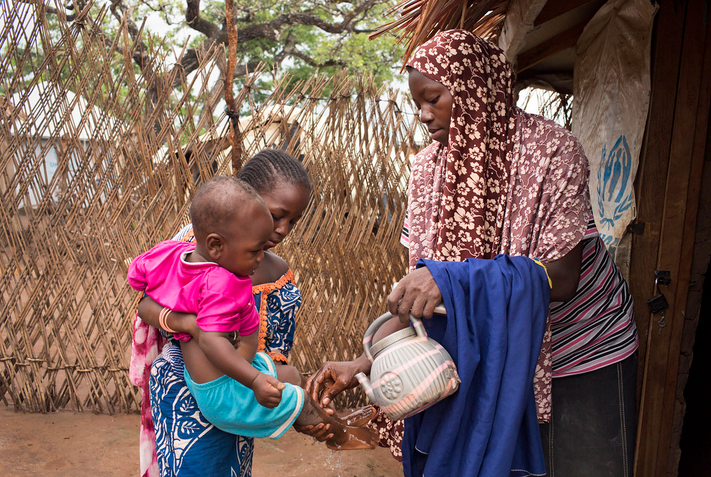
BMJ Open 2022;12:e068212. doi:10.1136/bmjopen-2022-068212. Image credit: Vitalis Barosse via Wikimedia (CC BY-SA 4.0)
- Log in to post comments