










































Association Najdeh
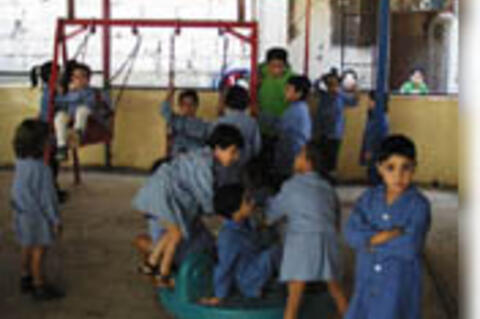
Najdeh uses interpersonal communication to empower Lebanese children and women through educational and capacity-building initiatives intended to provide crucial information and skills. (Click here for details about these offerings). Najdeh also regularly organises activities which are open to all interested members in the community. They include seminars/workshops on issues relating to health, the environment, and human rights.
Some of these activities are geared toward public awareness events which focus on specific issues impacting refugees in Lebanon. For example, to mark the World Day for Prevention of Child Abuse on November 19 (2005), Najdeh carried out several awareness-raising activities in refugee camps:
- Workshops for adults - For example, in Nahr El Bared camp (Northern Lebanon), discussion groups were carried out to explore concepts related to child abuse and to help participants deal with violence against children in effective ways. In Baddawi camp (North Lebanon), a workshop was held on child abuse and domestic violence, and to discuss the purpose of a World Day for Prevention of Child Abuse (46 mothers attended and gave testimonies). In Buss camp (Southern Lebanon), members of 6 NGOs working with children inside the refugee camp attended a workshop called "Violence within Educational Institutions"; also, 11 parents attended a session called "Child Negligence and its Impact". In Borj El Shemali Camp (Southern Lebanon), 5 NGOs working with children inside the refugee camp explored children's rights to education, and parents learned about children's right to free self-expression.
- Involvement of various community stakeholders - For example, in Buss camp, a public event was held including speeches, songs and sketches on child abuse performed by children. NGO representatives, teachers, students, families, community members, and the school director attended.
- Workshops for children - For example, in Shatila Camp (Beirut City), 8 facilitators conducted a workshop with 61 children (7-17 years) called "No to Child Abuse - Yes to Child Protection"; participants received information about child rights and the World Day. And in Borj El Shemali Camp, 13 children (10-14 years) participated in "The Right to Protection from Discrimination".
- Child participation through printed material/artistic expressions - For example, in Baddawi camp, Najdeh held a workshop on child abuse and violence against children; 75 children attended, shared their experiences, and wrote about violence and abuse. They also created drawings and addressed letters to themselves committing not to practice any act of violence or abuse. As part of this initiative, Najdeh created and distributed a paper badge with the message "No to child abuse!" in Arabic. An exhibition of the refugee children's drawings and writings exposing the violence and abuse they have experienced ensued. Similarly, in Ein El Helweh camp (Sidon City, South Lebanon), a workshop was held with 100 girls and boys (7-17 years) with the theme, "The Protection of the Child is a Guarantee for the Child's Future." Children wore the badge, received information about child rights, and were invited to prepare short stories, drawings, sketches and songs on violence against children. The children were also shown a video on child abuse and drugs. A public exhibition highlighting the children's stories and drawings, as well as the same video, was followed by a discussion.
- Child participation through media experiences - In Nahr El Bared camp, as part of a project called "The Young Journalist", children visited and interviewed children who were forced to leave school for work.
Children, Rights, Education, Women, Economic Development.
Najdeh was one of four laureates in the 2006 Women's World Summit Foundation (WWSF) Prize for Prevention of Child Abuse.
Email from the Women's World Summit Foundation (WWSF) to The Communication Initiative on November 10 2006; and Association Najdeh website.
- Log in to post comments