










































Attitudes about Vaccines to Prevent Ebola Virus Disease in Guinea at the End of a Large Ebola Epidemic: Results of a National Household Survey
Centers for Disease Control and Prevention, or CDC (Irwin, Robinson, Li, Hajjeh, VanSteelandt, Bunnell, Martel, Raghunathan, Marston); Focus 1000 (M.F. Jalloh, James, Sellu, M.B. Jalloh); Consultant to the CDC (Corker); Santé Plus (Mahmoud); Ministry of Health, Conakry, Guinea (Diallo); Food and Drug Administration, Center for Drug Evaluation and Research (Tracy)
From March 2014 to May 2016, Guinea suffered a large, national Ebola virus disease epidemic in which 3,814 confirmed, probable, or suspected cases and 2,544 deaths were reported. The government of Guinea's National Coordination for the Fight against Ebola collaborated with partner organisations to increase the public's knowledge about Ebola and to promote life-saving prevention practices; for example, mass media, community events, and door-to-door campaigns spread information about Ebola causes and transmission and advised prompt symptom reporting and avoiding contact with sick people and corpses. As the epidemic waned in August 2015, several organisations collaborated to conduct a national household survey that evaluated the knowledge, attitudes, and practices (KAP) related to the epidemic response and attitudes about hypothetical Ebola vaccines that might inform future use of experimental or licensed Ebola vaccines. This article shares the results of the KAP survey.
Using cluster-randomised sampling, the researchers selected participants aged 15+ years old in Guinea's 8 administrative regions, which had varied cumulative case counts. The questionnaire assessed socio-demographic characteristics, experiences during the epidemic, Ebola-related KAP, and Ebola vaccine attitudes. To assess the potential for Ebola vaccine introduction in Guinea, the researchers examined the association between vaccine attitudes and participants' characteristics using categorical and multivariable analyses.
Of 6,699 persons invited to participate, 94% responded to at least 1 Ebola vaccine question. Most participants were currently married (76.4%), lived with children under age 5 years ("young children", 78.9%), and lived with young children who had received routine childhood vaccines (87.4%) ("young, vaccinated children.") Most participants had in-home radios or televisions (79.1%), but less than half had home electricity (40.2%).
Nearly all (N = 5,752, 91.4%) participants had heard of Ebola before the survey and responded to additional questions about Ebola causes, consequences, prevention, and experiences during the epidemic. Mass media (i.e., radio, television, newspapers, or the internet) were the most frequently cited sources (84.4%) of Ebola information during the epidemic. Virtually all of these 5,752 participants reported taking actions to avoid Ebola (94.5%), such as handwashing or avoiding ill persons or crowds, and more than half had encountered Ebola response teams (58.4%). Few reported relatives, friends, or acquaintances who were affected by Ebola (13.0%). Most who rated their risk of acquiring Ebola (and did not reply "do not know") judged their risk as low or none (82.7%).
Of the 6,295 participants asked about hypothetical Ebola vaccines, the majority agreed or somewhat agreed that a vaccine to protect against Ebola was needed to fight the epidemic (85.8%; 95% confidence interval (CI): 84.6-86.4) and agreed or somewhat agreed that their families would accept safe, effective, preventive Ebola vaccines if they became available in Guinea (84.2%; 95% CI: 83.2-85.2)
Interest and acceptability were higher among participants who: were male; were aged 20+ years; were currently married; had attended secondary school; had home radios, televisions, or electricity (markers of wealth and media access); identified as community leaders; lived with young children; and lived with young, vaccinated children. Interest and acceptability were also significantly higher among participants who knew Ebola-affected persons, had encountered Ebola response teams, or had taken measures to prevent Ebola. Participants who believed people could recover from Ebola or would use Ebola treatment centres had particularly favourable vaccine attitudes. Participants who cited mass media or health workers as frequent sources of Ebola information during the epidemic had more favourable vaccine attitudes than participants who did not cite these sources.
The researchers point out that, "[t]hroughout the interview period, national and international media reported that a safe, '100% effective' Ebola vaccine being tested in Guinea was on the horizon. In fact, these media reports prompted some Guineans to call radio stations demanding to know why this promising vaccine was not being routinely offered to all Guineans. Awareness of these media reports may have increased interest and acceptability in hypothetical Ebola vaccines among some survey participants. It is possible that such high levels of interest and acceptability would wane when Guineans are not threatened by an ongoing epidemic or not exposed to Ebola-related media."
Reflecting on the findings also leads the researchers to discuss the fact that fear of an imminent infection that causes an obvious, severe disease, warrants specialised treatment, and has a high fatality rate may have stimulated interest in potentially beneficial vaccines. These findings, they suggest, "point to possible strategies to promote vaccine acceptance: framing vaccination as a proactive choice that prevents dramatic, life-threatening disease and engaging survivors to champion Ebola vaccination. Additional qualitative research on reasons Guineans might refuse experimental or licensed vaccines can also inform future vaccine promotion messages. Important attitudes to explore relate to vaccine efficacy and foreign manufacture...; safety and risk of confusing possible vaccine side effects (e.g., fever) with Ebola disease; lack of knowledge, access to, or trust in other vaccines or specialized Ebola care (e.g., treatment centers managed by expatriates...); and willingness to pay for vaccines (if not offered for free)."
They also suggest that "future Ebola vaccine promotion efforts should address vaccine safety, highlight any similarities with safe, effective vaccines commonly used in Guinea (e.g., vaccines against measles and group A meningitis...), and engage trusted vaccination programs and Ebola vaccine trial participants."
In conclusion, the high acceptability of hypothetical vaccines indicates strong potential for introducing Ebola vaccines across Guinea. The results from this and other west African household surveys have bolstered ongoing vaccine introduction efforts.
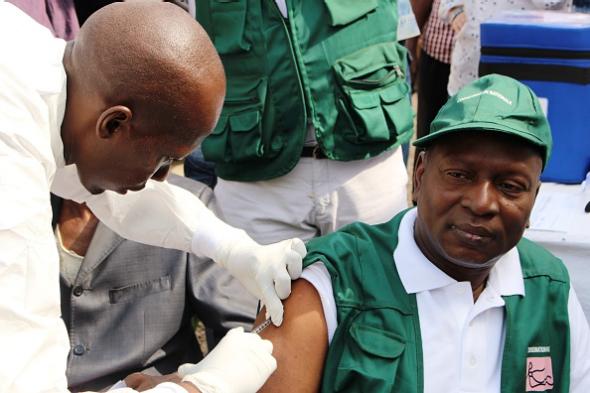
Vaccine Volume 35, Issue 49, Part B, December 14 2017, Pages 6915-6923. Image credit: Cellou Binani/AFP/Getty