










































Behavioral Dynamics Affecting Covid-19 Vaccination Uptake in India
Indian School of Business (Kabra, Sachdeva); Ontario Health (Sheth)
"The behavioral tools of choice architecture, message framing, addressing cognitive biases, and creating norms can be powerful arsenals in the policy-makers tool kit to influence pro-vaccination behavior for the COVID-19 disease."
Although widespread vaccinations can help address the COVID-19 pandemic in India, multiple barriers may limit vaccine uptake. In light of the country's goal of inoculating approximately 1.3 billion people within a year, this article applies insights from behavioural economics in the context of vaccination hesitancy and acceptance in India, focusing on strategies for bridging the intention-action gap. It also offers recommendations to policymakers and healthcare practitioners to help increase COVID-19 vaccination uptake.
As outlined in the article, among the challenges for rapid mass vaccination uptake in India are:
- India's diversity - in terms of demographics and geography, literacy rates, and the presence of various leaders and religious groups with their own opinions about COVID-19 vaccination - makes a universal approach for vaccine promotion campaigns nearly impossible.
- The expedited development of the COVID-19 vaccine and the limited information regarding the vaccine approval process is bound to raise questions regarding its safety and efficacy in the public's mind.
- The unavailability of data on long-term effectiveness and side effects from vaccination may not only deter vaccine supporters but also give anti-vaccinators support for avoiding vaccination.
- The public in India is not accustomed to choosing a brand of vaccine; the multiple brands of vaccines for COVID-19 approved in India with conflicting and incomplete results may lead to "decision paralysis".
- The lack of adequate and equitable access to vaccination centres equipped with medical facilities in small towns and rural areas to address any immediate life-threatening side-effects resulting from vaccination could discourage people from getting a COVID-19 vaccine.
From a behavioural perspective, the process of getting vaccinated can be subdivided into:
- Willingness - key factors affecting an individual's willingness to get vaccinated that are explored in the article include:
- Perception: The health belief model (HBM) proposes that the uptake of a vaccine will depend on the perceived susceptibility of the disease, severity of the disease, benefits of the vaccine, and risks of the vaccine. To fill the void of information, people often develop perceptions based on their own stories, and so fall prey to biases, such as confirmation bias (tendency to seek out information that supports something you already believe); availability bias (tendency to use the information we can quickly recall); in-group bias (likelihood of supporting or believing someone within one's own social group than an outsider); and optimism bias (overestimation of the chance of a favourable outcome). Suggestions:
- Ask people to act as outside observers and consider the vaccination decision for someone like them, which may improve the assessment of their own risk and lead to higher vaccination rates.
- Provide easy-to-understand, clear, and transparent information, allowing people to understand the benefits and risks of vaccination and discern the differences in causation and correlation.
- Leverage regret theory by using loss framing messages in terms of getting seriously ill or encountering death from vaccine-preventable disease, instead of focusing on the vaccine's potential side effects.
- Carefully tailor messages to address people's fears and misinformation.
- Confidence/Trust: People's confidence in vaccination may be reduced, resulting in low uptake, if (a) the manufacturing and distribution for the vaccine are rushed, (b) vaccines are manufactured in countries in which people have low confidence, and (c) there is a lack of transparency related to the vaccine's approval process, benefits, and side effects. Suggestions:
- Disseminate information periodically and transparently on the approval process and rigorous surveillance measures, of cases of ineffectiveness, and of possible COVID-19 reinfection despite vaccination.
- Communicate concretely and consistently, ensuring that information feels immediate, proximate, feasible, and likely to directly affect people or those they care about.
- Monitor, contain, and address the rapid spread of misinformation (the so-called "infodemic") on social media channels to gain the public's trust.
- Highlight the clinical endorsement of vaccines by people involved in the manufacturing and approval of the vaccines, and showcase medical professionals and politicians getting vaccinated.
- Take decisive steps to identify and control any potential fake vaccine market, considering that fake, counterfeit, or substandard medicines account for 25% of India's drugs.
- Provide people with a choice and control over their decisions regarding the type of vaccine.
- Norms: The theory of planned behaviour (TPB) proposes that uptake of the vaccine will depend on subjective and social norms. Subjective norms concern a person's beliefs about whether peers and people of importance think they should engage in the behaviour; social norms refer to the customary codes of behaviour in a group of people or a larger cultural context. Suggestions:
- Use consistent messaging that iterates based on the context and the audience.
- Show society influencers taking the vaccination jab on social media to create a powerful ripple effect.
- Provide relevant medical practitioners with a toolkit that contains messages and FAQs, which can be used as a reference material to address patients' concerns regarding vaccination.
- Engage nodal links such as the school system or large employers to spread vaccination information, which may influence subjective norms and intended behaviour.
- Altruism - Suggestion: Convey how a vaccination decision impacts the wellbeing of more vulnerable segments of the population who cannot take the vaccine with messages such as, "thank you for vaccinating; you have saved the life of a cancer patient."
- Perception: The health belief model (HBM) proposes that the uptake of a vaccine will depend on the perceived susceptibility of the disease, severity of the disease, benefits of the vaccine, and risks of the vaccine. To fill the void of information, people often develop perceptions based on their own stories, and so fall prey to biases, such as confirmation bias (tendency to seek out information that supports something you already believe); availability bias (tendency to use the information we can quickly recall); in-group bias (likelihood of supporting or believing someone within one's own social group than an outsider); and optimism bias (overestimation of the chance of a favourable outcome). Suggestions:
- Action - Addressing the last-mile challenge to access the vaccine is dependent on:
- Barriers: People are far less likely to search for, pay attention to, understand, or use information, or choose wisely, when the hassles are substantial. Suggestions:
- Make vaccination centres easily reachable, accessible for differently-abled, familiar to the public, approved for safety, and rigorously sanitised, and set up an easy, fast process for scheduling and getting vaccinated (e.g., with the help of Co-WIN App, a mobile application).
- Ensure that healthcare workers are knowledgeable in educating the public about the benefits, side effects, what-to-dos, costs, and where-to-go facts on COVID-19 vaccination and that they pay close attention to customer service.
- Use proven strategies from operations management to help minimise over-crowding at vaccination facilities, and ensure respectful time management to decrease the no-show rate.
- Affordability: 90% of COVID-19 vaccination costs are covered under India's Universal Immunization Programme (UIP); the Indian government can take advantage of pandemic pricing policies through which the vaccine developers cannot generate extraordinary profit.
- Barriers: People are far less likely to search for, pay attention to, understand, or use information, or choose wisely, when the hassles are substantial. Suggestions:
Looking ahead, "policymakers and essential government task forces need to play a significant role in influencing vaccination perception and thus creating much-needed trust and confidence in the process and benefits of vaccination." They can draw on some of the behavioural tools outlined in this article, the selection of which requires an "understanding the root causes of vaccine hesitancy and...an experimental mindset to determine the best course of action." Furthermore, "India can draw from the effective interventions employed by the western countries and its own world-recognized past vaccination efforts, including the eradication of polio and smallpox to ensure uptake of COVID-19 vaccination within its population."
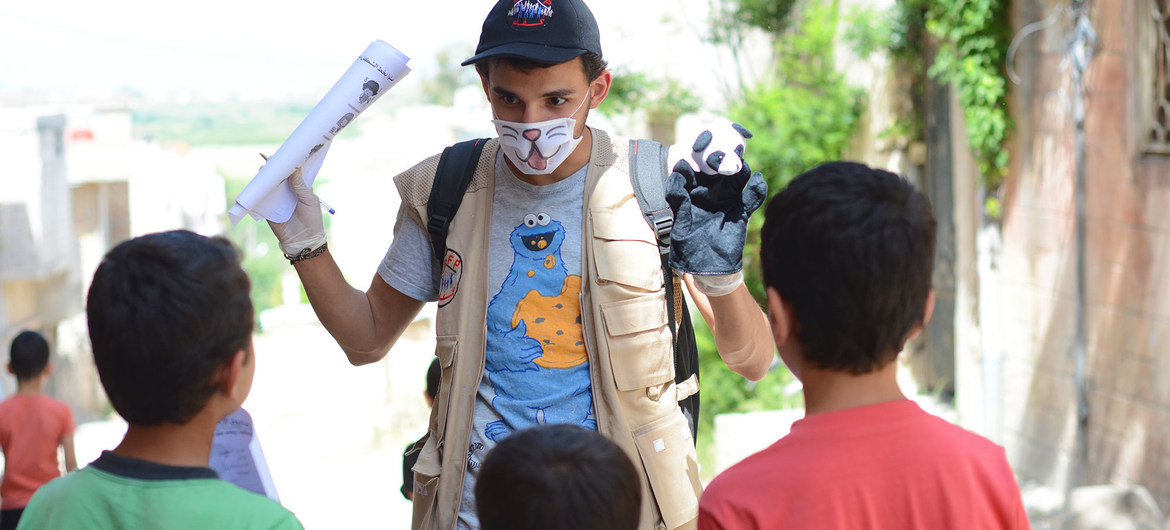
Health Management, Policy and Innovation, Volume 5, Issue 1, special issue on COVID-19, January 2021. Image credit: United Nations Children's Fund (UNICEF)/Vinay Panjwani
- Log in to post comments