










































The Bernard van Leer Foundation Annual Report 2011
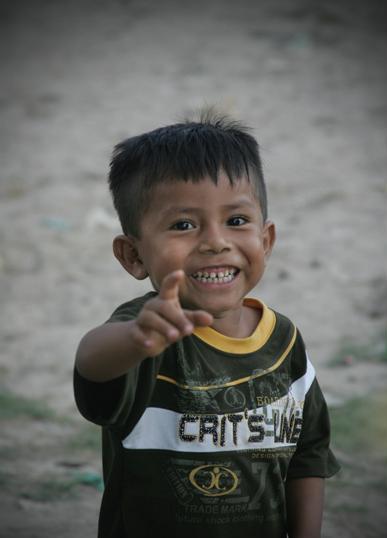
"In fact, while we can learn much from data gathering and analysis in the short term, we will not get a true picture of success until children with access to quality ECD [Early Childhood Development] have grown up and had children of their own."
This report details the Bernard van Leer Foundation (BvLF) grantmaking activities and financial situation for the year 2011. It discusses two ways the BvLF has begun moving forward with programme goals for 2011-2015: establishing a baseline for those strategies and forging partnerships to be able to ensure that more young children are served. "For the Foundation the primary aim of the baseline research remains, however, to provide a starting point to monitor and evaluate the impact of our own strategies on children." The report is in English, and there is also an executive summary in Spanish.
Some of the partnerships described are the following:
- "Through the Network of European Foundations we have been able to provide support to the Roma Education Fund to improve early learning for Roma children. Funding partners include Erste Foundation, the Remembrance Fund, Freudenburg Foundation and the European Union. The LEGO Foundation enlarged the impact with a generous donation of toys for toy libraries and kindergartens that were set up as part of this effort."
- "In 2011 we therefore initiated a fieldbuilding exercise with nine other foundations, the World Bank, UNICEF [the United National Children’s Fund] and UNESCO [the United Nations Educational, Scientific and Cultural Organization] to work together on three key issues: translating the existing evidence for investing in early childhood into a coherent and compelling case for the public, parents and politicians; finding new and innovative models for financing early childhood services; and building the capacity to sustain systems to deliver those services."
- "We created a partnership with two other foundations (Optimus and Oak Foundations) to launch the Evaluation Challenge Fund. This fund stimulates research to identify which interventions have proved effective in stopping violence against young children in low-income countries.”
The three BvLF goals are the following:
- Bringing quality early learning programmes to scale
- Reducing violence in young children’s lives
- Improving young children’s physical environments
Strategies by country include:
The Netherlands: Together with Stichting Kinderpostzegels, the BvLF provided finance for a special edition of Kinderen in Tel (Kids Count) focusing exclusively on child abuse in 2011. BvLF learned lessons on data modelling and motivating municipalities (reporting of variations in child abuse make comparison of municipalities difficult, making published comparisons challenging.)
Their baseline research showed that young children in families whose parents are migrants or lack education enter school with a disadvantage in Dutch language and mathematical skills. Research on the Voor- en Vroegschool Educatie (VVE) programme of centre-based playgroups showed a need for more teacher training to effectively facilitate group work and interact with the children and that mixing in the playgroups with children from wealthier and native Dutch families is advantageous for migrant children. The BvLF strategy focuses on reaching the parents of the most disadvantaged children through home-based support programmes.
Uganda: BvLF chose the approach implemented by a local partner Health Child Kisima Island, on the shores of Lake Victoria. "Health Child set out to establish a dialogue with local families, elders, young people, leaders and opinion makers to get a sense of what the community felt needed to be done and who were the right people to do it. It emerged, for example, that the younger generation had stopped eating nutritious traditional plants which were freely available locally, so Health Child organised workshops in which grandmothers showed young mothers which plants to use and how to prepare nutritionally balanced meals. As a result, children’s height and weight both measurably improved. The committee chosen by the community to lead the project also secured the agreement of every household to improve community hygiene by digging rubbish pits; created child-friendly spaces where young children could play under the supervision of trained caregivers; and successfully reinvigorated the local primary school by meeting with the district education officer on the mainland to alert him to a long-standing problem with teacher absenteeism. Most encouragingly of all, the productive dialogue among community members continues."
Peru: BvLF funded a research process involving slightly older children in studying the quality of life of young children in Iquitos, Peru. "For the adolescents, involvement in the research has given them new skills and insights; in particular, in an area in which parenthood often happens early, it has opened their eyes to the challenges involved in raising young children." Resulting from lobbying and a change in government in Peru, there is a new integrated childcare programme for children under 3 years old, Cuna Más. BvLF research shows a need for coordinated and well-publicised governmental services to ensure access, a need to address violent disciplinary behaviours, and a possibility of working with women victims of violent discipline (who are less inclined to use violence) as allies in changing the tolerance of violence as a disciplinary approach to child rearing.
Brazil: BvLF and Associação Brasileira Terra dos Homens (ABTH) did baseline participatory research to understand the life of young children of street vendors of Rio de Janeiro and found that they were not homeless but couldn't afford travel expenses from home to their workplace. As a result of a detailed demographic census and a street map of the slum, the municipal government is working on services, 200 new childcare centres are functioning, and economic opportunity for young parents is being developed. In addition, a proposed new national law banning physical and humiliating punishment is under debate, and a scale-up of home visiting programmes in the Amazon is under way.
India: BvLF is working with the Odisha Adivasi Manch (OAM) to support the cause of early childhood. OAM represents indigenous people in 22 tribal-dominated districts. "OAM has committed to campaign for:
• an expansion of the Right to Education Act to cover children under 6 years old
• all preschools in tribal areas to be mother tongue based multilingual
• tribal women to be selected as government preschool teachers in the tribal areas
• the mother tongue-based, multilingual approach to be covered in state preschool policy."
Israel: BvLF research shows that part of the problem for 45,000 Bedouin children in the Negeev desert "is a lack of public education about nutrition, health and hygiene, which the project will address by developing educational resources and holding public events, training 18 Bedouin women to be health promoters, and working with 40 imams to disseminate health messages. The Foundation’s grant will also help to fund a series of demonstration projects addressing various factors that contribute to malnutrition and morbidity among children in the Negev. These include using solar energy to keep food fresh and medicines safe; working with grandmothers to create safe play spaces for children; investing in a business that supplies nutritious meals to preschool children; and investigating how town planning and transport networks can be made more child-friendly. The project will be implemented by the Arab-Jewish Center for Equality, Empowerment and Cooperation of the Negev Institute for Strategies of Peace and Development (NISPED-AJEEC)."
Tanzania: BvLF research showed a need to improve the quality of early learning centres and address economic poverty and malnutrition. It is also advocating for government action on violence against children.
Turkey: At conference on migrant children within Turkey, BvLF-funded research by the Child Culture Research and Application Centre (ÇOKAUM) at Ankara University resulted in discussion and media coverage and workshops for government and non-governmental organisations on living conditions, educational services, and nutrition.
European Union: The Foundation organised a workshop which brought together 25 key stakeholders concerned with the early development of young Roma children. Meetings followed with country education organisations to increase the capacity of relevant stakeholders and service providers to include Roma children in early childhood interventions and to stimulate dialogue with a view to sharing lessons learned, as well as mainstreaming inclusive ECD.
The document then describes: international efforts including the Evaluation Challenge to foster capacity building and knowledge transfer through partnerships between researchers and practitioners; MenCare - a global fatherhood campaign, run by Promundo in Brazil and Sonke in South Africa; and advocacy for a General Comment from the United Nations Committee on the Rights of the Child on the right to play.
Bernard van Leer Foundation website, July 27 2012.
- Log in to post comments