










































Cartoons, TV and Pollies 'Create School Bullies'
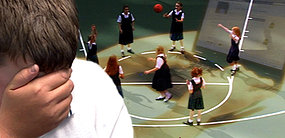
ABC News
This ABC news article is about research suggesting that children's media exposure is a big factor in whether or not children become bullies at school. The article includes interviews with paediatrics instructor David Bickham, Harvard Medical School, Cambridge, Massachusetts, United States, and Alison Wotherspoon, the screen production coordinator at Flinders University, Adelaide, Australia.
As stated here, Harvard's Centre on Media and Child Health found that children learn socially acceptable behaviour from television and movies and then model that in the playground. Dr. Bickham states that the media can affect children's behaviour by portraying violence and aggression as the norm. He points to the fact that those portrayed as "good guys and bad guys" both use violence without having the negative consequences of their acts portrayed.
Alison Wotherspoon states that bullying is being modelled in a range of television programmes that aren't specifically for children, but that children are going to watch. She describes a programme that is classified as "reality TV" in which the viewing audience votes some of the participants out of the show, described here as a model for construction of a bullying environment with "classic exclusion". She notes the "humiliation factor" in having panels of judges talk to a person on TV about, for example, his/her ability to sing or dance. She also cites the disrespectful behaviour of politicians "where it's acceptable to belittle someone and call them names and laugh at them and this is our top politicians being paid to do so."
In conclusion, Dr. Bickham points out that while media use is just one factor in children's bullying behaviour, it is, he feels, the easiest influence to counter: "A lot of the other factors are very, very complex about family environment and social economic status.... All of these things, cultural norms, things that are much more complex to actually do something about and the media, if we can talk to parents and show them the research and illustrate what's happening, then maybe we can help them make informed good health decisions."
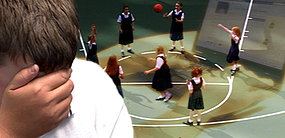
Youthful-media - Young People's Media Network, February 22 2010. Image source: ABC News Online
- Log in to post comments