










































Changing Behavior to Improve People's Lives: A Practical Guide
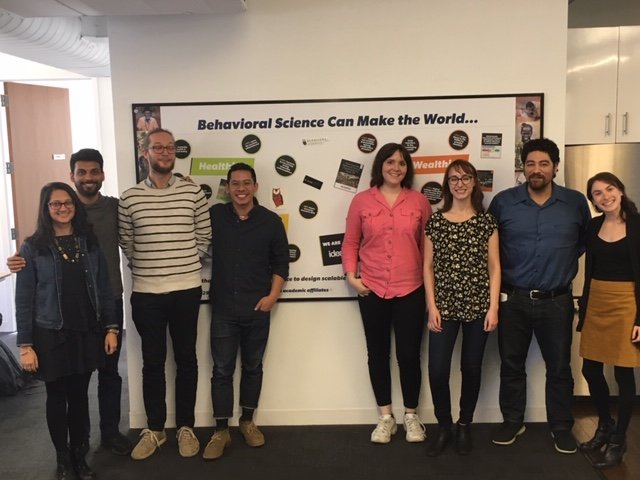
This resource focuses on the role of behaviour change in improving individual and social outcomes. The framework is based on the work of ideas42, an organisation that uses insights from behavioural science to design scalable solutions for social impact.
The ideas42 approach is based on the observation that many, if not most, technological solutions ultimately depend on individual behaviour. The birth control pill, invented in the 1950s, provided a technological solution to the need for contraception. But effective use of the pill requires that it be taken for three weeks with a break for the fourth. For many users, this regimen, with its irregular routine, was more difficult to follow than taking the pill every day. The behaviourally informed solution was to include a fourth week of placebos.
The core resource components correspond to the first four parts of the ideas42 framework (with the fifth being "SCALE"):
DEFINE: Identify the problem and intended outcome
- Determining the causes of the problem
- Identifying the beneficiaries and their needs
- Identifying possible approaches to solving the problem
- Eliminating approaches that seem implausible or weak under the particular circumstances
- Identifying behavioral aspects of your theory of change
DIAGNOSE: Hypothesize barriers to target behaviors relevant to your strategy
- Introduction: Transition from define
- Decision-Action Map
- Behavioral barriers
- Decision barriers
- Action barriers
- Diagnosing the 'Water jug chlorination' strategy for addressing infant diarrhea
- Transition to Design
DESIGN: Develop strategies to address behavioral barriers
- Introduction: Transition from Diagnose
- Brainstorming
- Common Interventions
- Concept selection
- Design and Diagnose Redux
- Unintended consequences
TEST: Testing your designed intervention through prototyping
- Testing in the field
- The challenge of generalizability
A case study and conclusion, the latter featuring "a word on the ethics of influence", complete the resource.
Publishers
60
ideas42 website, November 4 2019. Image credit: Denver Frederick
- Log in to post comments