










































Changing Perceptions of HIV/AIDS in Vietnam
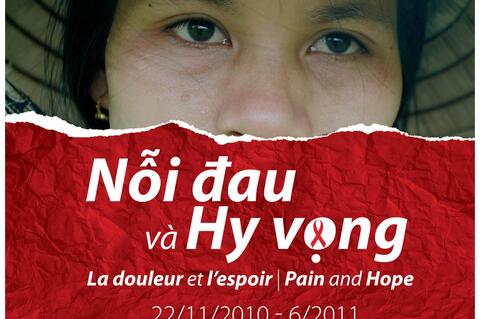
The Center for Community Health Research and Development (CCRD) and the Vietnam Museum of Ethnology (VME), Hanoi, Vietnam, in collaboration with Columbia University, New York, United States (US), organised a museum exhibition in Vietnam on HIV/AIDS through creative paintings, sculptures, photographs, digital media, and interactive performance. The purpose of the exhibition was to generate public discussion and debate and reduce stigma against people with HIV/AIDS. The exhibition has become a long-term installation at the VME.
Displaying personal belongings, artefacts, pictures, and memories donated by individuals living with HIV/AIDS, the exhibition depicted the lives of infected people and their families and traced changing perceptions about the epidemic over time. According to the exhibit organisers, HIV/AIDS was once considered a social evil in Vietnam, and media depicted HIV-infected people with negative images. The perception has gradually changed through public dissemination of accurate information by the government and international organisations.
The exhibition shows how the epidemic has altered the social life of Vietnamese society in many ways over the past 20 years. Through the exhibition, people living with HIV/AIDS and those engaged in HIV/AIDS research, advocacy, and prevention efforts met and shared their experiences. On March 1 2010, the website of the Project Vietnam HIV/AIDS exhibition was established to provide the visitors with the detailed information of the exhibition and to call for the community’s involvement through their donations including ideas, artefacts, pictures, and memories to the HIV exhibition. Aimed at bringing the exhibition closer to the general population, especially people far away from Hanoi, the website is filled with photos, artefacts, and stories collected from the fieldtrips in Hai Phong, Dien Bien, and Ho Chi Minh City. In addition, there is a forum on the website for members to discuss and share ideas and knowledge.
HIV/AIDS.
According to CCRD: "Since the early 1990s, when the virus was first reported in Vietnam, the epidemic has increased rapidly throughout the country and has indelibly influenced all levels of Vietnamese society – from the lives of individuals infected with HIV and their families to the policy and programmatic efforts of a diverse array of government bodies, international agencies, and local community organizations. Given its unique epidemiological characteristics and social and economic features, HIV/AIDS is one of the few epidemics in the recent history of Vietnam that holds such social significance for this country."
The Center for Community Health Research and Development (CCRD) and the Vietnam Museum of Ethnology (VME), in collaboration with Columbia University.
Email from Huyen Trn Dieu to The Communication Initiative on January 30 2012, and the Center for Community Health Research and Development website on January 31 2012.