










































Collaborative Approach to Community-based Malaria Prevention in Benin
This four-page document outlines the strategies used in a community-based malaria prevention project implemented by Plan Benin from 2007 to 2009. The project was designed to contribute to the reduction of child and maternal mortality rates by improving behaviours related to the prevention and treatment of malaria. It was funded by United States Agency for International Development (USAID) and overseen by the University Research Co. LLC (URC) through the USAID-funded Quality Assurance and Health Care Improvement projects. According to the document, participatory methods can be used to improve community-based programme implementation through adapting local behaviour patterns to best practices for a health issue (in this case malaria), thus achieving significant results in a short period of time and at a low cost by maximising methods that are proving successful. This can be extended by adapting best practices to other localities in the region/country through a controlled scale-up strategy.
The Benin project used the improvement collaborative approach and was implemented in 50 villages. Specifically, the project was designed to increase use of insecticide-treated bed nets from 34% to 60%; promote appropriate management of malaria in households and communities; increase timely care seeking for complicated malaria among children under five and pregnant women by 40%; and strengthen collaboration between health structures and communities through home visits and support to community groups.
The report details the improvement collaboration approach, explaining how it was implemented in two phases: the collaborative demonstration phase, and the collaborative expansion phase.
Collaborative Demonstration Phase
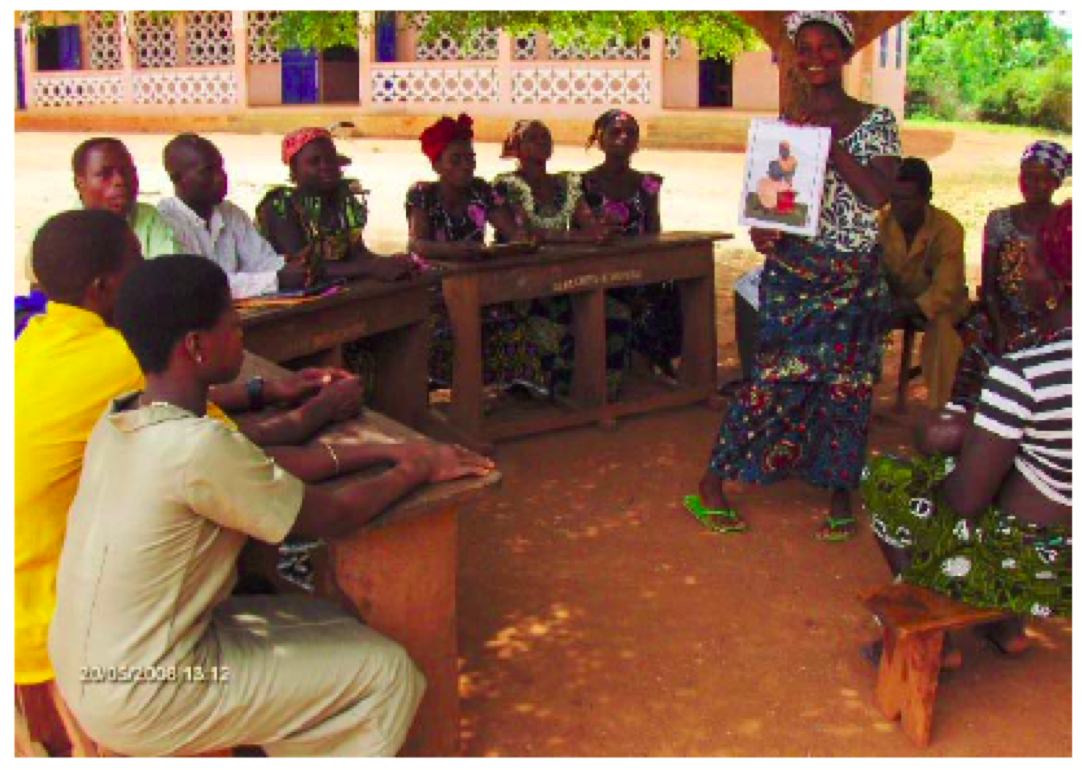
The first phase involved 20 pilot villages. In each village, Quality Improvement Teams (QIT) made up of various village stakeholders mobilised villagers to learn about and take action against malaria. The efforts of these teams included promoting knowledge around malaria transmission and prevention, and the signs of complicated malaria; conducting unannounced night visits to ensure proper use of bed nets; and collecting data on common indicators. Bimonthly sessions were held by each QIT to report data and project progress, and quarterly learning sessions were also held with all QIT's in a different village each quarter.
Collaborative Expansion Phase
The second phase built upon activities that were refined during the first phase, expanding the project to an additional 30 villages. The document states that because existing villages were able to share refined methods they had developed, expansion villages were able to more rapidly reduce malaria prevalence and transmission in their own villages.
Results
The report includes key results of a final evaluation conducted in 19 of the projects pilot villages. The evaluation found that the project succeeded in improving bed net utilisation among the intended groups. Net use increased from 34% to 70%, with 90% of mothers with infants aged zero to 11 months reporting sleeping under bed nets in the previous 24 hours.
According to report, the project educational activities and home visits were also effective in increasing the provision of appropriate home-based care and treatment of malaria. In addition, one of the effects achieved through the project was an increase in knowledge of the danger signs of malaria and a consequent increase in referrals of serious malaria cases to health facilities. The project enabled 95% of mothers with children under five to identify at least one sign of serious malaria.
Conclusion and recommendations
The document suggests that the improvement collaboration approach has proven to be an effective means of creating an environment that fosters sustained behaviour changes, and say that two main strategies contributed to this success: increased collaboration between communities and health facilities, and community learning and problem solving. The report adds that new strategies for building ownership and sustainability of project activities within the community should be developed. In addition, Plan Benin and other local actors should continue to expand the establishment of QITs and support shared learning experiences to efficiently scale up the approach throughout Benin.
CORE Group website on June 3, 2011.
- Log in to post comments