










































Communication with Communities: Walking the Talk
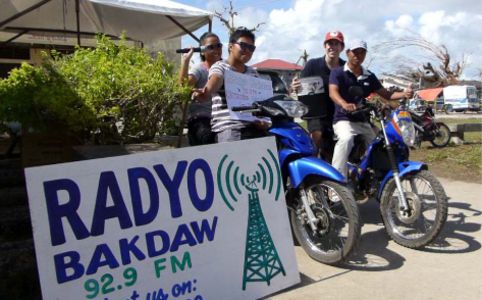
"If we are to meet the growing needs of disaster-affected communities around the world, we must do more to truly listen to them and, crucially, to tailor our responses accordingly. However, the fact is that the implementation of these commitments remains inconsistent and unpredictable during response."
This policy brief from Internews presents the rationale and evidence for increasing investment and uptake in communications with communities (CwC) as part of humaniarian response, and makes recommendations for policymakers to maximise CwC's potential. In an increasingly connected world, crisis-affected communities have the tools to demand information, engagement, and action. In this context, enabling people to communicate with each other, not only with humanitarian organisations, is increasingly acknowledged as an important contribution to a humanitarian response. The paper explores why and how to put people at the centre, sharing lessons learned and recommendations from Internews' own experience.
Including the affected population in the humanitarian decision-making process is described here as key to restoring their dignity and their sense of agency, improving their relationship with humanitarian actors, and delivering more efficient and effective preparedness, response, and recovery in several ways. Internews characterises information as a right and a lifesaver; communicating with people in crisis can be critical to psychological resilience under stress. Participation improves sustainability, and CwC enables transparency and accountability. Listening to communities delivers localisation and efficiency, as was seen during the Manila floods in the Philippines in 2012, when Twitter users responding to the floods organised themselves around the hashtag #rescueph to help search and rescue teams do their work more effectively. Several other examples are provided to illustrate how effective CwC has helped humanitarian actors and communities evaluate and interpret rumours to ensure people affected by crisis are able to make accurately informed choices about their own recovery. These examples include Nepal's 'Open Mic' following the 2015 earthquake, the 'Sak Di Sak Vre' (What is Said, What is True') bulletin in response to Haiti's 2016 hurricane, and News that Moves, launched in 2015 in Greece to provide migrants and refugees with reliable and verified information through a website, dedicated Facebook pages in Arabic and Farsi, and rumour-tracking bulletins.
Lessons learned are shared and, in brief, include:
- Diverse communities need dynamic engagement strategies.
- There is a collective responsibility for organisations to share information about response activities and to coordinate CwC.
- Collection of feedback without action can lead to the perception that organisations are actively ignoring the community.
- Successful two-way communication depends on the design of fast and locally relevant feedback loops.
- The use of appropriate language to communicate is key to encouraging participation and ensuring impact, especially if the information is culturally or politically sensitive.
- Face-to-face dialogue remains one of the most powerful engagement tools and is often preferred by the community ("Online information exchange and social media represent a technology-driven extension of face-to-face and peer-to-peer communication".)
- Communication preferences should be assessed, not assumed.
- The role of local media is vital; for instance, the community sees local media as being independent from the humanitarian response and therefore a channel through which people can talk freely about sensitive issues, such as corruption.
- Two-way communication should inform the full programme cycle.
Recommendations are offered; in brief, donors should:
- Demand that organisations prove how they are delivering better engagement and participation in their programme design, implementation, and evaluation.
- Recognise the value of investment in local media capacity in order to maximise the potential of local media to enhance CwC (and therefore humanitarian action more widely).
- Support collective approaches that more efficiently use resources, build local capacity, and enable humanitarian actors to speak with one voice - ensuring consistency in community engagement efforts and reducing "engagement fatigue".
- Support CwC preparedness planning to ensure that community engagement is central to planning efforts so as to engage a diverse range of stakeholders in advance of crisis and increase the likelihood of coordinated CwC efforts during a response.
Internews website, October 2 2017.
- Log in to post comments