











































Community Dialogue to Address Antibiotic Resistance in Bangladesh: Research Intervention
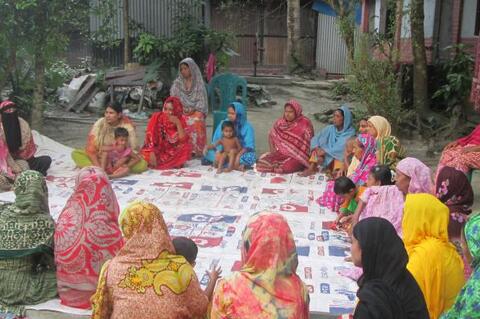
The community dialogue approach (CDA) is a community engagement approach that aims to trigger individual and social change in communities for improved health outcomes in low-resource settings. Drawing on this approach in an effort to combat the spread of antibiotic resistance, this intervention was implemented in the catchment area of 5 community clinics in Comilla district, Bangladesh, between April and October 2018. Its feasibility and acceptability were assessed with the help of routine monitoring and evaluation data, as well as qualitative research with community members, volunteers, supervisors, practitioners, and policymakers.
On the CDA, community-based volunteers facilitate regular community meetings to explore how a health issue affects the community, identify solutions, and decide collectively how to address the issue. The approach is embedded within the health system to provide technical oversight and supportive supervision to the volunteers, as well as strengthen care seeking. It also seeks to link with community structures to increase acceptability and mobilisation of resources.
Key stakeholders at policy, health system, and community levels were engaged throughout the process of developing the intervention, which was shaped by a mixed-methods design that involved: reviewing community engagement approaches in low- and middle-income country (LMIC) settings; conducting exploratory research; drawing on appropriate social and behaviour change theories; and applying lessons learned from the research team's experience with training community healthcare providers and implementing the CDA intervention.
In the study area, 55 Community Dialogue volunteers were selected by the communities and then participated in a 3-day training on the appropriate use of antibiotics, as well as on basic communication and facilitation skills. The volunteers were equipped with a flipchart containing images illustrating key messages. The flipchart was designed to stimulate discussion among the community and encourage the sharing of stories and experiences. To embed the Community Dialogues within the health system, the volunteers were supervised by community support groups linked to the network of community clinics.
With the help of community leaders, Community Dialogue volunteers were tasked with organising and hosting regular meetings in their community. Each meeting was open to the entire community and included a general overview of antibiotics and antibiotic resistance before focusing on a more specific topic, such as the difference between antibiotics and other medicines.
Health
The spread of antibiotic resistance has been cited as a critical threat to global health, food security, and development. The World Health Assembly's global action plan to tackle antimicrobial resistance recognises the urgent need to improve understanding of antimicrobial resistance at community level. For example, the general public can help combat antibiotic resistance by preventing infections, using antibiotics only when prescribed by a health professional, completing the full prescription, never using leftover antibiotics, and never sharing antibiotics.
Over the course of the study, 446 Community Dialogue meetings were conducted. Decisions documented by communities included not buying antibiotics without a prescription, visiting the community clinic if unwell, and encouraging handwashing among community members. A major challenge observed was volunteers' ability to facilitate rather than dominate community dialogue meetings and encourage active participation. Observations also highlighted the need to reinforce some of the key messages in regular feedback meetings with all volunteers to ensure they are communicated correctly.
Nuffield Centre for International Health and Development, University of Leeds, ARK Foundation, Malaria Consortium. Donors include: Economic and Social Research Council, Higher Education Funding Council for England
Community Dialogue to Address Antibiotic Resistance in Bangladesh [PDF], submitted by Michael Haydock to The CI's Health Communication Network on October 1 2019; and email from Christian Rassi to The Communication Initiative on October 22 2019.
- Log in to post comments