











































The CORE Group Polio Project India Sharing of Experiences with Polio Program, Government of Afghanistan, Kabul
CORE Group Polio Project (CGPP) India
This presentation (and associated trip report) shares insights about how India eliminated polio. It was delivered by Mr. Jitendra Awale of the CORE Group Polio Project (CGPP) India to the Government of Afghanistan and the United States Agency for International Development (USAID) on a June 6-13 2013 exchange visit to share lessons learned.
In opening slides, Mr. Awale maps out the high-risk areas in Uttar Pradesh (UP) that the Social Mobilization Network (SMNet) covers and shares other statistics indicating how polio Supplementary Immunisation Activities (SIAs) have helped to wipe out polio in India. He explains the progress by pointing to partnership - one element of which is the collaboration between CGPP and the United Nations Children's Fund (UNICEF) on communication strategies. Political commitment and strong government ownership at all levels are amongst the other strategies behind India's success that Mr. Awale highlights.
Mr. Awale discusses communication-related challenges, such as community resistance that grew in Western UP in 2001. Hindu and Muslim mothers heard rumours and concerns about the oral polio vaccine (OPV), such as the belief that polio immunisation led to impotency and/or was part of a family planning programme. In response, UNICEF and CORE set up the SMNet, which included community mobilisers selected from the same communities to overcome resistance and sustain community participation for polio eradication and routine immunisation (RI).
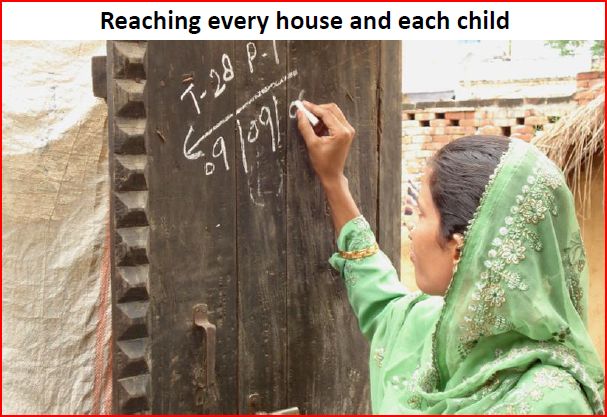
Amongst the elements that Mr. Awale feels contributed to the success of the polio programme in India is improved SIAs. He explains that vaccination booths, which are organised on a Sunday, are decorated to give them a festive look. Meanwhile, vaccination teams visit each and every house Monday through Friday. Then, houses with unvaccinated children are revisited on the following Monday. The entire process of following up is described, including finger marking and classification of reasons why each child has remained unvaccinated. Mr. Awale notes that analysis of "resistance" had led to the development of negotiation strategies (as opposed to an instructive approach). This has spawned a focus on skill-building in the area of interpersonal communication (IPC) for vaccinators and community mobilisation coordinators (CMCs), each of whom covers 400-500 houses. They undertake activities such as visiting pregnant women and presenting them with a "congratulation card" when they give birth.
Other elements described here are health camps, children's rallies, intensive engagement with religious networks, and efforts to reach migrants, mobile communities, and all of those in hard-to-reach areas. As part of some of these activities, CMCs have conducted IPC sessions on the importance of polio vaccination and RI.
In addition to outlining recent innovations and research by the India programme, such as the use of mobile technology, Mr. Awale's closing remarks describe the legacy of India's polio programme, highlighting features such as strong ownership by the government at all levels, partnership (each organisation complementing each other's capacities), the SMNet and community involvement it implies, and community empowerment to ask for their rights. Yet, he stresses that the job is not yet over, emphasising the importance of maintaining civil society involvement in eradicating polio.
Click here to access the 64-slide PowerPoint presentation in PDF format.
Click here for an associated 5-page trip report by Mr. Awale in PDF format.
Emails from Ellyn Ogden and Jitendra Awale to The Communication Initiative on June 16 2013 and September 16 2013, respectively.
- Log in to post comments