










































Covering Migration: Challenges Met and Unmet
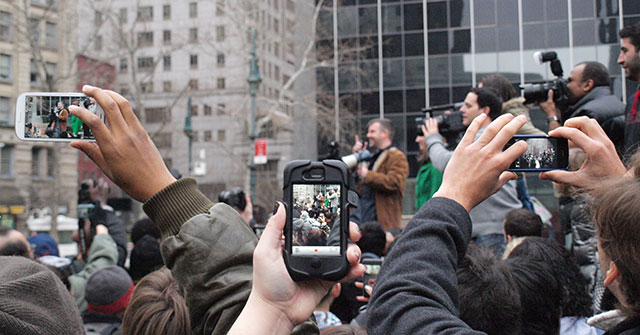
From a meeting for journalists to assess the importance of media in shaping and influencing public perceptions of migration, this document contains recommendations for: reporting, involving migrants, media actions, and governmental and non-governmental actions. The meeting was organised on February 19 2013 in New York, United States, by the United Nations Alliance for Civilizations in partnership with the Global Editor’s Network and hosted by the Gulbenkian Foundation.
Participants included a diversity of media representatives such as the BBC (United Kingdom), El Mundo (Spain), Corriere della sera (Italy), NZZ (Switzerland), derStandard.de (Austria), Komsomolskaya Pravda (Russia), Maariv (Israel), and Al Ahram (Egypt), alongside migration experts from intergovernmental organisations, think tanks, and academics from the International Organization for Migration, Sciences Po-Ceri, the Ethical Journalism Network, and the Geneva Center for Security Policy, among others.
Discussions were structured for an exchange of best practices and ideas on ways to: strengthen the role of international organisations; establish partnerships with governmental, intergovernmental, and other organisations and groups; and work with civil society and media to heighten awareness and foster responsible media coverage of migration. Participants suggested a series of guidance documents, including a glossary of acceptable terms and reporting guidelines.
Participants also proposed including migrants in representing themselves - in particular telling their stories so that reports can include primary sources with detail and insight. It was agreed that both journalists and editors must pay close attention to how the information is used so that it cannot be misconstrued in such a way as to cause harm.
It was noted that the media need the help and support of governmental and non-governmental organisations as it adjusts to the recommended practices, for example, by advancing a framework and platform for the continued conversation, for monitoring trends, and for the advancement of ideas.
In summary, the document includes recommendations in four areas:
- Reporting on migration with a working knowledge of the topic, for instance offering journalists a media-friendly glossary in multiple languages, a collection of codes and guidelines on various types of coverage, a professional degree in migration issues for journalists as a specialisation, and facilitated access to refugee camps and detention centres.
- Involving migrants in migration coverage, including employing migrants or individuals of migrant origin in the newsroom, using migrants as primary sources, and encouraging the development of the migrant’s voice in the national press associations through migrant representatives.
- Media actions, including encouraging timely publication of accurate data and use of data, organisational audits for accuracy and ethics, a policy of anonymity for subjects and sources, a balanced portrayal of migrants in print and image publication, and more rigorous review and editing of stories.
- Governmental and non-governmental involvement, for instance, forging formal and informal inks between journalists and other partners, rewarding journalists for quality coverage of the issues, facilitating open access to information and sources, monitoring of hate speech, coordinating work among media and migration experts and professionals, and convening experts in newsrooms to develop analyses and articles on migration in order to enhance fruitful exchange within the locations where the news is being produced.
Press release from The Alliance of Civilizations (UNAOC) on February 19 2013.
- Log in to post comments