










































Current Challenges and Proposed Solutions to the Effective Implementation of the RTS, S/AS01 Malaria Vaccine Program in Sub-Saharan Africa: A Systematic Review
University Hospitals of Leicester (Dimala); Health and Human Development (2HD) Research Network (Dimala); Universite Libre de Bruxelles (Kika); Clinical Research Education, Networking and Consultancy Group, or CRENC (Kika); London School of Hygiene and Tropical Medicine, or LSHTM (Kadia, Blencowe); Grace Community Health and Development Association (Kadia)
The Malaria Vaccine Implementation Program, coordinated by the World Health Organization (WHO), intended to initiate the roll-out of the RTS, S/AS01 malaria vaccine in 3 sub-Saharan African countries (Ghana, Kenya, Malawi) in 2018. This study had as objectives to systematically review and summarise studies published between 1947 and 2017 that address the challenges faced during the implementation phase of malaria vaccination programmes and randomised trials conducted in sub-Saharan Africa (SSA). The review also sought to report proposed solutions to the challenges identified.
The 8 studies included in the review had a total of 6,189 participants and used a variety of methodologies (3 qualitative, 1 quantitative, 3 mixed method studies, and 1 clinical trial review). Of the participants, 1,157 were involved in the qualitative studies. These included parents, caregivers, health professionals, community leaders, teachers, religious leaders, and other key stakeholders.
There was an overall positive acceptance towards the new malaria vaccine (n = 6/8 studies), with a mean acceptance rate of 86.1% (95% confidence interval (CI): 62.0-110.2, n = 2). The researchers explain that previous studies conducted in diverse sub-Saharan African settings found that malaria was generally perceived as a major public health problem. Therefore, it could be inferred that vaccination against malaria is perceived as an important preventive measure by this population.
Up to 75% of the studies (n = 6/8 studies) reported inadequate community engagement resulting from the lack of information about the vaccine. Fear of the vaccine's side effects was reported as a challenge by 62.5% of the studies (n = 5). Half of the studies (n = 4) reported the inefficient delivery of the child immunisation services as a major barrier to adequate vaccine implementation. An overall low quality of the services provided in the health facility was reported in 37.5% of the studies (n = 3). This low quality was linked to the lack of health supplies at hospitals, unresponsive hospital staff, and poor communication between hospital staff and patients.
The vaccine acceptance was also found to be significantly affected by the health decision-maker in the household and the decision maker's relationship with the child to be vaccinated.
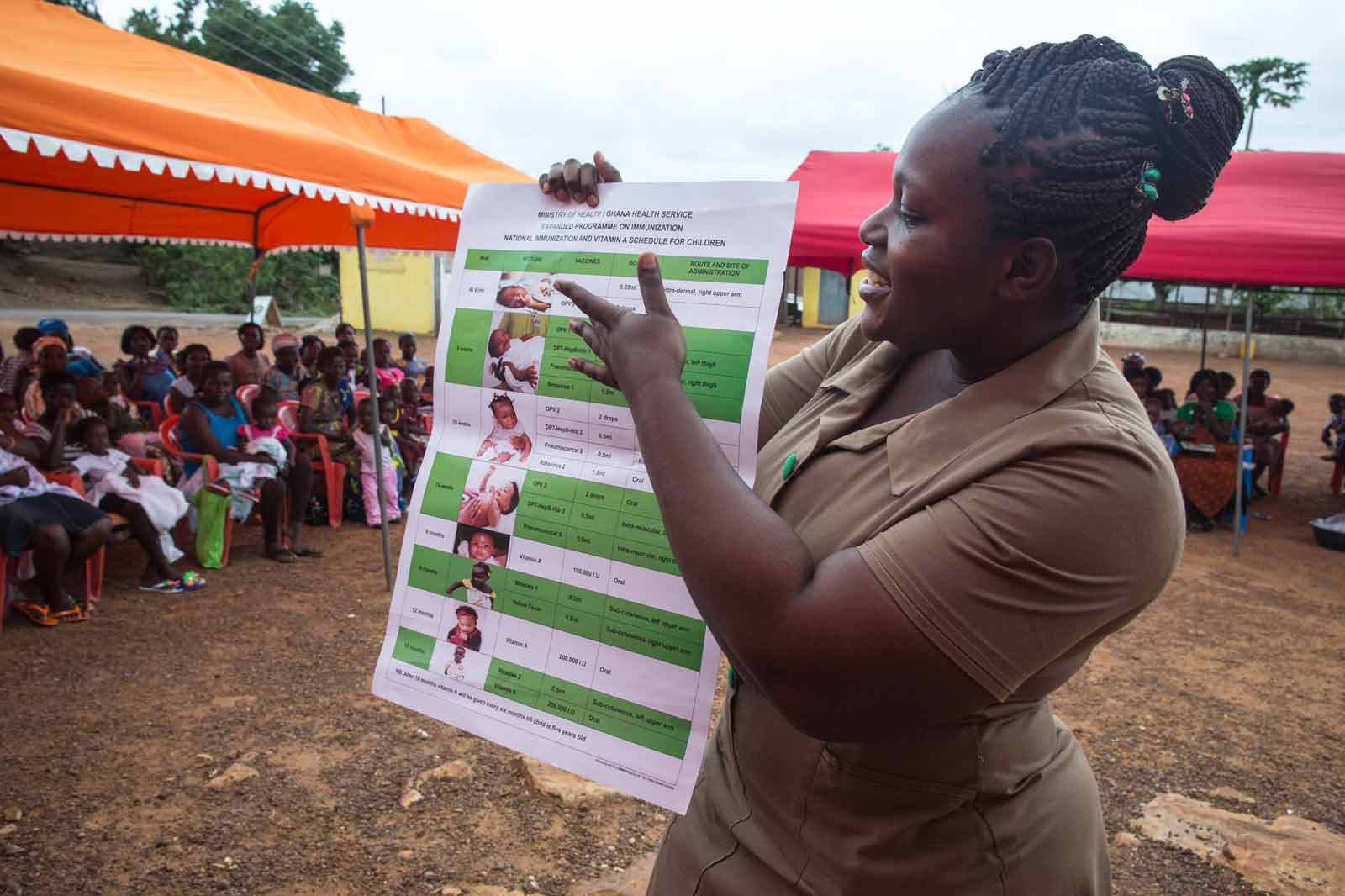
Solutions proposed to the problem of community engagement and lack of information on the vaccine included the use of trusted sources for delivering health information, involving stakeholders in planning and vaccine implementation at both the national and district levels, translating information about the vaccine into local languages, and involving local leadership in the selection and design of communication messages. Two studies suggested addressing the socio-cultural aspects (religion, ethnicity, occupation, and region) that influence the decision of parents and caregivers and to use proper communication strategies to clarify the expectations of stakeholders prior to the introduction of the malaria vaccine. Other strategies proposed were to reach out to specific segments of child caregivers (residents of regions with low acceptance, service providers in health facilities, older caregivers, less educated) with relevant messages and to embed community engagement activities in already existing structures and activities. Implementing the malaria vaccine alongside the package of services of already well-established programmes was proposed as a solution to increase vaccine uptake. With regard to concerns about the vaccine's side effects, it has been suggested that information relayed to communities should emphasise the safety of the malaria vaccine.
In conclusion: "Effective implementation of the malaria vaccine program requires careful consideration of the socio-cultural context of each community. The RTS, S/AS01 malaria vaccine acceptance and uptake may be significantly enhanced if caregivers' perceptions about vaccines and their importance are adequately fine-tuned. In order to achieve these, community participation and the provision of adequate information in an acceptable form via reliable communication channels seem to be imperative."
PLoS ONE 13(12): e0209744. https://doi.org/10.1371/journal.pone.0209744. Image credit: Gavi, the Vaccine Alliance
- Log in to post comments