










































Delivering on the Promise of a Polio-free World: Polio Eradication Strategy 2022-2026
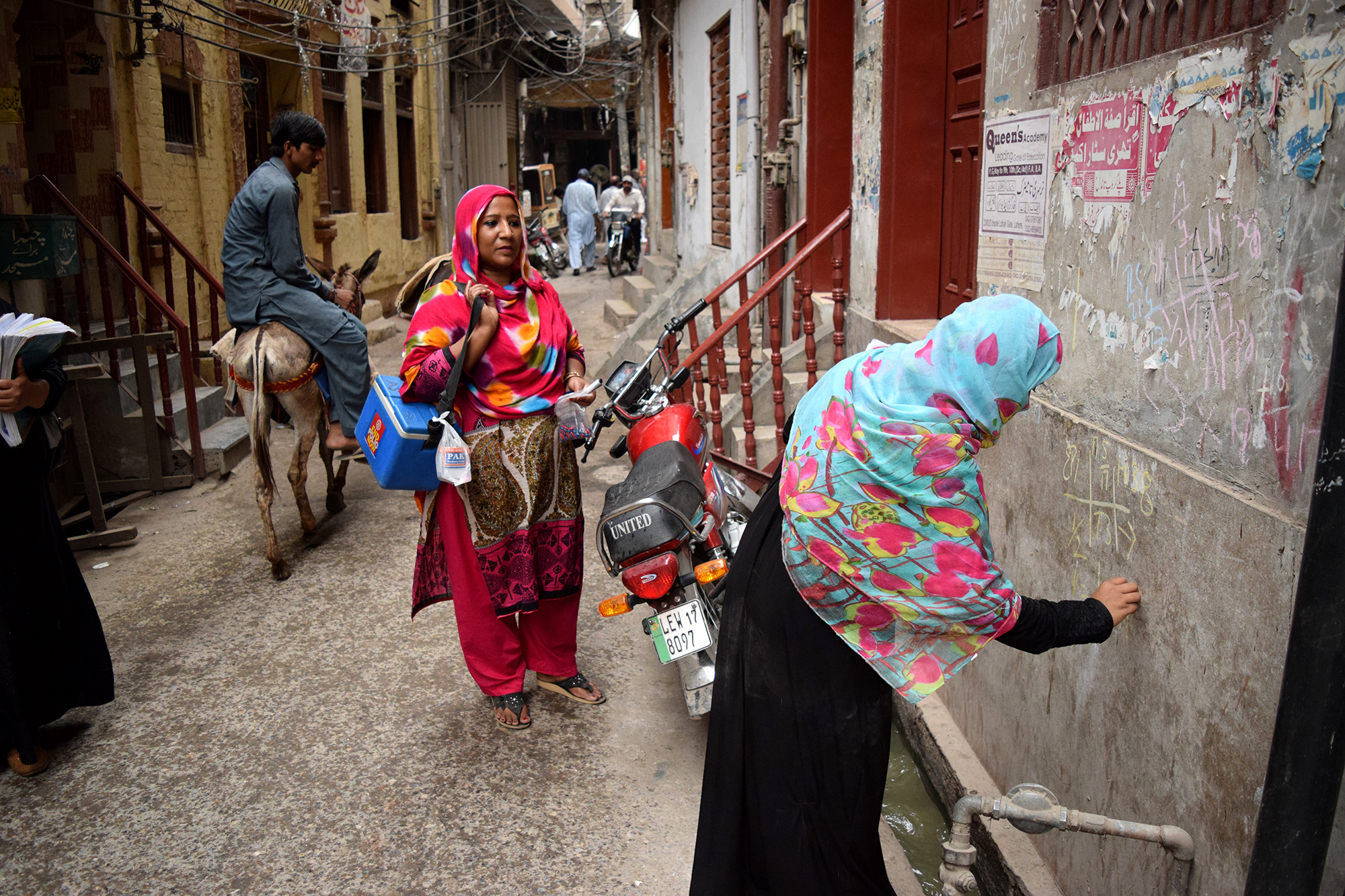
"[T]he GPEI has re-envisioned its relationship with governments, deepened its commitment to polio-affected communities, made changes to empower and safeguard the frontline workforce, and expanded its partnerships...principles of being people-centred, country-owned, partnership-based and data-guided."
While polio cases have fallen 99.9% since 1988, polio remains a public health emergency of international concern (PHEIC). In 2020, 1,226 cases of all forms of polio were recorded, compared to 138 in 2018. In 2020, the Global Polio Eradication Initiative (GPEI) paused door-to-door oral polio vaccine (OPV) campaigns for four months to protect communities from the spread of COVID-19 and contributed up to 30,000 programme staff to support pandemic response in almost 50 countries. As the world adjusted to a new global health threat in COVID-19, the GPEI launched a review to identify remaining obstacles to polio eradication and to develop a new strategy to deliver on the promise of a polio-free world.
Developed through a collaborative process involving a broad range of stakeholders, the 2022-2026 plan emphasises: cutting outbreak response times; increasing vaccine demand; transforming campaign effectiveness; working systematically through integration; increasing access in inaccessible areas; transitioning towards government ownership; improving decision-making and accountability; and strengthening the programme's gender responsiveness so that women's meaningful participation and empowerment becomes a cornerstone of GPEI efforts. Many of the new tactics and strengthened approaches outlined in this plan are already operational, and the plan officially replaced the current Polio Endgame Strategy in January 2022. (See Related Summaries, below.)
In addition to eradicating the wild poliovirus (WPV), GPEI will strengthen efforts to stop outbreaks of circulating vaccine-derived poliovirus (cVDPV), which continue to spread in under-immunised communities across Africa and Asia. Select countries began using novel oral polio vaccine type 2 (nOPV2) in March 2021, which clinical trials have shown to be safe and effective against type 2 cVDPVs, while having the potential to stop cVDPV2 outbreaks in a more sustainable way compared to the existing type 2 OPV.
However, as the GPEI works to generate collective urgency, engagement in and accountability for polio eradication, it faces the following challenges:
- difficulty in achieving and maintaining political will due in part to inadequate approaches to securing ownership of the eradication effort by the governments of polio-impacted countries;
- under-engagement with and from affected communities, as polio eradication isn't positioned within their broader needs, and as mistrust in the programme remains unresolved;
- undefined and largely unfunded commitments to integrate the polio programme with other health and development initiatives;
- gaps in campaign performance due to the absence of strong monitoring and evaluation (M&E) frameworks and purposeful community engagement; and
- delayed detection of poliovirus transmission.
In that context, overall strategic objectives for 2022-2026 include:
- Political advocacy: Create urgency and accountability to generate greater political will by re-envisioning the GPEI's relationship with governments and systematising political advocacy.
- Community engagement: Generate vaccine acceptance through context-adapted community engagement that reduces refusals and increases community commitment to child immunisation, in part through multidisciplinary research into vaccine hesitancy and community mistrust.
- Integration: Expedite progress through expanded integration efforts (e.g., deliver polio vaccines alongside basic public services) that involve a broader range of partners in immunisation, essential health care, and community services.
- Campaigns: Improve frontline success through changes to campaign operations, including the recognition and empowerment of the frontline workforce.
- Surveillance: Enhance detection and response through sensitive surveillance that provides the programme with critical information for action.
Each of these objectives is outlined in the context of the strategy's two goals, alongside key areas of evolution and anticipated outcomes. The goals include:
- Permanently interrupt all poliovirus transmission in endemic countries (Afghanistan and Pakistan) through:
- increased political will at all levels of government and with all local actors through a commitment to the apolitical value of polio eradication;
- a deep and enduring partnership with marginalised communities, especially those living in the highest-risk districts for polio;
- a well-functioning programme with a motivated and appropriately staffed frontline workforce who consistently deliver vaccines to the doorstep of every household or at every opportunity in areas where household access is restricted;
- an integrated service delivery approach that prioritises essential immunisation and the provision of other health services; and
- a continued investment in and improvement of surveillance quality and timeliness of detection.
- Stop cVDPV transmission and prevent outbreaks in non-endemic countries through:
- targeted and coordinated political advocacy in outbreak countries to link polio outbreak preparedness and response to broader country health priorities;
- emergency command structures at the country, regional, and global levels for rapid decision-making during outbreak detection and response;
- increased regional and country capacity to support surveillance and outbreak response;
- deployment of nOPV2 and other new tools, approaches and partners to improve surveillance, outbreak response speed and quality, and community engagement; and
- strong coordination with in-country Expanded Programme on Immunization (EPI) and essential immunisation partners to identify zero-dose and under-immunised communities in polio-priority geographies.
Successful execution of the 2022–2026 strategy requires an enabling environment. For example, with regard to gender, the approach will involve:
- increasing ownership of and accountability for mainstreaming gender considerations into all aspects of the programme;
- instituting specific field-level mechanisms to prioritise the safety of polio workers and beneficiaries;
- creating a safe work environment for all staff and contractors, and enforce GPEI policies on preventing sexual exploitation and abuse (PSEA) and safeguarding;
- strengthening data collection and analysis and complementing quantitative data with robust qualitative social data, especially through the community engagement workstream;
- building a formal GPEI partner coordination mechanism on gender; and
- ensuring specified and dedicated financial resources.
And, to cite one of the other enabling factors, with regard to communication, the GPEI notes that: "Effective, clear and well-coordinated communications strategies are essential to restore and reinforce social norms around vaccination, increase vaccine uptake and manage public narratives in the context of the COVID-19 pandemic, related mis/disinformation and vaccine hesitancy." The GPEI will:
- address social and behaviour barriers, leveraging opportunities for polio vaccine delivery and acceptance;
- develop and implement crisis communication strategies for early detection and response to vaccine infodemics, informed by continuously improved social listening data, research tools, and communications interventions;
- engage social influencers, programme advocates, and other prominent public figures to help reframe polio immunisations as an apolitical public health agenda and a global priority;
- build capacity and strengthen coordination efforts across communication partners and staff, as well as frontline workers and other personnel, to use interpersonal skills for community engagement and hone digital skills to expand reach, influence, and capacity for timely and targeted action; and
- continue to help shape and manage global, regional, and country narratives on the polio programme and polio vaccines by ensuring the availability of clear, accurate information to mitigate communications-related risks and maintain confidence in polio eradication.
In conclusion: "Strong communication efforts will be prioritized to help build the enabling environment needed to support key areas of this strategy, including successful nOPV2 introduction, strengthened community engagement and political advocacy, and overall confidence in the feasibility of achieving a polio-free world."
Editor's note: A video of the June 10 2021 launch event is available below. It brought together senior leadership of the governments of Pakistan, Afghanistan, and the Democratic Republic of Congo (DRC), as well as core partners of the GPEI (Rotary International, the United Nations Children's Fund (UNICEF), the World Health Organization (WHO), the United States Centers for Disease Control and Prevention (CDC), the Bill & Melinda Gates Foundation, and Gavi, the Vaccine Alliance).
The full report is available in English [PDF, 84 pages], Chinese [PDF, 84 pages], French [PDF, 88 pages], Russian [PDF, 92 pages], and Spanish [PDF, 84 pages]. The executive summary is available in English, Arabic, Chinese, French, Russian, and Spanish (see URL below). Also available is a stakeholder consultation report [English, PDF, 15 pages].
"Countries Reaffirm Commitment to Ending Polio at Launch of New Eradication Strategy", June 10 2021 news release; and GPEI website, June 10 2021, February 1 2022, and November 15 2024. Image credit: © WHO Pakistan / A. Khan
- Log in to post comments