










































Demand Creation for Polio Vaccine in Persistently Poor-Performing Communities of Northern Nigeria: 2013-2014
World Health Organization, or WHO (Warigon, Mkanda, Korir, Bawa, Gali, Erbeto, Gerlong, Banda, Yehualashet, Vaz); National Primary Health Care Development Agency (Muhammed, Etsano); Global Public Health Solutions (Nsubuga)
"...[D]emand creation interventions played a critical role in improving the quality of polio SIAs [supplementary immunisation activities] in communities noncompliant with uptake of polio vaccines and contributed to a reduction in polio transmission."
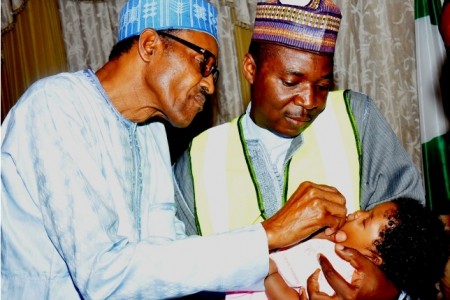
This paper describes the implementation and evaluation of several activities to create demand for polio vaccination in 77 persistently poor-performing local government areas (LGAs) across 10 states in northern Nigeria. The context is that, in Nigeria, some children continued to miss the opportunity to be fully vaccinated because, for various reasons (e.g., religious and sociocultural beliefs), parents and caregivers do not allow them to be fully vaccinated. In some instances, vaccination programmes miss children because of compromised security and population mobility. Despite the desire to vaccinate all children and meet the Global Polio Eradication Initiative (GPEI) targets, the effectiveness of recommended strategies for creating a genuine demand for immunisation was limited, according to the analysis presented here.
To stimulate the population to request OPV, demand creation interventions were introduced during the September 2013 polio vaccination campaign following successive recommendations by the Independent Monitoring Board and the Expert Review Committee, which oversee polio eradication activities in Nigeria. Seventy-seven LGAs in the following 10 northern Nigerian states were selected for demand creation interventions: Bauchi (3 LGAs), Borno (2), Kaduna (12), Kano (30), Katsina (11), Kebbi (3), Niger (3), Sokoto (4), Yobe (5), and Zamfara (4). The demand creation activities included:
- the provision of attractive benefits (hereafter, "pluses") such as soap, detergent, or sugar during immunisation activities;
- dramatic road shows involving local theatre troupes to stimulate noncompliant mothers into changing their behaviour (e.g., by depicting individuals with permanent disabilities or featuring polio survivors themselves);
- the Qur'anic schoolteacher package through which these influential teachers were equipped with answers to frequently asked questions about polio and immunisation, communication materials, key messages, fact sheets, and audiovisual materials (CDs/DVDs) for community dialogues on the importance of polio eradication;
- training of nomadic Ardos (i.e., Fulani community leaders) who knew the migratory patterns of their communities and were able to mobilise heads of households in hamlets by providing dates and time of immunisation visits;
- identification and training of local heads of religious sects, influential community leaders, youth groups, community-based organisations (CBOs), and non-governmental organisations (NGOs) on OPV administration, data recording, and interpersonal communication skills. The selected heads of the group were assigned to mobilise communities, distribute fliers and posters, and even vaccinate children aged
- establishment of health camps to address health needs other than those associated with polio vaccination (announced through engaged town announcers and religious and community leaders); and
- efforts to increase media visibility at the state level through press releases, panel discussions broadcast via radio and television, and jingles. Before launching of polio SIA rounds, states disseminated messages via these outlets about the importance of accepting OPV, to increase awareness of the activities and create demand for immunisation services. Furthermore, breakfast meetings were organised for journalists and media producers.
Data on numbers of children reached by different interventions were collected using vaccination team tally sheets, immunisation registers, and treatment records in clinic registers. In all, 7,137,460 children were vaccinated through demand creation interventions from November 2013 to November 2014. A total of 4,819,847 children were vaccinated at health camps alone. Similarly, there was an overall increase in the number of children reached with the Ardo intervention. Initially, in November 2013, 21 643 children were vaccinated. The number peaked in September 2014, with 217,383 children vaccinated, but declined in November 2014. Similar increases, with variations, were observed with the Qur'anic schoolteacher package, which recorded 71,266 vaccinated children in November 2013 and 156,302 vaccinated children in May 2014, but there was a decline in November 2014. For the road show intervention, a steady increase in the number of children vaccinated was observed, with the highest number, 67,275 children, vaccinated in September 2014, compared with 696 children in November 2013. There was a reduction in the number of wards in which >10% of children were missed by SIAs due to noncompliance with vaccination recommendations (from >10% in 8 states during 2012 to 0 states having more than 10% under-immunized children by 2014). There was also a rise in the proportion of children who received =4 OPV doses, from 80% in 2012 to 97% in 2014. Finally, there was a decrease in the proportion of children who were underimmunised (from 17% to 4%) or unimmunised (from 3% to 1%).
Among the communication-related reflections on these findings, one relates to the health camps: "It is also worth noting that the provision of treatments for minor ailments assisted in building trust in communities receiving public healthcare interventions, which increased acceptance of OPV." Furthermore, "[w]ith the expansion of the Qur'anic schoolteacher package, the program was able to deploy more teams to Qur'anic schools, to plan vaccination activities and administer vaccine to children. It also helped dispel beliefs and perceptions that polio vaccination was aimed at harming children and causing infertility." Along these lines, "[t]he presence of other influential community members, such as the group of polio survivors who participated in road shows, put a human face on polio and evoked the intended positive behavior, as caregivers witnessed firsthand that their children at risk for paralysis with continued noncompliance. The intervention also underwent several modifications to make it more entertaining, with the addition of local jesters to draw children to immunization points outside noncompliant households. The road shows were also expanded to include transit sites, such as markets and motor parks, and special occasions, like marriage and naming ceremonies."
Although there are limitations to this approach (e.g., the LGAs involved in the study were not randomly selected, and there was no control to determine whether programme) performance metrics increased in LGAs that did not implement demand creation activities, it is noted that the increase in acceptance of OPV in previously poor-performing areas drew interest from government and GPEI partners to further invest and scale up the interventions to other areas beyond the initial 77 LGAs. "Furthermore, it is important to note that demand creation activities, although specific in this setting to polio eradication, could also be used to improve the success in implementing other public health interventions that face resistance."
Best Polio Eradication Initiative (PEI) Practices in Nigeria With Support From the WHO: A Supplement to The Journal of Infectious Diseases, Guest Editors: Rui G. Vaz and Pascal Mkanda. J Infect Dis. Vol. 213, suppl 3, May 1 2016: S67-S72. Image credit: Nigerian-German Business Association
- Log in to post comments