

























Development action with informed and engaged societies

After nearly 28 years, The Communication Initiative (The CI) Global is entering a new chapter. 

Following a period of transition, the global website has been transferred to the University of the Witwatersrand (Wits) in South Africa, where it will be administered by the Social and Behaviour Change Communication Division. Wits' commitment to social change and justice makes it a trusted steward for The CI's legacy and future. 

On the transfer, co-founder Victoria Martin expressed her pleasure to see this work continue under Wits' leadership, knowing that co-founder Warren Feek (1953–2024) would have felt deep pride in The CI Global's Africa-led direction. 

As Wits, we honour the team and partners who sustained The CI for decades and look forward building from that strong base. This includes co-founders Warren Feek (1953-2024) and Victoria Martin as well as La Iniciativa de Comunicación (CILA), which continues independently at lainiciativadecomunicacion.com with links to The CI Global site. We are also eager to forge new partnerships and entertain new ideas as we consider how best to contribute to social and behaviour change in our rapidly evolving environment.

If you are joining the International Social and Behaviour Change Communication (SBCC) Summit in Panama, please join Wits and CILA on Monday, 22 June, to share your thoughts and suggestion for the relaunch of the Communication Initiative. We will be in Pacifica 5 from 12-1:25 for the Refuel, Reflect, and Renew Lunch Series: The Communication Initiative: celebrating a driving force for Communication for Social Change and the way forward. We will reflect on the legacy of Warren Feek and family in creating the Communication Initiative, consider the contributions of CI over the years and then turn our attention towards the future in this dynamic session. 

If you are unable to join us in Panama, we still want to hear from you. Please contribute your thoughts by following this link: https://redcap.link/CommunicationInitiative2026 or reaching out to ci_surveys@commint.com

You can also follow the QR Code:

 https://redcap.link/CommunicationInitiative2026

Time to read
1 minute
Read so far

Demonstrating Child Survival Successes at the Community Level
0 comments
Date
Summary

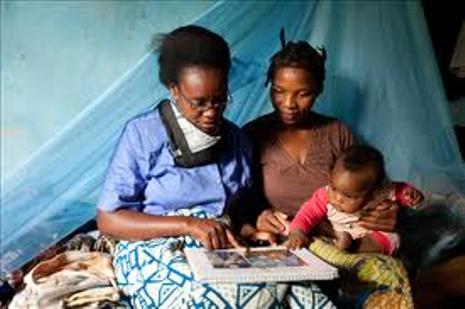
This research brief from the Health Communication Capacity Collaborative (HC3) at Johns Hopkins Bloomberg School of Public Health Center for Communication Programs in collaboration with Management Sciences for Health, NetHope, Population Services International, Ogilvy PR, and Internews explores the strategy of community-level approaches which "emphasise the community, rather than the individual, as the point of engagement." The brief suggests that this approach is more sustainable and that when there is local participation in design and implementation, local ownership is enhanced. "Community approaches focus on group processes (e.g. participation, consensus building, community dialogue)" and often use "public events as a way of reaching and involving community members on a broad scale (e.g. community theatre, sporting events.)"

The intervention itself has been for frontline health workers (FHWs) using a train the trainer model and has included:

  1. A targeted training course;
  2. Pictorial checklists to guide prevention, care, and referral; and
  3. Reusable medical equipment and commodities.


In order to evaluate the effectiveness of this approach, trainers were given a questionnaire to assess their knowledge, and the FHWs were assessed with "objective structured clinical examinations (OSCEs; administered pertaining, immediate post-training, several months follow-up)…" and focus group discussions on the impact of the trainings on FHW practices and perceptions.

Results included a greater likelihood of FHW referring patients to a health facility post-training and a greater reported use of cleaned and boiled delivery equipment after each use (reproductive health), no maternal deaths 30 days after the training, and an improved survival rate of newborns born not breathing (all received additional resuscitation).

An article regarding the training of frontline maternal, newborn, and child health workers in South Sudan informed this brief.

Source

The Health Communication Capacity Collaborative website, February 24 2014. Image credit: ConcernUSA