










































Empowering Women through ICT
Swedish Program for ICT in Developing Regions (Spider)
"If access to ICTs can promote sustainable socio-economic development and women lag behind, a significant portion of the world's population must be aided by a targeted approach."
From the Swedish Program for ICT in Developing Regions (Spider) ICT for Development (ICT4D) Series No. 4, this publication looks at recently concluded gender-focused information and communication technology (ICT) projects in the rural regions of the global south that Spider supported (with additional partners) from 2007 until early 2011. With specific focus on the outcomes of these projects, the report considers the impact on the lives of the women who participated in the different projects. The volume further draws on theories from gender and technology studies in analysing the social and technical implications on the women's lives.
The introductory section examines "the gender digital divide", which refers to prevailing inequalities in access to ICTs throughout the world that have the implication that many women are hindered by their social and economic circumstances from developing a relationship with ICT. The author of the report, Caroline Wamala, explains the difference between gender as a social category and the fact that the projects reviewed in this report are actually women-centred.
After a brief overview of gender, technology, and ICT in development, the publication discusses project activities situated within the local context, with a general profile of each country. Thereafter, the details of the project activities and outcomes are provided in broad strokes leading up to an analysis of the impact of ICT on the women's lives. Specifically, this publication covers five different projects carried out in six different locations. In summary:
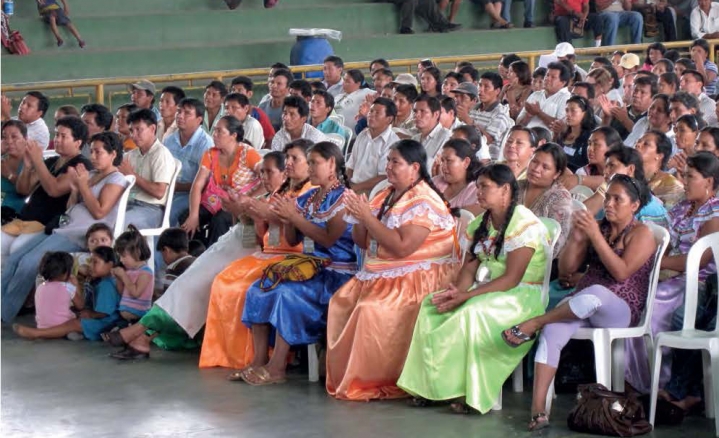
- There were two projects in Bolivia:
- One focusing on empowering female indigenous leaders: In order to increase lobbying activities and decision-making practices on the part of the Confederation of Indigenous Peoples of Eastern Bolivia (CIDOB), a core group of 100 women participated in computer skills development. The training was tailored to political leadership and was designed to build the women's self-worth. Tools used included: interactive platforms such as blogs, wikis, and Skype, as well as traditional media such as television and radio. "For example, through television an advertisement campaign on the new constitution was subjected to a gender analysis that gave special focus to the unique rights and needs of indigenous women in Bolivia." Brief statement of impact: "The overall use of ICTs has empowered these women especially the Internet resources have created a greater awareness of governance issues and technical forms of communication."
- One focusing on providing female victims of domestic violence with a safe virtual environment where they could receive support and exchange experiences and information: The Casa de la Mujer domestic violence support programme used ICT to support women's needs to speak while at the same time heeding their desire to remain anonymous. The programme established six telecenters across three districts in the region of Santa Cruz. Approximately 100 women acquired training in legal issues related to domestic violence, also learning to write blogs. They developed training content and virtual platforms that are still in use. The courses included education on human rights and on raising their self-esteem, in addition to introducing gender equality discussions within the framework of domestic violence. The women established forums at the telecentres to expand the number of end users. Brief statement of impact: "The project found that victims of domestic violence are paralyzed into silence by the fear of being identified. ICTs, however, are changing this situation as regular radio broadcasts featuring stories of domestic violence and the online clinic are slowly chipping away at the public, private boundary as the public exposure of real stories has given more women the courage to come forward."
- A research project in Vietnam focused on the consideration given to gender in the development of ICT: The focus was directed at companies in hardware, software, and ICT services development in Hanoi and Ho Chi Minh City. The material was gathered through survey questionnaires and personal interviews with the companies. Of the 207 companies interviewed, only six of them (3%) confirmed taking women's technical needs into consideration, while 74% did not differentiate between men and women (23% did not answer the question). "However, as mentioned in the introduction to this volume, men are the implicit norm and are therefore by default assumed to be the 74%." Brief statement of impact: "207 Vietnamese companies became more aware of the benefits of having a gender aspect during their work processes. Some of them have expressed an interest in diversifying production to include specific requirements that take gender differences into account."
- A project in Rwanda focused on integrating ICT into women's basket-weaving practices in order to explore the opportunities of an online presence as well as the preservation of traditional practices: 8 women members of Duhuzimbaraga Cooperative, an umbrella organisation for handicraft cooperatives, were given laptops and digital cameras. The women were taught how to use the camera to capture their basket-weaving skills as well as the finished products. They were also instructed in how to upload the pictures onto computers and create a descriptive log for each basket. "The success of the project at hand lies to a large extent in the fact that ICT was streamlined into everyday activities of rural women. The project used basket weaving, a practice that women were already skilled in, as a gate-way to introduce ICT." Brief statement of impact: In addition to proving that rural women can learn to use ICT, "[t]he project instilled these women with the knowledge that their craft does matter and is likely to appeal to an audience that is both wider and geographically remote from their current location. Capturing the weaving processes digitally will archive these disappearing traditional skills and ensure that they are available to future generations."
- A project carried out in both Kenya and India focused primarily on women's self-help groups (SHGs) and emphasised ecological sustainability, diversification of livelihood, and basic training in ICT:
- More than 89 women in the coastal villages of Kenya were brought together with a small percentage of men who were also members of the SHGs. Given that fishing is a key activity in those villages, the project sought to empower women by introducing supplementary income-generating activities to their families. The infrastructure in Kenya was a challenge as none of the SHGs had access to electricity in their meeting areas. The e-learning materials covering numeracy, literacy, and environment that had been developed were provided on XO laptops. Local women were employed as village coordinators at the ICT centres, which were run as income-generating businesses. Mobile pay phones were also provided to the SHGs as one of the income generating activities. Brief statement of impact: "Before this project, many of these women could not read, write or count...There are several success stories that have exceeded the project objectives. Women such as Binti Omanri, Mwanaasha Gema and Saidi Boga took up the role of office managers in their respective villages, and are in charge of the ICT facilities that were gained through the project."
- In India, a total of 312 participants, mostly women, took part in the SHG training programme in five coastal villages. Brief statement of impact: "The beneficiaries gained access to group loans, extended their language skills by improving their English, and supported their husbands fishing practices by buying fishing gear. Some started small to medium enterprises..."
In conclusion, the report examines technological and social sustainability. One core strategic recommendation: "Success of women-centered projects in general hinges on the ability to ensure that the technology is adapted to suit the women's reality." The uses of ICT were related to women's everyday activities to demystify the technology. In other words, the success of the projects hinged on the extent to which technology was adapted to suit women's reality, and not vice versa.
Established in 2004, Spider is based at the Department of Computer and Systems Sciences (DSV) at Stockholm University, Sweden. Spider is primarily financed by the Swedish International Development Cooperation Agency (Sida), with complementary funding from Stockholm University. Spider's Twitter feed is spidercenter; Spider is on Facebook here.
Email update from Ørecomm, March 10 2012; Spider website, March 14 2012; and email from Caroline Wamala to The Communication Initiative on March 16 2012. Image courtesy of IICD (The International Institute for Communication and Development)