










































Enable: Promoting the Strengths of Disabled Children
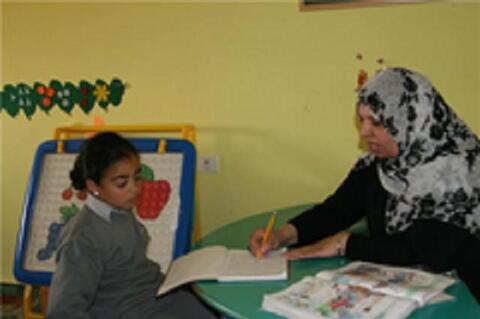
"In our Palestinian community where rates of childhood disability are very high, advocacy and human rights groups have been working diligently towards the integration of individuals with disability into society. By contrast, due to significant social, economic, and political barriers in access to research and in knowledge translation, research evidence is seldom used in the process of changing attitudes and practices."
The Palestinian Happy Child Centre (PHCC) is embarking on a research programme in the area of genetics and the early identification of developmental disability, such as neurodevelopmental disorders (NDs). This project - "Engage" - seeks to build public engagement (PE) with this research by contributing towards the public understanding of research evidence and improving people's understanding and participation in research. Its goal is to enable Centre users to formulate health research messages based on their unique and individual experiences and communicate those messages to a wider audience.
This project, both at its initiation and throughout, involves strengthening PHCC capacity for PE by training of Centre staff and enhancing their access to tools and expertise to be used in future activities. Specifically, one PHCC staff member carried out a 3-month internship in the United Kingdom (UK). In consultation with project funder Wellcome Trust, PE teams and project advisers customised a training programme which included both theoretical and practical elements. The PHCC staff member is extending her learning to other staff members over the course of the project.
Beyond that, this project relies on upstream rather that downstream PE in science in order to engage Centre users in reflective dialogue regarding state-of-the-art findings from research on NDs. Having accessed a solid base of "raw scientific materials", including evidence about the causes and characteristics of various NDs, PHCC set about to explore the fit between this evidence and family perspective and understanding of 3 interrelated scientific themes: (i) causal mechanism of the condition; (ii) the family's recognition of strengths associated with the child's condition; and (iii) the extent to which existing ideas about causes and strengths impact the family and community attitudes and practices towards the children.
The 25 participating families reflected on how research findings relate to their unique experience. This process involved: 1) preliminary interviews to examine families' knowledge and attitudes in relation to the above-mentioned scientific themes and then individualised test batteries designed on the basis of prior research to ascertain possible unrecognised strengths of each child's condition; and 2) discussion of the findings from this research with the families in a second interview (they are supplied with a written report). The Centre then hosted a series of focus groups with 5-7 caregivers in each, wherein the families could share their reflections on the extent to which general research evidence and the assessment results of their children contributed new knowledge. Families shared day-to-day examples of how this knowledge changed any of their pre-existing attitudes and practices. During this phase, parents were offered the chance to create PE tools aimed at helping other families and the wider public to demystify participation in research and to explain complex findings about developmental disability. In a participatory process with the project team, families contribute to designing a "toolbox" of PE materials to reach out to the wider community (parents, relatives, and teachers). This will include segments of videotapes of interviews with the children or their families, artwork by the children, a website, a podcast, posters explaining some of the research tasks and showing the children's performance, and a community dialogue forum. For example, at the latter event, PHCC will present its experience with the project and screen a DVD featuring participating families. The guest panel will include participating families, PHCC staff, and local researchers. Organisers will then invite community members to ask questions and make comments.
The team is planning to present their PE work annually at international conferences, which, in the long run, could contribute to building capacity for research and, perhaps, raising the profile of international engagement in low- and middle-income countries.
Children, Rights
PHCC notes that research advances have been effective in advocating for the rights of individuals with disability - who are often subject to stigma and discrimination - and in transforming societal perception. For example, recent evidence from research on NDs has demonstrated that several conditions are associated with specific brain and behavioural profiles of strength and weakness. For example, people with autism have superior attention to detail, and those with Williams Syndrome can achieve very high levels of proficiency in music. Researchers have also learned that the same condition may give rise to a wide range of individual differences and levels of ability. This means that a child diagnosed with an ND may need support in specific areas but can nevertheless achieve comparable levels of cognitive, intellectual, or social skills as any other typical child.
PHCC was established in 1994 community-based non-governmental organisation by a group of professionals and volunteers that includes physicians, educational psychologists, counselors, special educators, speech therapists, social workers, art and music teachers, and community leaders. The mission of the PHCC is to promote the well-being of Palestinian children, including, but not limited to, children suffering from trauma, neurological disorders, learning disabilities, and other educational problems. The PHCC is also dedicated to raising parental and community awareness and community engagement to ensure that children achieve their true potential.
Funded by the Wellcome Trust.
"International Engagement Awards: Projects funded in 2011" [PDF]; and email from Jumana Odeh to The Communication Initiative on November 13 2012. Image credit: Qantara.de
- Log in to post comments