










































Engaging Civil Society in Health Finance and Governance: A Guide for Practitioners
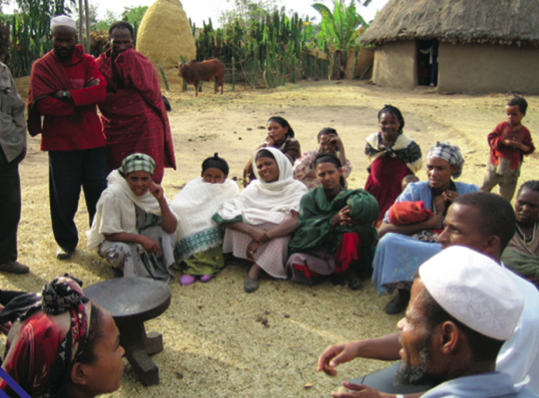
“Designing programs that include the use of mechanisms and tools to engage both civil society and government counterparts that are guided by an understanding of the country context, and that recognize and mitigate potential risks are significant factors in productive civil society engagement.”
This guide provides governments and donors with practical advice on engaging civil society in health finance and governance in order to meet health sector objectives and to improve health outcomes. As explained in the guide, “[G]overnments and international donor organizations increasingly acknowledge the role of civil society organizations (CSOs) in strengthening health systems. By facilitating dialogue between government and citizens on issues of health sector priorities, performance, and accountability, CSOs can help to improve health service delivery and contribute to evidence-based policy. Often, however, CSOs lack the skills and tools needed to engage other stakeholders in issues of health finance and governance.”
The guide describes the potential and limitations of civil society engagement entry points and presents an array of tools that may be used to do so, with a specific focus on social accountability tools to help gain access to information, mobilise collective action and advocacy, and support sanctions. This guide provides details on the following eight tools :
- Community scorecards
- Entry point mapping
- Social audits
- Citizen charters
- Public Expenditure Tracking Surveys (PETS)
- Report cards
- Health facility exit surveys
- Private sector engagement
The Annex of the guide provides a detailed description of each of the tools, a summary of step-by-step implementation, resources required to implement the tools, and examples of how these tools have been used in developing contexts.
The guide also describes how effective civil society engagement, including efforts using social accountability tools, has resulted in important reforms to improve health service delivery performance and inform evidence-based policy.
The guide is divided into the following sections:
Section 1: Objectives and Limitations of Civil Society Engagement
- Objectives of civil society engagement
Section 2: Opportunities and Objectives for Civil Society to Engage in Health Finance and Governance
- Who are health CSOs?
- How civil society can contribute to strengthening health systems
Section 3: Tools for Engaging Civil Society in Health Finance and Governance
- Deciding what tool is best
Section 4: Entry Points for Civil Society in the Health System
Section 5: Good Practices for Achieving Impact With Civil Society Engagement
- Understand the Context
- Forge Constructive Partnerships with Government
- Recognize and Mitigate the Risks
- Build Civil Society Engagement into Existing Health Finance and Governance Efforts
Conclusion
References
The guide was produced for the Health Finance and Governance (HFG) project which strives to fundamentally strengthen health systems in ways that benefit all health services, including those for maternal and child health, malaria, and HIV and AIDS. Supported by US Agency for International Development (USAID), the project works in over 30 developing countries around the world, with the majority of countries in Africa.
English
80
HFG website on July 5 2017.