










































Exploring Knowledge, Attitudes, and Beliefs about Child Marriage in Bangladesh through a Transmedia Entertainment-Education Initiative
Drexel University
"EE programmes such as Icchedana offer a promising opportunity to shift perceptions towards child marriage by entertaining and educating viewers simultaneously."
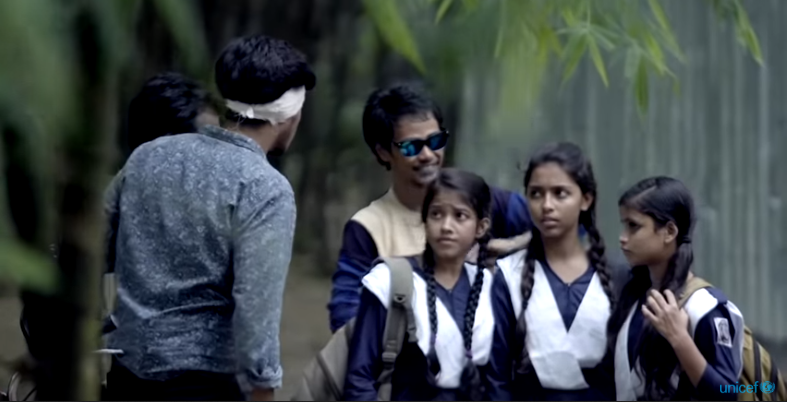
Transmedia programmes, which involve a narrative that extends beyond just one media platform, are a type of entertainment-education (EE) approach to reaching hard-to-reach or vulnerable populations with messages about positive behaviours and social change. Such strategies have been leveraged in order to address the deeply entrenched practice of child marriage in Bangladesh, which persists despite widespread condemnation. In 2017, the United Nations Children's Fund (UNICEF), The Government of Bangladesh's Ministry of Children and Women's Affairs, the United Nations Population Fund (UNFPA), and other partners launched a transmedia campaign, Icchedana, to address social norms around child marriage. This paper describes a study conducted to decipher the impact of Icchedana on five of the determinants that drive child marriage in Bangladesh.
As detailed at Related Summaries, below, Icchedana (On the Wings of Wishes) included engagement across multiple platforms and was grounded in several key social and behaviour change communication (SBCC) concepts. There were three main components:
- Transmedia: broadcasting Icchedana on television, radio, and social media. The first season (2018-2019) consisted of 26 episodes portraying four girls' lives as they faced and navigated the challenges and risks of being an adolescent girl in Bangladesh. The television programme was preceded by the Dhol campaign, which included five public service announcements (PSAs) designed to remind audiences of the legal age of marriage in Bangladesh.
- Community engagement and social mobilisation: conducting interpersonal communication strategies such as engaging key stakeholders (religious leaders, fathers).
- Advocacy and capacity building: engaging local and national policymakers to produce change in the legal system and build the capacity of these systems to facilitate and sustain the change that is necessary to reduce the prevalence of child marriage.
As part of a literature review, the researchers identify and describe five determinants of child marriage in Bangladesh: poverty, the practice of dowry, family honour, lack of education, and violence against women and girls. These determinants fall into different levels of the social-ecological model (SEM), which focuses on change at the individual, interpersonal, organisational, community, and societal levels. While each level - and each determinant - presents a unique challenge, they are all interconnected.
Data were collected in 2017 and 2019. A non-probability purposive sample design was used to select four rural and two urban districts. These districts were selected because of their high prevalence of child marriage. Within these districts, two rural upazillas (sub-districts) and one urban upazilla were chosen using random probabilistic sampling. The researchers conducted interviews with 3,905 participants from 1,102 households, posing two questions from each level of the SEM (e.g., community-level question: "'Marrying girls off when they are young is one of the solutions to get rid of paying a large dowry' - What is your opinion on that?"). Mean scores for each of the questions were calculated, as was a score for each level of the SEM and an overall score. Exposure was defined as whether a participant had watched Icchedana and served as the primary predictor variable.
Table 3 in the paper reports the mean average response of 10 5-point Likert items from the End Child Marriage Questionnaire. Responses ranged from 1 (strongly disagree) to 5 (strongly agree). A higher score reflected higher disapproval of child marriage. Multiple linear regression was calculated to measure individual perceptions on the five selected SEM level determinants based on exposure to Icchedana after controlling for respondent type, occupation, region, education, age, and income. On average, participants who watched Icchedana scored 0.87 points higher than participants that had not, indicating lower levels of approval of child marriage (P <0.001). Youth who are in school, who have completed secondary school, or have some higher education report the highest disapproval of child marriage. Scores (disapproval) increased with the level of education. On the other hand, participants living in a rural area scored 0.91 lower on average than participants who lived in urban areas (P <0.001). Because the majority of Bangladeshis live in rural areas and have relatively low education levels, interventions to change perceptions about child marriage need to be tailored to these vulnerable populations.
The researchers note: "EE programmes can often reach more segments of a population than traditional didactic approaches to behaviour change...This was apparent with Icchedana. Of the 749 participants who had watched the programme, 20.67% were fathers who are most often responsible for when and whom to marry their daughters...Additionally, 51.55% of viewers were students, many of whom will be getting married and become parents in the future....[P]eople are socialized into specific norms starting at a young age, so engaging students and challenging the underlying mechanisms that drive child marriage practice is essential..."
In short, the findings show that participants exposed to Icchedana had lower disapproval of child marriage than participants who had not, though the researchers are careful to make any causal claims because of other potential confounding factors. They conclude that "this study identified characteristics of participants that can inform EE initiatives and initiatives in other sectors and levels of the SEM that can shift perceptions about child marriage in Bangladesh."
Journal of Development Communication 32: 1 - sourced from email from Neha Kapil to The Communication Initiative on December 9 2021. Image credit: screenshot from an episode of Icchedana