










































Exploring Latino Promotores/a de Salud (Community Health Workers) Knowledge, Attitudes, and Perceptions of COVID-19 Vaccines
Cancer Research Center for Health Equity, Samuel Oschin Comprehensive Cancer Institute (SOCCI) at Cedars-Sinai
"Promotoras...are trusted pillars in their communities, uniquely poised to promote COVID-19 vaccine uptake in the area they serve."
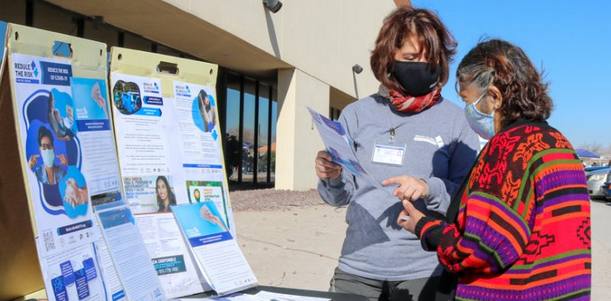
In the context of COVID-19 vaccination uptake in the United States (US), disparities among racial and ethnic minority populations persist, potentially exacerbating existing health disparities experienced by Hispanic/Latin/a/o/x (hereafter referred to as Latino) communities. Promotoras/promotores (subsequently referred to as promotoras) are frontline public health workers, embedded in their localities and with shared values and experiences, who provide health education and outreach services within their communities. This study explores promotoras' perspectives on COVID-19 vaccination in an attempt to inform the development of culturally sensitive strategies and approaches to promote COVID-19 vaccine uptake in urban Latino communities.
The qualitative study explores knowledge, attitudes, and perceptions of COVID-19 vaccines through the lens of promotoras in Los Angeles (LA), California, US. Latinos comprise 48.6% of the population in LA County. Promotoras (n=22) were recruited to participate in semi-structured focus groups conducted virtually in February 2021.
Reflexive thematic analysis identified three overarching themes:
Prevalence of misinformation - Promotoras discussed how misinformation and lack of trustworthy information contributed to negative perceptions about COVID-19 and related vaccines. Despite being experienced promotoras, it was difficult for them to ascertain which information source was trustworthy, even when the information originated from health officials. Promotoras also shared that widespread misinformation in the community exacerbated mistrust in the government, public health officials, and the scientific community. Mistrust among the Latino population is not unfounded, as there is a long history of exploitative medical research and practices against communities of colour in the US.
Instances of lack of information were also identified. For example, promotoras noted that information circulated in media outlets and the public health department did not highlight the fact that proof of legal immigration or documented status is not a requirement for COVID-19 vaccination. Years of anti-immigrant rhetoric and policy have eroded trust in the government and led to negative health consequences for undocumented individuals. Many people in the community felt that COVID-19 vaccines would be utilised by the government to track and control immigrants. Fear of deportation and feelings of deprivation stimulate belief in conspiracy theories, which threaten health officials' credibility, guidance, and efforts to reduce the transmission of COVID-19 and vaccination uptake.
Hesitancy - Promotoras discussed how members of the Latino community were hesitant to get vaccinated because of health safety concerns related to the expedited development of the vaccine. Another issue underlying vaccine hesitancy noted by the promotoras is the perception that the COVID-19 vaccines and related potential side effects are worse than contracting the virus.
Hesitancy is also linked to eligibility confusion, as outlined by the promotoras. Although the vaccines are free, they felt that this information was not widely disseminated in the community and that questions regarding health insurance at vaccination sites created uncertainty among community members. Many people had expressed frustration upon hearing instances where people were vaccinated even though they didn't fit into one of the state's current eligibility categories.
Notably: "The term vaccine hesitancy may not accurately represent people's stance on vaccines as it underestimates access barriers experienced by some groups such as Latinos, the variability in stages of readiness (to get vaccinated), and the fluidity of people's point of views."
Promotoras' recommendations for improving vaccine uptake, including:
- Bring the vaccine closer to the community, to spaces that are familiar and accessible: Public health and local government officials should work with churches, clinics, and schools to gauge the number of vaccines needed and guarantee access to those who want to be vaccinated.
- "Lead by example" to combat misinformation, foster trust, and improve vaccine uptake among members of the Latino community: Latinos may be more receptive to advice or health messaging from a community leader or someone well integrated in the community due to their tight-knit culture and beliefs, which weigh information from trusted peers above all.
In conclusion: "Strategies for vaccination uptake need to allay immigration concerns and prioritize community engagement in a manner that is culturally and linguistically sensitive to develop a sustainable infrastructure that will promote health equity and justice moving forward. [This] research encourages working with trusted members of the community such as promotoras or others that are well-integrated into the community, to share their vaccination experience and dispel misinformation. Despite the many barriers discussed, promotoras felt very positive about the future and hopeful that vaccination uptake will increase, and their communities will go back to their new and healthy normal."
SSM - Qualitative Research in Health Volume 2, December 2021, 100033. https://doi.org/10.1016/j.ssmqr.2021.100033. Image credit: Maria Ramos Pacheco/El Paso Matters
- Log in to post comments