
























Development action with informed and engaged societies

After nearly 28 years, The Communication Initiative (The CI) Global is entering a new chapter. 

Following a period of transition, the global website has been transferred to the University of the Witwatersrand (Wits) in South Africa, where it will be administered by the Social and Behaviour Change Communication Division. Wits' commitment to social change and justice makes it a trusted steward for The CI's legacy and future. 

On the transfer, co-founder Victoria Martin expressed her pleasure to see this work continue under Wits' leadership, knowing that co-founder Warren Feek (1953–2024) would have felt deep pride in The CI Global's Africa-led direction. 

As Wits, we honour the team and partners who sustained The CI for decades and look forward building from that strong base. This includes co-founders Warren Feek (1953-2024) and Victoria Martin as well as La Iniciativa de Comunicación (CILA), which continues independently at lainiciativadecomunicacion.com with links to The CI Global site. We are also eager to forge new partnerships and entertain new ideas as we consider how best to contribute to social and behaviour change in our rapidly evolving environment.

If you are joining the International Social and Behaviour Change Communication (SBCC) Summit in Panama, please join Wits and CILA on Monday, 22 June, to share your thoughts and suggestion for the relaunch of the Communication Initiative. We will be in Pacifica 5 from 12-1:25 for the Refuel, Reflect, and Renew Lunch Series: The Communication Initiative: celebrating a driving force for Communication for Social Change and the way forward. We will reflect on the legacy of Warren Feek and family in creating the Communication Initiative, consider the contributions of CI over the years and then turn our attention towards the future in this dynamic session. 

If you are unable to join us in Panama, we still want to hear from you. Please contribute your thoughts by following this link: https://redcap.link/CommunicationInitiative2026 or reaching out to ci_surveys@commint.com

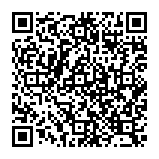
You can also follow the QR Code:

 https://redcap.link/CommunicationInitiative2026

Time to read
1 minute
Read so far

Eye to Eye

0 comments
Eye to Eye was a multi-media project which ran through June 2003 and enabled fourth-generation Palestinian refugee children living in refugee camps in Lebanon and Occupied Palestinian Territories to express themselves through photography and the web. The project aimed to raise public awareness and increase understanding among audiences in the UK of the needs and rights of Palestinian children and the negative impact of the stalled peace process; and to increase awareness among Palestinian communities of the value of children's work in presenting their situation to the outside world.
Communication Strategies

The Eye to Eye project held six photography-based workshops in refugee camps in Lebanon, the West Bank and Gaza Strip, including four seven-day workshops producing materials for local display (in Arabic) and international exhibitions (in English) and for a website developed and managed by the Education Unit of Save the Children in the UK. Two shorter "emergency" intifada workshops focused on eliciting materials for the website.

The workshops used a "powerful, highly participative, expressive methodology which enabled the children to learn new skills and gain self-confidence, think for themselves about their lives and communities, and represent themselves to external audiences." In the workshops, children got to know each other and shared camp life experiences through their photos. They exhibited 700 images with accompanying interviews of elders and other writings relevant to the photos. In some workshops "books" were produced by the children with the purpose of providing a referenced resource from which website, exhibition and other materials could be selected in London. Cameras were left with after-school clubs and partner organisations in the camps to allow children to continue to take photos.

The website provided information for Global Education in the UK and offered a controlled message board system to facilitate interaction and exchange between Palestinian refugee children and other individuals and groups around the world. The website no longer facilitates this exchange, but has archived the messages and stories collected while the project was running. It also continues to incorporate curriculum materials for use by teachers in the UK.

Development Issues

Children, Refugees.

Key Points

An estimated 100 children participated in the project, including 10 who were involved in later workshops as volunteer assistants or peer educators. A second Eye to Eye project, in India, was planned and piloted in 2003 using digital technology within a similar framework to address child rights.

Partners

Education Unit of Save the Children UK.

Teaser Image
http://www.savethechildren.org.uk/eyetoeye/eyetoeyepics/photos/workshopsindia2.jpg