










































The Fight Against Polio: Health Communication Lessons from India's Success
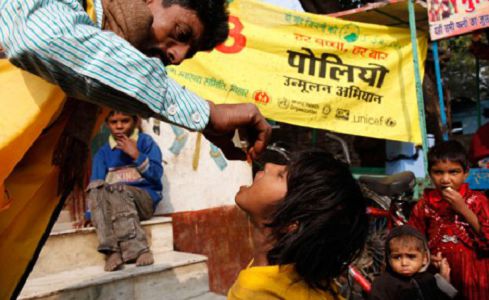
"Early on in the initiative, it became clear that information alone is not sufficient to encourage behavior and social change."
In this piece, a Pakistani-American who has a family member with form of polio reflects on some of the lessons that social marketers and public health communicators can learn from the progress India has made in the global effort to eradicate polio. (Editor's note: On March 27 2014, the World Health Organization (WHO) declared India a polio-free country, since no cases of wild poliovirus (WPV) had been reported for three years.)
Farha Marfani begins by providing a short history of the global campaign to eradicate polio. A group of organisations including WHO, Rotary International, the Centers for Disease Control and Prevention (CDC), and the United Nations Children's Fund (UNICEF) joined together in 1988, at a time when the virus was paralysing 1,000 children around the world every day, half of them in India. The campaign took off in India in 1995, after garnering political will, support, and manpower. However, volunteers were faced with skeptics and rampant rumours that the polio vaccine caused illness and infertility and that the mass vaccination campaign was a Western conspiracy to curb the growth of Muslims. In response, a massive public education and advocacy campaign was launched to build confidence and credibility in the polio eradication initiative.
Marfani culls out some of the key points from a paper in the Bulletin of the World Health Organization (see Related Summaries, below) that outlines key strategies and lessons learned from polio eradication efforts in India and Pakistan. Selected insights from these efforts focused on tackling deep-seated religious, socio-cultural, and political resistance to eradication:
- Engage influencers as spokespeople: The polio campaign gained the support of religious and community leaders, who became strong community allies. They infused polio-vaccine-related messaging into religious sermons and mosque announcements to reach community members, and Imams (religious leaders) welcomed families to vaccination booths.
- Carefully segment the intended audience and reach them through interpersonal communication: With the backing of community leaders, the campaign reached out to women and female caregivers, who are the primary decisionmakers on child health. Trained female health workers conveyed the safety, efficacy, and benefits of the vaccine.
- Take the product to the people: In addition to a house-to-house strategy, vaccination booths were set up across the country. Taking into account constant migration, booths were also set up at train and bus stations and border posts to ensure that hard-to-reach children, including those of migrant workers, were vaccinated.
- Constantly monitor and track data: Volunteers set out every day to examine babies and collect stool samples for testing. Health centres, doctors, and even spiritual healers are trained to report the first sign of symptoms that might indicate polio.
Marfani notes that, although these strategic and synergistic communication efforts have led to success, the campaign has also been controversial. Some argue that the campaign is narrow-minded in that it is only focused on eradicating polio, to the detriment of other pressing public health issues in the region, such as malaria, malnutrition, and poor maternal health. Still, she concludes, India's experience can serve as a blueprint for other countries, motivating them to use the same model to tackle other critical public health challenges. "The world awaits for Nigeria, Afghanistan and Pakistan to follow in India's footsteps and achieve a similarly successful outcome."
Social Marketing exCHANGE, accessed on March 1 2018. Image credit: Gates Foundation, Flickr