










































Follow-up MANDONA: A Field Guide for Accelerating and Sustaining Open Defecation Free Communities
“Sanitation is the world’s silent development crisis; 2.4 billion people currently do not have access to adequate sanitation, with 946 million practicing open defecation.”
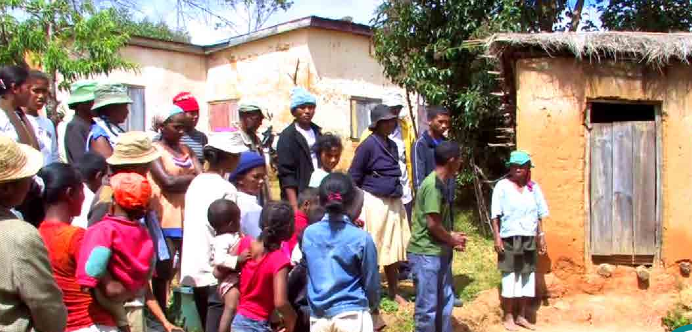
Illustrated with photos, case studies, and tips, this field guide provides a practical, step-by-step guide for how Community-Led Total Sanitation (CLTS) practitioners around the world can implement the Follow-up MANDONA (FUM) approach in their own contexts. As explained in the guide, FUM is an action-oriented approach to accelerate the end of open defecation after the initial CLTS triggering session. This initial CLTS session involves facilitated participatory ‘triggering’ exercises, which are designed to ignite a community-wide awakening that open defecation leads to unknowingly eating each other’s feaeces, provoking feelings of shock, disgust, and indignity. If done well, this sparks immediate action to become open defecation free (ODF) – a journey driven by emerging ‘Natural Leaders’ who encourage and support their fellow community members to ensure that
everyone can use and access adequate sanitation and hygiene – especially the most vulnerable.
As the initial triggering exercises and individual follow-up visits do not always lead to the desired change or at the desired speed, the MIARINTSOA NGO in Madagascar together with the CLTS Foundation ended up developing FUM to accelerate the collective momentum to end open defecation after the initial triggering session, and to sustain change. Based on CLTS principles, FUM involves a series of facilitated sessions with the entire community to reinforce behaviour change and collectively undertake small, immediate and doable actions to become ODF in the shortest time possible. It emphasises ‘coaching’ community members to help their neighbours, which ignites the emergence of dynamic community support systems, driven by new Natural Leaders and Community Consultants, to help those that are the least able to access safe, private, and sustainable sanitation.
FUM involves putting communities squarely in the lead of the entire CLTS journey - not just the triggering session, but also the broader continuum of pre-triggering, triggering, follow-up, and post-ODF activities. By focusing on sustainable behaviour change, FUM is also a useful tool for addressing issues surrounding ‘slippage’, which relates to returning to previous unhygienic behaviours.
The name ‘Mandona’ is both a Malagasy word meaning ‘to push’ and an acronym summarizing the approach’s core principles where the community, rather than the external facilitator, always takes the lead:
Motivate households
Analyse the sanitation situation
Norms and standards for ODF
Decide to act now
Organise actions
No-one left behind
Advance to ODF status
The guide offers an in-depth description of the three phases of FUM, a detailed description of their most important implementation steps, as well as several tips and challenges that facilitators should look out for.
English and French
64
WSSCC website on May 18 2017.
- Log in to post comments