










































Health System Factors Influencing Uptake of Human Papilloma Virus (HPV) Vaccine among Adolescent Girls 9-15 Years in Mbale District, Uganda
Makerere University
In Uganda, cervical cancer is the number one cancer killer disease among women. It is estimated that the human papillomavirus (HPV) vaccine will reduce deaths from cervical cancer by two-thirds if uptake reaches 80%. Yet uptake of the vaccine, which was launched in Uganda in 2012, has remained low in many districts, with the national average estimated at 17% as of December 2016. This study aimed to assess how health systems are influencing uptake of HPV vaccine so as to inform policy in Mbale district, Eastern Uganda.
The researchers conducted a cross-sectional study of 407 female adolescents aged 9-15 years, selected from 56 villages. Uptake of the HPV vaccine in this study was defined as completing 2 doses of the vaccine. In addition, 6 key informant interviews were conducted with district health officials involved in implementation of the HPV vaccine.
Fifty six (13.8%) of 407 adolescents had received both doses. After adjusting for possible confounders, the multivariable analysis showed that the prevalence of uptake of the HPV vaccine was 2.5 times higher among girls who had received the vaccine from an outreach clinic compared to those who obtained it from static sites. It was also 3 times higher among those who received an explanation of possible side effects compared to those who didn't get an explanation. Prevalence was also twice as high among adolescents who received vaccines together with other services and 4 times more among adolescents who had many options from where to receive the HPV vaccine. Key informant interviews revealed that, with the school-based approach, health facilities have been able to liaise with schools to make it easier for adolescents to receive HPV vaccine. Also, the integration of the HPV vaccine with other services such as child days plus helps to increase coverage by taking advantage of the existing infrastructure to provide the vaccine.
In terms of barriers, 182 (52.3%) of 348 reported lack of awareness about the HPV vaccine (or the need for a second dose) as the major reason for not having received it (or not having had the second dose). Other reasons for not vaccinating include reluctance to vaccinate, being afraid of vaccines, and myths about the vaccines. Major service delivery issues identified in the key informant interviews included myths about the vaccine, unclear communication about the proper age for receipt of the vaccine, transport challenges, inconsistency in vaccine supply, and inadequate health centre staff, along with insufficient training on the HPV vaccine. Despite the latter human resource barriers, village health teams (VHTs) and other community mobilisers support the health workers in mobilising the community to take their daughters for vaccination, thus motivating them. This study revealed that cost was not a barrier to obtaining the vaccine, due to the fact that the HPV vaccine is provided free of charge by the Government of Uganda and subsidised by the Global Alliance for Vaccines and Immunization (GAVI).
One reason the researchers cite to explain the low uptake is the lack of information, education, and communication (IEC) materials on HPV vaccine in health facilities, schools, and other communal places such as markets. Findings from this study show that adolescents who received adequate information about HPV vaccine were more likely to accept the vaccine, which is similar to findings from another study conducted in Kenya. Several studies have highlighted the need for health workers to be trained to provide adequate information about this vaccine, as adolescents' vaccination decisions are shaped by confidence in the vaccination programme and healthcare providers. This may call for health workers to provide a brief discussion on the vaccine and its benefits and possible side effects prior to administration.
Based on the findings, the researchers recommend that:
- The Ministry of Health and implementing partners aim to raise awareness about the HPV vaccine as a primary preventive mechanism against cervical cancer through various forms of media - e.g., radio talk shows (tailored to the particular age group);
- The Ministry of Health ensure that the expected target for coverage is communicated to all relevant stakeholders so that they work towards it and are capable of monitoring and evaluating their work;
- The government nurture a public-private partnership to include private health facilities in providing the HPV vaccine so as to increase coverage in areas that are mainly served by the private health services;
- District health teams conduct continuous on-the-job training of health workers on HPV vaccine so that they can deliver quality information to adolescents prior to receipt of the vaccine and communicate with the care takers of the children to allay fears that may lead to hesitancy.
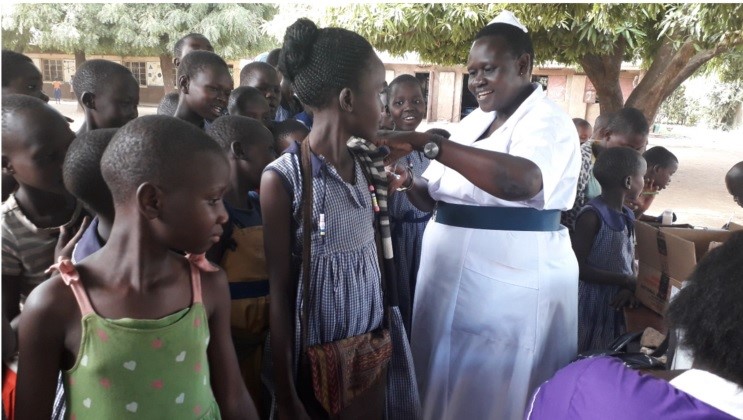
BMC Public Health (2020) 20:171 https://doi.org/10.1186/s12889-020-8302-z. Image credit: UNICEF Uganda via Facebook
- Log in to post comments