










































Hollaback!
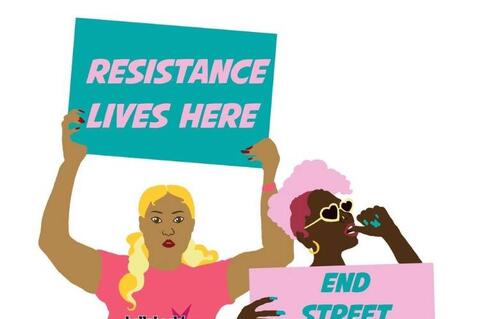
"We've got your back. By sharing your story, you change the way people talk about and understand harassment."
Hollaback! is an international movement seeking to end harassment in public spaces. Its website invites women to share narratives (and photos) of their experience of street harassment as well as photos of the men who harassed them. The network of grassroots activists powering Hollaback! works together to understand harassment, ignite public conversations, and develop strategies to ensure equal access to public spaces.
Hollaback! is an example of feminist online activism, with the site's narrative-image posts providing a means of enacting countervisuality in public spaces involving: altering the traditional dichotomy of male/observer and female/observed, enacting feminist rhetorical agency through mobility in public spaces, and generating women's solidarity through shared experience. Noting that criminal law and punishment are disproportionately applied to people of colour, low-income individuals, and trans and gender-nonconforming people, Hollaback! believes that it is their role as advocates to steer policymakers away from measures that would increase criminalisation of street harassment that predominantly affects these groups, and toward measures that engage communities in prevention.
Those who have been harassed are encouraged to tell their story (with or without photos of their harassers) by: downloading free apps for iPhone and Android (see the Hollaback! website); texting their story to holla@ihollaback.org (putting the email address where the numbers usually go); and/or submitting their story on the Hollaback! website. Readers of the stories can then click on "I've got your back!" to let victims know they are not alone.
Hollaback! offers several street harassment resources, such as Holla 101: Anti-Street Harassment Curriculum (provides 25- and 45-minute lesson plans corresponding with short vlogs that are designed to help students start a conversations about street harassment); Holla 101: An Educator's Guide to Street Harassment; Hollaback! School Action Pack; Responding to Harassers; Harassment Is: An Exploration of Identity and Street Harassment; Employer, Union, and Service Provider's Guide to Ending Street Harassment (with video introduction); Beyond the Bathroom: Gender-Inclusive Planning and Policy for Public Spaces; and Street Harassment – Know Your Rights (which compiles legal definitions and information on all forms of street harassment across 22 countries and in 12 languages). Hollaback!'s publication "#HarassmentIs: An exploration of identity and street harassment" invites readers to practice recognising how people's identities and oppressions overlap and how that can affect how they walk down the street. As part of the launch, Hollaback! hosted a #harassmentis tweetup that yielded over 1,500 posts and hosted a #harassmentis chalk walk in Washington Square Park, New York City, United States.
A project of Hollaback!, HeartMob is a platform that provides real-time support to individuals experiencing online harassment and empowers bystanders to act. HeartMob allows users to document their harassment and maintain control over their story. @theheartbot is a Twitter bot that logs private reports of online abuse, replies to harassers with a disincentive, and keeps everyone else out of it. Once documented, users will have the option of keeping their report private and cataloguing it in case it escalates, or they can make the report public. If they choose to make it public, they will be able to choose from a menu of options on how they want bystanders to support them, take action, or intervene. They are also given resources including: safety planning, materials on how to differentiate an empty threat from a real threat, online harassment laws and details on how to report their harassment to authorities (if requested), and referrals to other organisations that can provide counseling and legal services. Bystanders looking to provide support receive public requests, along with chosen actions of support. HeartMob staff reviews all messages and reports to ensure the platform remains safe and supportive.
The HeartMob team has developed several resources for people experiencing or combating online harassment. These include, for example: Technical Safety Guide, Social Media Safety Guides, and Self-Care Guide. There are also links to related resources such as Online Harassment: A Comparative Policy Analysis and a list of supportive organisations.
Gender, Rights
Hollaback! explains: "Street harassment is sexual, gender-based, and bias-motivated harassment that takes place in public spaces like the street, the supermarket, and the social media we use every day....Street harassment is not about sexual gratification. It's about power....Sometimes it's sexual, sometimes it's racist, sometimes it's homophobic, and sometimes it's all of the above and more. Whatever form it takes, it tells us that we're not safe in the physical or online spaces we share with friends, relatives, acquaintances, and strangers."
"Online harassment includes a wide range of targeted behaviors including: threats, continued hateful messages, doxxing, DDoS attacks, swatting, defamation, and more....While there is space for debate and discussion online (as well as conflicting ideas!), what separates online harassment from healthy discourse is the focus on harm: including publishing personal information, sending threats with the intention to scare or harm, using discriminatory language against an individual, and even directly promoting harm against a person or organization."
Abstract: "'I stared at him in defiance:' Hollaback! movement and the enactment of reflexive, resilient countervisuality", by Nancy Gómez and Roger C. Aden, Journal of Applied Communication Research, Volume 45, Issue 2, pages 160-178; and Hollaback! website, July 7 2017.