










































'I Wasn’t Thinking I Could Get Pregnant': A Rapid Assessment of the Need for Teenage Pregnancy Communication in O.R. Tambo District, EC and uMgungundlovu District, KZN
The Centre for AIDS Development, Research and Evaluation (CADRE)
"For teenage pregnancy communication interventions to be effective, adolescent girls and boys, their family members, teachers, community members, and healthcare workers should each be incorporated in communication strategies aimed at preventing pregnancy and the uptake of health services. A district social mobilisation strategy should thus be targeted at children, teenagers, and all those that influence them."
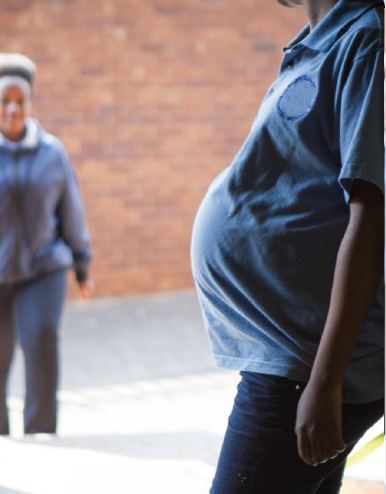
This 94-page research report discusses the issue of teenage pregnancy, including factors that contribute to teenage pregnancy; what influences young people’s health-seeking behaviours around contraception, antenatal, and postnatal care; and how the health system should adapt to the particular needs of teenagers. The research was conducted to guide an adolescent-focused communications and social mobilisation strategy being implemented by Community Media Trust and TB HIV Care Association as part of the Futures Group's 'Reducing Maternal and Child Mortality Through Strengthening Primary Healthcare in South Africa' programme. The findings are based on a rapid assessment conducted in O.R. Tambo (Eastern Cape) and uMgungundlovu (Kwazulu Natal) districts, comprising largely focus groups with adolescents and others involved or working with young people.
Overall the research found that shame and stigma contributed to preventing young people from accessing health services, especially pre-natal care. Young mothers and fathers expressed that caring for a child was much more difficult than anticipated, and noted that young women overwhelmingly bear responsibility for the child. In some cases young people lacked practical information about contraceptives, in other cases they lacked access, or were deterred from health services because of health workers' attitudes or their own fears that someone may find out they were sexually active. This lack of understanding and poor health worker attitudes also deterred health seeking behaviours.
Family support and having accurate sexual and reproductive health information were seen as key factors determining accessing ante-natal care. On the other hand, young men were generally not welcome or involved with their unborn child's health. In fact, young men are rarely the focus of any kind of reproductive health information. Related to this, the report makes the point that "it is important to provide social spaces where teenage boys and men can engage in critical dialogue about issues such as peer pressure, sexual coercion, gender inequality, responsible fatherhood and how these affect teenage pregnancy."
The research also found that sex is a very uncomfortable topic within households, for both parents and young people. Life orientation classes in schools cover some aspects of sexuality and reproductive health, but do not offer enough practical, useful information about contraceptive early enough. As such, "the potential for schools to play a critical role in the delivery of comprehensive sexual and reproductive health education to young people cannot be underestimated; particularly where such information is not provided at home, schools are a critical resource.
The report offers a number of different recommendations, including key messages for the campaign. These include: more practical education around things like contraception, dual protection, and termination of pregnancy; improving healthcare worker attitudes, and equipping young people with knowledge and skills around rights, healthy pregnancies, and risk perception; and encouraging and strengthening communication within different relationships and in households.
The recommendations also include a list of ideas from study participants, which range from building adolescents' life skills to addressing gender stereotypes and inequalities, to helping young people realise what a big responsibility a child is. Many of the young mothers and fathers expressed regret about their choices. "Incorporating some of their sentiments into media could be an effective way of communicating to youth. The potential of using personal testimony to increase risk perception was noted several times. True stories, presented in a video or radio format, would be a powerful way to caution youth, given the greater emotiveness, credibility, resonance and message internalisation possible in this format." Participants' suggestions for media included using documentary or reality style shows, television and radio dramas, and cartoons.
CADRE website on March 9 2015.
- Log in to post comments